
Morning route
Begin with a landmark, market, waterfront, downtown district or historic street before crowds build.
Midwest city guide
Architecture, lakefront parks, jazz and blues, museums, sports and deep-dish pizza. Use this page for a first-day plan, neighbourhood ideas, food stops, museum time and wider route planning through Illinois.
Start with one central neighbourhood, a walkable landmark area, a local meal and one cultural attraction. Chicago works best when you balance the famous sights with smaller local stops that show how people actually live in the city.
Begin with a landmark, market, waterfront, downtown district or historic street before crowds build.
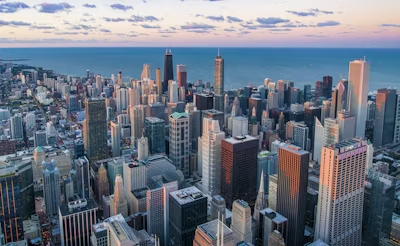
Add a museum, public park, campus, food hall, sports venue or neighbourhood walk.
Finish with a local restaurant, music venue, theatre, skyline view or seasonal event.
Use Chicago as an anchor and add a nearby state park, small town, food trail or regional drive. For larger trips, combine this page with the Illinois state guide, the regions page and the travel tips planner.
Pick a landmark, a neighbourhood walk, one museum and one local food experience.
Add a second neighbourhood, a day trip and a culture or sports event.
Connect the city to nearby nature, historic towns or a scenic drive through Illinois.
Connected guide
Professional UX works by connecting pages together: city guide, state guide, region guide, food guide and travel planner.
Open IllinoisCity depth
Chicago is a strong first-time city because architecture, lakefront parks, museums, sports and food are close enough to build efficient days. Visitors should protect time for the Riverwalk, the Art Institute, neighbourhood food, live music and a skyline view from the lake or an observation deck.
A robust city page should help visitors choose where to stay, what to group together, what to eat, how to move around and what cultural story makes the city distinct. Use this guide as a base, then connect it to state, culture, food and itinerary pages for a complete route.
Stay near the main transit or neighbourhood cluster that matches your top activities.
Use morning landmarks, afternoon neighbourhoods and evening food or performance.
Connect the city to a nearby state route, museum district, waterfront or regional food stop.
Useful details
This page is built to help visitors make a real choice, not just click through a directory. Read it as a planning page: identify the strongest places, compare the practical details, then connect the page to states, cities, food, culture and itinerary tools.
Choose the best season, build around one or two anchor experiences, and leave space for meals, walks, local stops and slower moments that make a trip feel personal.
Look for the regional story behind the place: geography, migration, industry, music, food, sport, architecture, politics or natural landscape. That context makes each stop more memorable.
Use the internal links to move from broad overview to detailed state pages, city guides, culture features, food routes and five-day itineraries with cost guidance.
Tip: build trips around contrast — one famous landmark, one local neighbourhood, one regional meal and one story worth remembering.