1. Place
Connect the person to a state, city, school, neighborhood, workplace or landscape.
America Explorer
Notable Americans are more than names on a list. They connect to cities, schools, kitchens, studios, laboratories, rivers, ballparks, courtrooms, movements and museums. Use this page to explore people through place — then follow the links into deeper state and city guides.
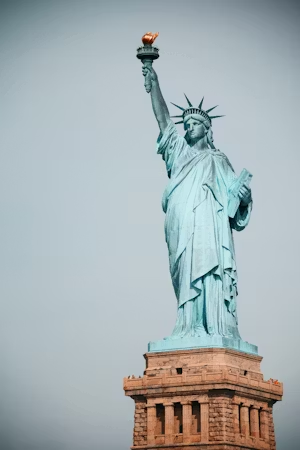
Start with a person, then ask: where did they come from, what shaped them, who did they influence, and what can a visitor or student still see today?
How to use this page
Connect the person to a state, city, school, neighborhood, workplace or landscape.
Look at the discipline: music, politics, science, business, literature, cuisine, sports or screen culture.
Find the moment when the person’s work changed a community, industry or national conversation.
Link the story to museums, public art, travel routes, books, films, classrooms or civic debates.
🏛️ People and place
Washington DC, Philadelphia, Boston and New York connect visitors to the institutions, debates and documents that shaped American public life.
Virginia / Washington DC
Leadership, independence, public service
Explore the connected place →Kentucky / Illinois / Washington DC
Union, emancipation, national memory
Explore the connected place →New York
Human rights, public service, diplomacy
Explore the connected place →Georgia / Alabama / Tennessee
Civil rights, faith, nonviolent leadership
Explore the connected place →📚 People and place
American literature is deeply regional: New England essays, Southern Gothic, Harlem Renaissance poetry, Western frontier stories and modern immigrant narratives.
Missouri / Mississippi River
American voice, satire, river culture
Explore the connected place →Arkansas / California
Memoir, poetry, civil rights, performance
Explore the connected place →Ohio / New York
Literature, memory, Black American history
Explore the connected place →Illinois / Florida / Idaho
Modern prose, travel, nature and war writing
Explore the connected place →🎶 People and place
Jazz, blues, country, rock, hip-hop, soul and pop are all tied to real places: New Orleans, Memphis, Nashville, Detroit, New York, Los Angeles and Atlanta.
Louisiana
Jazz, New Orleans sound, global cultural influence
Explore the connected place →Tennessee
Country music, songwriting, literacy philanthropy
Explore the connected place →Minnesota
Minneapolis sound, performance, independent artistry
Explore the connected place →Michigan
Soul music, gospel roots, civil rights soundtrack
Explore the connected place →🎬 People and place
The American screen story stretches from Broadway and radio to Hollywood studios, independent film, streaming and regional theatre.
California
Hollywood, image, celebrity culture
Explore the connected place →Ohio / California
Modern film storytelling and blockbuster craft
Explore the connected place →Mississippi / Illinois
Television, media, book culture, philanthropy
Explore the connected place →New York
Broadway, hip-hop theatre, American history on stage
Explore the connected place →🔬 People and place
American innovation is place-based too: labs, universities, garages, observatories, space centers, farm fields and factories all shaped what came next.
Ohio / New Jersey
Practical invention, laboratories, electric age
Explore the connected place →West Virginia / Virginia
NASA mathematics, spaceflight, education
Explore the connected place →New York / Massachusetts
Computing, programming languages, naval service
Explore the connected place →California
Personal computing, design, Silicon Valley
Explore the connected place →🏆 People and place
Sports pages can become geography lessons: ballparks, courts, arenas, Olympic venues, college towns and community fields all tell local stories.
Georgia / California / New York
Baseball integration, courage, civic impact
Explore the connected place →Michigan / Florida / California
Tennis excellence, family training, global sport
Explore the connected place →North Carolina / Illinois
Basketball, college and professional legacy
Explore the connected place →Ohio / Texas
Gymnastics, resilience, Olympic excellence
Explore the connected place →🍽️ People and place
Chefs, designers, entrepreneurs and community builders shape how people eat, shop, travel, learn and imagine American life.
California / Massachusetts
Cooking education, television, food confidence
Explore the connected place →Illinois / California / Florida
Animation, theme parks, family entertainment
Explore the connected place →New York
Fashion, Americana, visual identity
Explore the connected place →California
Farm-to-table cooking, food education
Explore the connected place →Routes
These routes help visitors and students turn biography into a real itinerary.
Atlanta → Montgomery → Birmingham → Memphis → Washington DC
Connect speeches, churches, schools, memorials, museums and court decisions into one powerful civic-history route.
New Orleans → Memphis → Nashville → Detroit → New York
Trace jazz, blues, country, soul, Motown and hip-hop through neighborhoods, studios, theatres and food streets.
Boston → New York → Pittsburgh → Detroit → Silicon Valley
Compare universities, finance, steel, manufacturing, design and technology entrepreneurship.
Concord → New York → Oxford MS → Hannibal → Key West
Build a reading journey through landscapes that shaped essays, poetry, novels, memoirs and journalism.
Cooperstown → Chicago → Indianapolis → Los Angeles → Houston
Use halls of fame, stadiums, Olympic venues and college towns to study community identity and national culture.
New Orleans → Charleston → Austin → San Francisco → Portland
Pair notable people with cuisine, agriculture, markets, immigrant traditions and regional ingredients.
State spotlights
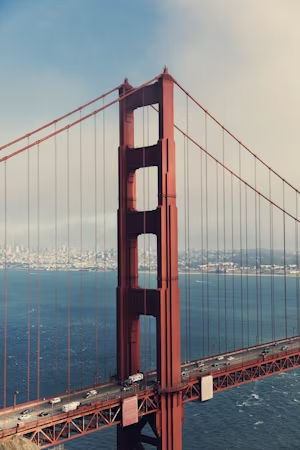 California
Film, tech, food innovation, agriculture, architecture, surfing, immigrant culture and national parks.
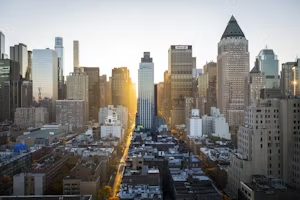 New York
Publishing, finance, Broadway, museums, hip-hop, immigration, journalism and global city life.
 Louisiana
Jazz, Creole and Cajun cuisine, literature, festivals, river trade and layered cultural memory.
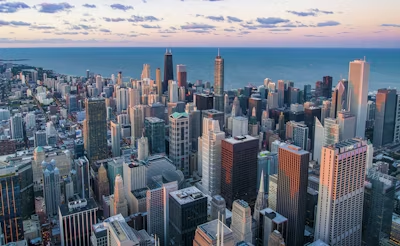 Illinois
Chicago architecture, blues, comedy, politics, sports, journalism and Midwest migration stories.
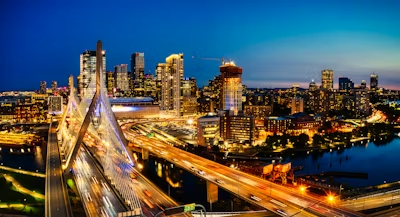 Massachusetts
Higher education, revolution, literature, science, medicine, coastal history and civic debate.
 Texas
TexasSpace, energy, ranching, borderlands, music, foodways, sports, business and big-city growth.
🪶 Deeper research
These profiles connect visitors to tribal nations, languages, land stewardship, art, law, education and the deep history that predates the United States.
Oklahoma
Cherokee leadership, community development, tribal governance
Explore the connected place →Oklahoma / Pennsylvania
Olympic sport, Native excellence, athletic legacy
Explore the connected place →Oklahoma
Ballet, Osage heritage, American dance history
Explore the connected place →New Mexico
Public service, Native representation, land and culture
Explore the connected place →🏙️ Deeper research
Buildings and public spaces make biography visible. These people help students read skylines, neighborhoods, homes, museums and civic spaces.
Wisconsin / Illinois / Arizona
Organic architecture, homes, public buildings, design philosophy
Explore the connected place →Ohio / Washington DC
Memorial design, landscape, public memory
Explore the connected place →Massachusetts / New York
Modern architecture, museums, civic spaces
Explore the connected place →New York
Urban neighborhoods, walkable cities, community planning
Explore the connected place →💼 Deeper research
American business stories can be studied through factories, railroads, ports, farms, stores, media, technology and everyday products.
Louisiana / Indiana / New York
Entrepreneurship, beauty industry, Black business history
Explore the connected place →Michigan
Automobiles, assembly lines, labor and industrial culture
Explore the connected place →California
Gold Rush commerce, clothing, American workwear
Explore the connected place →New York
Brand building, retail, beauty and global consumer culture
Explore the connected place →🚀 Deeper research
From Kitty Hawk to Houston to Cape Canaveral, exploration stories connect science, risk, engineering, weather, geography and national imagination.
Ohio / Florida / Texas
Moon landing, aviation, NASA history
Explore the connected place →California / Florida
Spaceflight, science education, women in STEM
Explore the connected place →Kansas
Aviation, ambition, risk and public imagination
Explore the connected place →Ohio
Space, public service, aviation and Cold War history
Explore the connected place →🎨 Deeper research
American visual culture includes landscapes, murals, abstraction, pop art, photography, public art and community-based storytelling.
Wisconsin / New Mexico
Desert modernism, flowers, New Mexico landscapes
Explore the connected place →Pennsylvania / New York
Pop art, celebrity, consumer culture
Explore the connected place →Kansas / New York
Photography, film, journalism and civil rights
Explore the connected place →New York
Story quilts, public art, Black women’s history
Explore the connected place →🎤 Deeper research
Comedy can explain regional accent, family life, politics, class, migration, media and changing social rules.
New York / California
Television sitcoms, production, comedy business
Explore the connected place →Illinois / California
Stand-up comedy, race, vulnerability and performance
Explore the connected place →Texas / California
Sketch comedy, variety television, performance craft
Explore the connected place →Pennsylvania / New York
Comedy writing, television, satire and performance
Explore the connected place →🧭 Deeper research
These stories help connect biography to schools, hospitals, public policy, community organizations and national debates.
Massachusetts / Washington DC
Nursing, disaster response, Red Cross history
Explore the connected place →Illinois
Settlement houses, social work, immigration and reform
Explore the connected place →Massachusetts / Georgia
Scholarship, civil rights, sociology and public debate
Explore the connected place →California
Farm labor, organizing, food systems and civil rights
Explore the connected place →🌲 Deeper research
America’s parks, rivers, mountains and coasts are tied to writers, scientists, activists, photographers and public servants.
California
National parks, wilderness writing, Sierra Nevada legacy
Explore the connected place →Pennsylvania / Maryland
Environmental science, public awareness, conservation
Explore the connected place →California
National park photography, conservation imagery
Explore the connected place →Florida
Everglades advocacy, wetlands and civic action
Explore the connected place →⚖️ Deeper research
Courts, schools, public offices and local organizing show how legal change becomes lived experience.
Maryland / Washington DC
Civil rights law, Supreme Court, education equality
Explore the connected place →New York / Washington DC
Law, gender equality, judicial influence
Explore the connected place →Arizona
Supreme Court history, Western civic life
Explore the connected place →New York
Public service, law, education and representation
Explore the connected place →🍳 Deeper research
Cuisine has a Who’s Who too: writers, chefs, farmers, entrepreneurs and teachers who helped define American regional taste.
Virginia
Southern cooking, seasonal food, memory and hospitality
Explore the connected place →Louisiana
Creole cooking, civil rights gathering spaces, New Orleans culture
Explore the connected place →Oregon / New York
American cooking, food writing, culinary education
Explore the connected place →Washington DC
Restaurants, humanitarian food relief, immigrant food culture
Explore the connected place →Timeline thinking
Use these eras to turn a biography list into a full story of America’s development.
Indigenous nations, colonial writers, revolutionary leaders, enslaved and free Black communities, early cities and founding debates.
Expansion, removal, abolition, women’s rights, industrial invention, literature, railroads and Civil War leadership.
Reconstruction, immigration, labor, jazz, film, aviation, modern art, conservation and global conflict.
Civil rights, space, television, suburbia, environmentalism, rock, soul, modern feminism and new public institutions.
Personal computing, cable television, hip-hop, global sports, finance, immigration and new city identities.
Streaming, social media, climate debates, new food movements, entrepreneurship, representation and global cultural exchange.
Better links
Birthplace, city, state, school, workplace, museum, stadium, studio or route.
Speech, song, invention, book, film, building, recipe, law, game, photo or public project.
The challenge that made the story matter: exclusion, risk, design problem, public debate, market failure or social change.
A museum, trail, walking route, performance, game, classroom activity or cuisine stop that makes the profile tangible.
Explore Canada and research
Choose five people from one state and connect them to cities, industries, migrations, museums and major events.
Compare an artist and an inventor. What did each change, where did they work, and what places can visitors still see?
Write a 120-word exhibit label for one person, including place, era, object, conflict and why the story still matters.
Pick a chef, farmer, brewer, immigrant community or regional dish and explain how geography shaped the table.
Plan a city route around one person with a museum, public site, meal stop, reading/viewing resource and reflection question.
Build a timeline that includes birthplace, education, career turning point, public influence and memorial/legacy site.
Better biographies

State-by-state atlas
Every state has a people story worth exploring. These cards give visitors and students a starting point, then link into the state guide for deeper travel context.

Strong themes: civil rights, space science, music and Southern literature.
People to start with: Rosa Parks; Helen Keller; W. C. Handy; Hank Aaron; Mae Jemison.
Montgomery, Birmingham, Muscle Shoals, Huntsville and Mobile create a strong route through civil rights landmarks, music history, aerospace research and Gulf Coast culture.
Open the Alabama guide →
Strong themes: Indigenous leadership, conservation, exploration and Arctic culture.
People to start with: Elizabeth Peratrovich; Benny Benson; Susan Butcher; Libby Riddles; Walter Harper.
Alaska biographies should be read through land, water, climate and sovereignty. Strong routes connect Juneau, Anchorage, Denali, coastal communities and Alaska Native cultural institutions.
Open the Alaska guide →
Strong themes: desert architecture, Indigenous cultures, space science and public leadership.
People to start with: Barry Goldwater; Sandra Day O’Connor; Cesar Chavez; Linda Ronstadt; Geronimo.
Arizona stories move between Sonoran Desert cities, borderlands, tribal nations, mining towns, observatories, architecture and national parks.
Open the Arizona guide →
Strong themes: civil rights, music, literature, politics and Delta culture.
People to start with: Maya Angelou; Johnny Cash; Daisy Bates; Bill Clinton; Scott Joplin.
A strong Arkansas people route connects Little Rock, the Delta, music corridors, civil rights sites and river towns where memory and migration shaped culture.
Open the Arkansas guide →
Strong themes: film, technology, activism, agriculture, design and global culture.
People to start with: Cesar Chavez; Steve Jobs; Walt Disney; Serena Williams; Julia Child.
California biographies stretch from Hollywood to Silicon Valley, farmworker movements, Bay Area art, university research, beaches, redwoods and global immigrant neighborhoods.
Open the California guide →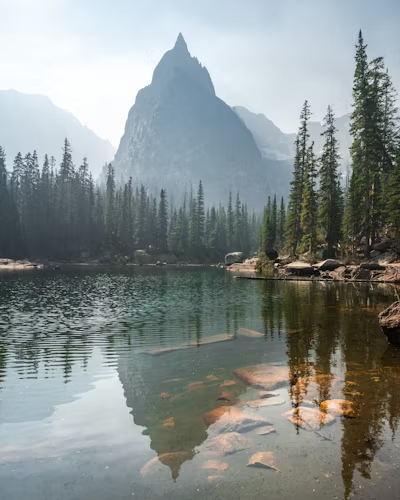
Strong themes: mountain conservation, aviation, sports, music and outdoor culture.
People to start with: Molly Brown; John Denver; Ralph Carr; Katherine Lee Bates; Hattie McDaniel.
Colorado connects mountain parks, Denver institutions, mining history, ski culture, environmental thinking and Western migration stories.
Open the Colorado guide →
Strong themes: publishing, invention, education, abolition and coastal industry.
People to start with: Harriet Beecher Stowe; Mark Twain; Noah Webster; Katharine Hepburn; Charles Goodyear.
Connecticut links New England writing, universities, manufacturing, maritime towns, theatre and reform movements in a compact travel geography.
Open the Connecticut guide →
Strong themes: founding history, industry, public service and coastal culture.
People to start with: Caesar Rodney; E. I. du Pont; Annie Jump Cannon; Joe Biden; Henry Heimlich.
Delaware is small but layered: colonial towns, du Pont industrial history, coastal communities and civic institutions create a concise people-and-place route.
Open the Delaware guide →
Strong themes: spaceflight, literature, music, sports, tourism and Caribbean connections.
People to start with: Zora Neale Hurston; Marjory Stoneman Douglas; Ernest Hemingway; Ray Charles; Janet Reno.
Florida profiles work best when connected to Eatonville, Miami, Key West, the Everglades, Cape Canaveral and Gulf/Atlantic food and music cultures.
Open the Florida guide →
Strong themes: civil rights, literature, music, film and Southern politics.
People to start with: Martin Luther King Jr.; Jimmy Carter; Flannery O’Connor; Ray Charles; Jackie Robinson.
Georgia connects Atlanta civil rights sites, Plains, Savannah, Macon, Athens music, film production and coastal/Gullah Geechee history.
Open the Georgia guide →
Strong themes: Native Hawaiian culture, surfing, music, astronomy and Pacific leadership.
People to start with: Queen Liliʻuokalani; Duke Kahanamoku; Barack Obama; Israel Kamakawiwoʻole; Patsy Mink.
Hawaii biographies should center Native Hawaiian history, ocean culture, migration, language, sovereignty, astronomy and Pacific crossroads.
Open the Hawaii guide →
Strong themes: wilderness, agriculture, literature, engineering and Western communities.
People to start with: Sacajawea; Ernest Hemingway; Ezra Pound; Philo Farnsworth; Picabo Street.
Idaho stories connect mountain towns, river canyons, farming regions, skiing, invention and the long movement of people across the interior West.
Open the Idaho guide →
Strong themes: presidential history, architecture, blues, labor, sports and writing.
People to start with: Abraham Lincoln; Barack Obama; Jane Addams; Muddy Waters; Gwendolyn Brooks.
Illinois is one of the strongest biography states: Springfield politics, Chicago architecture, migration, blues, journalism, literature and reform work all meet here.
Open the Illinois guide →
Strong themes: basketball, motorsports, literature, invention and public life.
People to start with: Kurt Vonnegut; Madam C. J. Walker; Larry Bird; Cole Porter; David Letterman.
Indiana profiles move through Indianapolis, small college towns, racing culture, Hoosier basketball, manufacturing and Midwestern storytelling.
Open the Indiana guide →
Strong themes: agriculture, music, painting, politics and frontier communities.
People to start with: Grant Wood; Herbert Hoover; George Washington Carver; John Wayne; Bill Bryson.
Iowa stories connect farmland, small towns, universities, American regionalist art, presidential politics and migration through the Midwest.
Open the Iowa guide →
Strong themes: aviation, abolition, jazz, sports and prairie identity.
People to start with: Amelia Earhart; Dwight D. Eisenhower; Langston Hughes; Gordon Parks; Wilt Chamberlain.
Kansas profiles work through prairie towns, aviation history, civil rights photography, presidential memory, jazz roots and the central plains.
Open the Kansas guide →
Strong themes: bluegrass, bourbon, horses, literature and civil rights sports.
People to start with: Muhammad Ali; Abraham Lincoln; Loretta Lynn; Wendell Berry; Bill Monroe.
Kentucky people routes connect Louisville, horse country, bourbon towns, Appalachian music, farms, boxing, literature and Lincoln history.
Open the Kentucky guide →
Strong themes: jazz, Creole cuisine, civil rights, literature and river culture.
People to start with: Louis Armstrong; Leah Chase; Truman Capote; Mahalia Jackson; Ernest J. Gaines.
Louisiana biographies are inseparable from New Orleans, bayous, French and Spanish colonial history, African American music, Creole kitchens and river life.
Open the Louisiana guide →
Strong themes: maritime life, literature, environmental culture and New England independence.
People to start with: Rachel Carson; Stephen King; Henry Wadsworth Longfellow; Margaret Chase Smith; E. B. White.
Maine connects coastal villages, lighthouses, Acadia, forests, shipbuilding, writing and the environmental imagination.
Open the Maine guide →
Strong themes: civil rights law, abolition, medicine, space science and Chesapeake culture.
People to start with: Frederick Douglass; Thurgood Marshall; Harriet Tubman; Johns Hopkins; Billie Holiday.
Maryland stories move through Baltimore, Annapolis, the Eastern Shore, the Underground Railroad, Chesapeake foodways and Washington-area public life.
Open the Maryland guide →
Strong themes: founding history, education, literature, science and sports.
People to start with: John Adams; Abigail Adams; W. E. B. Du Bois; Emily Dickinson; John F. Kennedy.
Massachusetts offers a dense biography map: Boston, Cambridge, Concord, Amherst, Salem, Cape Cod and universities all hold nationally important stories.
Open the Massachusetts guide →
Strong themes: automobiles, Motown, lakes, labor, design and sport.
People to start with: Henry Ford; Aretha Franklin; Stevie Wonder; Rosa Parks; Gerald Ford.
Michigan routes connect Detroit industry and music, Great Lakes shipping, union history, civil rights, college towns and northern landscapes.
Open the Michigan guide →
Strong themes: music, literature, politics, Indigenous culture and winter sport.
People to start with: Prince; Bob Dylan; Hubert Humphrey; Judy Garland; Charles Schulz.
Minnesota biographies connect Minneapolis, St. Paul, the North Shore, immigrant neighborhoods, Dakota and Ojibwe histories, music and public life.
Open the Minnesota guide →
Strong themes: blues, literature, civil rights and river culture.
People to start with: B. B. King; Medgar Evers; William Faulkner; Eudora Welty; Oprah Winfrey.
Mississippi is central to American music and civil rights history. Strong routes move through the Delta, Jackson, Oxford, river towns and cultural museums.
Open the Mississippi guide →
Strong themes: river literature, jazz, politics, baseball and frontier movement.
People to start with: Mark Twain; Harry S. Truman; Josephine Baker; T. S. Eliot; Chuck Berry.
Missouri connects St. Louis, Kansas City, the Mississippi and Missouri Rivers, jazz, blues, literature, baseball and gateway-to-the-West narratives.
Open the Missouri guide →
Strong themes: wilderness, Indigenous history, literature and conservation.
People to start with: Jeannette Rankin; Charlie Russell; Gary Cooper; Chief Plenty Coups; Norman Maclean.
Montana stories connect big landscapes, tribal histories, ranching, conservation, Western art, literature and national parks.
Open the Montana guide →
Strong themes: plains literature, aviation, business, civil rights and agriculture.
People to start with: Willa Cather; Malcolm X; Warren Buffett; Gerald Ford; Standing Bear.
Nebraska biographies connect Omaha, Lincoln, prairie towns, migration, agriculture, business, Native rights and American literary memory.
Open the Nebraska guide →
Strong themes: entertainment, mining, desert cities, sports and public land.
People to start with: Sarah Winnemucca; Pat Nixon; Andre Agassi; Mark Twain; Harry Reid.
Nevada routes connect Las Vegas, Reno, mining towns, Paiute history, desert landscapes and entertainment culture.
Open the Nevada guide →
Strong themes: politics, mountains, literature and New England town life.
People to start with: Daniel Webster; Robert Frost; Christa McAuliffe; Alan Shepard; J. D. Salinger.
New Hampshire is strong for civic tradition, mountain landscapes, writers, space history and small-town political culture.
Open the New Hampshire guide →
Strong themes: music, invention, film, immigration and shore culture.
People to start with: Thomas Edison; Bruce Springsteen; Whitney Houston; Grover Cleveland; Paul Robeson.
New Jersey biographies connect labs, factories, boardwalks, suburbs, immigrant cities, music venues and the New York/Philadelphia corridor.
Open the New Jersey guide →
Strong themes: Indigenous art, Hispanic culture, science, painting and desert modernism.
People to start with: Georgia O’Keeffe; Robert Oppenheimer; Popé; Dolores Huerta; Rudolfo Anaya.
New Mexico profiles connect pueblos, Santa Fe, Taos, Albuquerque, Los Alamos, desert art, Spanish colonial history and borderland identity.
Open the New Mexico guide →
Strong themes: publishing, finance, theatre, immigration, activism and global media.
People to start with: Franklin D. Roosevelt; Eleanor Roosevelt; Alexander Hamilton; Shirley Chisholm; Andy Warhol.
New York is a world biography hub: Harlem, Broadway, Wall Street, immigrant neighborhoods, museums, universities and reform movements all overlap.
Open the New York guide →
Strong themes: aviation, literature, civil rights, sports and coastal/mountain culture.
People to start with: The Wright Brothers; Nina Simone; Michael Jordan; Thomas Wolfe; Maya Angelou.
North Carolina stories connect the Outer Banks, research universities, basketball, civil rights, music, barbecue, tobacco history and mountain communities.
Open the North Carolina guide →
Strong themes: plains life, Indigenous history, agriculture and conservation.
People to start with: Sakakawea; Lawrence Welk; Peggy Lee; Louis L’Amour; Sitting Bull.
North Dakota routes connect Mandan-Hidatsa-Arikara history, prairie landscapes, music, ranching, literature and Theodore Roosevelt country.
Open the North Dakota guide →
Strong themes: aviation, presidents, literature, music, invention and sports.
People to start with: Toni Morrison; Neil Armstrong; Jesse Owens; Paul Laurence Dunbar; Steven Spielberg.
Ohio biographies connect Cleveland, Cincinnati, Columbus, Dayton, Akron, space history, aviation, sports, literature and industrial change.
Open the Ohio guide →
Strong themes: Native nations, country music, literature, energy and sport.
People to start with: Will Rogers; Woody Guthrie; Jim Thorpe; Maria Tallchief; Wilma Mankiller.
Oklahoma profiles should center Native nations, forced removal, resilience, plains music, oil towns, dance, sport and civic leadership.
Open the Oklahoma guide →
Strong themes: food writing, design, environment, athletics and Pacific Northwest culture.
People to start with: James Beard; Beverly Cleary; Linus Pauling; Phil Knight; Ursula K. Le Guin.
Oregon biographies connect Portland, the coast, Willamette Valley, forests, running culture, science, books and sustainable food movements.
Open the Oregon guide →
Strong themes: founding documents, industry, art, sports and science.
People to start with: Benjamin Franklin; Rachel Carson; Andy Warhol; Kobe Bryant; Fred Rogers.
Pennsylvania links Philadelphia, Pittsburgh, Gettysburg, steel towns, universities, public television, environmental writing and American democracy.
Open the Pennsylvania guide →
Strong themes: maritime trade, design, religious freedom and coastal culture.
People to start with: Roger Williams; Gilbert Stuart; H. P. Lovecraft; Nathanael Greene; Viola Davis.
Rhode Island is compact but rich: Providence, Newport, design schools, ports, religious freedom, Revolutionary history and coastal arts all connect.
Open the Rhode Island guide →
Strong themes: Gullah Geechee culture, civil rights, military history and literature.
People to start with: Mary McLeod Bethune; Dizzy Gillespie; Darius Rucker; Robert Smalls; Pat Conroy.
South Carolina biographies connect Charleston, Gullah Geechee communities, civil rights, coastal foodways, military history and Southern literature.
Open the South Carolina guide →
Strong themes: Lakota history, frontier memory, conservation and public lands.
People to start with: Sitting Bull; Crazy Horse; Laura Ingalls Wilder; George McGovern; Hubert Humphrey.
South Dakota profiles should center Lakota history, the Black Hills, prairie towns, public memory, parks and the tension between monuments and sovereignty.
Open the South Dakota guide →
Strong themes: music, civil rights, literature, food and Appalachian/Delta links.
People to start with: Dolly Parton; Elvis Presley; Ida B. Wells; Aretha Franklin; Alex Haley.
Tennessee routes connect Memphis, Nashville, Knoxville, the Great Smoky Mountains, civil rights landmarks, studios, barbecue and country/soul histories.
Open the Tennessee guide →
Strong themes: music, politics, space, ranching, food, energy and borderlands.
People to start with: Lyndon B. Johnson; Beyoncé; Selena; Bessie Coleman; Barbara Jordan.
Texas biographies are large-scale: Houston, Austin, San Antonio, Dallas-Fort Worth, borderlands, spaceflight, barbecue, Tejano music and public leadership.
Open the Texas guide →
Strong themes: religious settlement, desert parks, skiing, film and technology.
People to start with: Martha Hughes Cannon; Philo Farnsworth; Roseanne Barr; John Moses Browning; Wallace Stegner.
Utah stories connect Salt Lake City, red-rock parks, the Great Basin, religious settlement, film festivals, outdoor sport and environmental writing.
Open the Utah guide →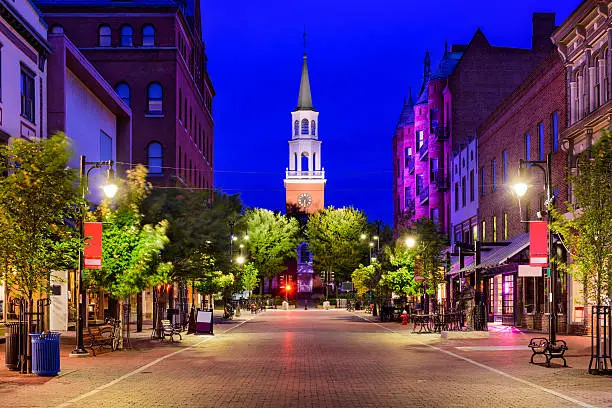
Strong themes: democracy, literature, agriculture, design and mountain life.
People to start with: Calvin Coolidge; Bernie Sanders; Grace Potter; Justin Morrill; Dorothy Canfield Fisher.
Vermont biographies connect small towns, independent politics, dairy and maple culture, mountains, education and New England reform traditions.
Open the Vermont guide →
Strong themes: founding history, military life, literature, civil rights and foodways.
People to start with: George Washington; Thomas Jefferson; Ella Fitzgerald; Booker T. Washington; Edna Lewis.
Virginia connects colonial sites, presidential homes, Hampton Roads, Shenandoah, civil rights education, music and Southern food memory.
Open the Virginia guide →
Strong themes: aviation, technology, music, Indigenous cultures and outdoor life.
People to start with: Jimi Hendrix; Bill Gates; Dale Chihuly; Chief Seattle; Bing Crosby.
Washington biographies connect Seattle, Puget Sound, aerospace, software, glass art, grunge, coffee culture, tribal nations and mountain landscapes.
Open the Washington guide →
Strong themes: Appalachian music, labor history, writing and mountain culture.
People to start with: Pearl S. Buck; Chuck Yeager; Katherine Johnson; Mary Lou Retton; Bill Withers.
West Virginia stories connect coalfields, labor struggles, Appalachian music, aviation, NASA mathematics, mountains and small-town resilience.
Open the West Virginia guide →
Strong themes: progressive politics, architecture, sports, dairy and conservation.
People to start with: Frank Lloyd Wright; Georgia O’Keeffe; Laura Ingalls Wilder; Les Paul; Vince Lombardi.
Wisconsin biographies connect Madison, Milwaukee, Green Bay, dairy country, architecture, invention, progressive politics and lake landscapes.
Open the Wisconsin guide →
Strong themes: national parks, women’s voting rights, rodeo and conservation.
People to start with: Nellie Tayloe Ross; Jackson Pollock; Sacajawea; Chief Washakie; Matthew Shepard.
Wyoming profiles connect Yellowstone, Grand Teton, women’s suffrage history, Shoshone leadership, ranching, art and public land debates.
Open the Wyoming guide →Fields of influence
These themes help readers compare people across time and place instead of treating biography as a disconnected list.
Names to compare: Louis Armstrong, Bessie Smith, Duke Ellington, Ella Fitzgerald, Billie Holiday, Woody Guthrie, Hank Williams, Muddy Waters, Chuck Berry, Elvis Presley, Aretha Franklin, Bob Dylan, Jimi Hendrix, Dolly Parton, Prince, Madonna, Tupac Shakur, Beyoncé, Taylor Swift and Kendrick Lamar.
Music biographies should connect sound to place: New Orleans jazz, Mississippi blues, Detroit Motown, Nashville country, New York hip-hop, Los Angeles studio culture, Minneapolis funk and Atlanta pop/rap. The richest profiles explain migration, technology, performance spaces, civil rights, radio, dance and youth culture.
Names to compare: Charlie Chaplin, Walt Disney, Orson Welles, Katharine Hepburn, Sidney Poitier, Marilyn Monroe, Steven Spielberg, George Lucas, Spike Lee, Oprah Winfrey, Meryl Streep, Denzel Washington, Tom Hanks, Ava DuVernay, Shonda Rhimes and Ryan Coogler.
Screen culture turns cities into global symbols. Hollywood matters, but so do Atlanta production, New York television, Chicago comedy, independent film festivals, animation studios, documentary traditions and streaming platforms that changed how people watch stories.
Names to compare: Benjamin Franklin, Thomas Edison, George Washington Carver, Nikola Tesla, Marie Curie’s American scientific influence, Grace Hopper, Katherine Johnson, Jonas Salk, Rachel Carson, Jane Goodall’s American institutions, Neil Armstrong, Mae Jemison, Jennifer Doudna and Katalin Karikó.
Great science profiles explain the problem, the lab or field site, the public impact and the human cost. Link inventors to museums, campuses, national laboratories, observatories, hospitals, patent cities and technology corridors.
Names to compare: Frederick Douglass, Harriet Tubman, Sojourner Truth, Ida B. Wells, W. E. B. Du Bois, Mary McLeod Bethune, Thurgood Marshall, Rosa Parks, Martin Luther King Jr., Fannie Lou Hamer, Cesar Chavez, Dolores Huerta, Harvey Milk, Wilma Mankiller and John Lewis.
Civil rights biographies should never be isolated from place. They connect courthouses, churches, schools, buses, farms, union halls, tribal governments, newspapers, marches, lunch counters and laws.
Names to compare: Ralph Waldo Emerson, Henry David Thoreau, Walt Whitman, Emily Dickinson, Mark Twain, Edith Wharton, Zora Neale Hurston, Langston Hughes, William Faulkner, Ernest Hemingway, John Steinbeck, James Baldwin, Toni Morrison, Maya Angelou, Ursula K. Le Guin and Louise Erdrich.
A strong literature profile asks how landscape, class, race, migration, war, family and language shaped the work. Connect authors to homes, libraries, trails, campuses and the cities or regions they interpreted.
Names to compare: Jackie Robinson, Babe Ruth, Jesse Owens, Muhammad Ali, Billie Jean King, Jim Thorpe, Althea Gibson, Michael Jordan, Serena Williams, Simone Biles, Michael Phelps, Tiger Woods, Megan Rapinoe, LeBron James and Caitlin Clark.
Sports stories can explain race, gender, immigration, business, media and local pride. Use stadiums, schools, training towns, Olympic sites and neighborhood courts as biography anchors.
Names to compare: Madam C. J. Walker, Henry Ford, Walt Disney, Ray Kroc, Estée Lauder, Steve Jobs, Bill Gates, Oprah Winfrey, Vera Wang, Elon Musk, Mary Barra, Ursula Burns and Jensen Huang.
Business profiles should connect products to workers, cities, supply chains, design choices, risks, marketing and public consequences. The best profiles do not just celebrate wealth; they explain change.
Names to compare: Georgia O’Keeffe, Jacob Lawrence, Jackson Pollock, Andy Warhol, Jean-Michel Basquiat, Faith Ringgold, Maya Lin, Frank Lloyd Wright, I. M. Pei, Dale Chihuly, Gordon Parks and Dorothea Lange.
Art biographies are strongest when connected to museums, landscapes, studios, public buildings, photography routes and the communities represented in the work.
Names to compare: Edna Lewis, Leah Chase, James Beard, Julia Child, Alice Waters, José Andrés, Anthony Bourdain, Mashama Bailey, Sean Sherman, Dolores Huerta and George Washington Carver.
Cuisine biographies connect farms, ports, migration, kitchens, markets, cookbooks, labor and hospitality. Food history is a way to understand region, race, class, memory and celebration.
Names to compare: Powhatan, Pocahontas/Matoaka, Tecumseh, Sequoyah, Sacagawea, Sitting Bull, Crazy Horse, Chief Joseph, Sarah Winnemucca, Zitkála-Šá, Maria Tallchief, Wilma Mankiller, Deb Haaland and Joy Harjo.
Indigenous profiles should center sovereignty, language, land, law, art, continuity and living communities. Link biographies to tribal cultural centers, museums, landscapes, treaty history and contemporary leadership.
Names to compare: John Muir, Rachel Carson, Aldo Leopold, Ansel Adams, Marjory Stoneman Douglas, Theodore Roosevelt, Sacagawea, Stephen Mather, Wangari Maathai’s U.S. environmental influence and contemporary park advocates.
Outdoor biographies must balance wonder with responsibility. Connect people to national parks, rivers, forests, coastlines, Indigenous land history, climate questions and access to public space.
Names to compare: Jane Addams, Booker T. Washington, W. E. B. Du Bois, Mary McLeod Bethune, Horace Mann, John Dewey, Jaime Escalante, Ruth Bader Ginsburg, Shirley Chisholm, Barbara Jordan and Dolores Huerta.
These profiles explain how classrooms, settlement houses, libraries, courts, unions, schools and local governments change daily life. They are ideal for student projects because they connect ideas to institutions.
Profile library
Use these starters to build deeper pages, classroom assignments, travel routes, museum captions, discussion questions or internal links.
Alabama / Michigan • Civil rights
Her biography connects Montgomery’s bus boycott, Black women’s organizing, labor, churches, law and the long afterlife of civil rights work in Detroit. A stronger profile shows Parks not as a single moment, but as an experienced organizer whose courage was supported by networks of people.
Maryland / New York / Washington DC • Abolition and publishing
His story links the Eastern Shore, self-emancipation, newspapers, speeches, diplomacy and public memory. A traveler can connect Douglass sites to Chesapeake history, Baltimore, Washington and the broader Underground Railroad.
Maryland / New York • Freedom and public service
Tubman’s story connects the Chesapeake landscape, Underground Railroad networks, Civil War service, disability, faith, family and civic courage. It is a powerful example of biography as geography.
Kentucky / Indiana / Illinois / Washington DC • Union and emancipation
Lincoln’s profile can be studied through frontier childhood, Springfield law and politics, Civil War Washington, the Gettysburg Address and national memory. The best route connects humble beginnings to national crisis.
New York / Washington DC • Human rights and public service
Roosevelt’s story links Hyde Park, the White House, journalism, the United Nations, women’s public leadership and human rights language that shaped global civic life.
Georgia / Alabama / Tennessee • Civil rights and faith leadership
King’s biography connects Atlanta, Montgomery, Birmingham, Selma and Memphis. It is strongest when paired with local organizers, churches, legal strategy, mass meetings and the risks borne by ordinary people.
Arizona / California • Labor and farmworker organizing
Chavez’s story connects migration, agriculture, grape boycotts, unions, faith, food systems and worker dignity. A student can link his biography to what appears on grocery shelves.
New Mexico / California • Labor, gender and organizing
Huerta’s biography brings together teaching, union strategy, women’s leadership, farmworker rights and public language that turned workplace struggle into a national movement.
Arkansas / California • Literature, performance and civil rights
Angelou’s life crosses memoir, poetry, theatre, journalism, activism and teaching. A place-based profile connects Stamps, San Francisco, New York and the performance of American voice.
Ohio / New York • Literature and memory
Morrison’s work connects Lorain, publishing, universities, Black history, family memory and the power of language. A useful profile links biography to reading routes and classroom discussion.
Missouri / Mississippi River • Humor and American voice
Twain’s story connects river towns, printing, travel, satire, slavery, frontier myth and American speech. His biography is a route along waterways and public contradictions.
New York / New Jersey / Washington DC • Poetry and democracy
Whitman links Brooklyn, printing, Civil War hospitals, public voice and the expansion of American poetic form. A strong profile asks who was included and excluded in his democratic imagination.
Louisiana / New York • Jazz and modern sound
Armstrong’s story connects New Orleans neighborhoods, riverboats, Chicago, New York, recording technology and global performance. It makes music history tangible through streets and stages.
Washington DC / New York • Jazz composition
Ellington links U Street, Harlem, big bands, composition, touring and Black elegance in American modern culture.
Tennessee / Michigan • Soul, church and civil rights
Franklin’s story connects Memphis, Detroit, gospel, Motown-era culture, women’s voice and civil rights performance.
Tennessee • Country music and philanthropy
Parton’s biography connects Appalachian childhood, Nashville songwriting, business, literacy, tourism and the careful management of public image.
Minnesota • Funk, pop and creative control
Prince links Minneapolis, recording studios, fashion, genre mixing, ownership battles and regional sound becoming global culture.
Texas • Pop, performance and visual culture
Beyoncé’s profile can connect Houston, music business, Black Southern culture, choreography, visual albums, entrepreneurship and global performance standards.
Wisconsin / New Mexico • Modern art and landscape
O’Keeffe’s story links art training, New York modernism, New Mexico landscapes, abstraction and the way place can become a visual language.
Pennsylvania / New York • Pop art and media
Warhol connects Pittsburgh, New York, celebrity culture, consumer products, printmaking and the blurred line between art and commerce.
Wisconsin / Illinois / Arizona • Architecture and design
Wright’s profile connects Prairie School design, homes, studios, landscapes and the question of how buildings shape daily life.
Ohio / Washington DC • Design and public memory
Lin’s story connects architecture, sculpture, the Vietnam Veterans Memorial, public controversy and the power of minimalist design to hold national grief.
West Virginia / Virginia • Mathematics and spaceflight
Johnson’s biography links education, NASA, segregation, orbital mechanics, teamwork and the hidden labor behind public achievement.
New York / Virginia • Computing and language
Hopper’s story connects mathematics, the Navy, programming languages, teaching and the translation of machines into human-readable tools.
Alabama / Illinois / Texas • Medicine and space
Jemison links science education, medicine, NASA, representation and the imagination needed to see new futures.
Ohio / Texas • Aviation and space
Armstrong’s story connects Ohio aviation, test flights, NASA teamwork, the Moon landing and the national investment behind a single famous step.
Pennsylvania / Maine / Maryland • Environmental writing
Carson’s profile connects science, sea writing, pesticides, public policy and the modern environmental movement.
Missouri / Iowa / Alabama • Agricultural science
Carver’s story links education, Tuskegee, soil, crop rotation, peanuts, teaching and practical science for farmers.
Louisiana / Indiana / New York • Entrepreneurship and beauty culture
Walker’s biography connects Black women’s business networks, beauty products, self-presentation, philanthropy and early twentieth-century entrepreneurship.
Michigan • Industry and labor
Ford’s story connects Detroit, assembly lines, wages, consumer culture, labor conflict and the automobile’s reshaping of American space.
California • Design and technology
Jobs’s profile connects Silicon Valley, product design, marketing, counterculture, computing and the cultural meaning of devices.
Mississippi / Tennessee / Illinois • Media and public conversation
Winfrey’s biography connects rural Mississippi, Nashville, Chicago television, publishing, philanthropy and the transformation of daytime media.
Georgia / California / New York • Baseball and civil rights
Robinson’s story connects Pasadena, Brooklyn, military service, integration, sports pressure and civic courage under public scrutiny.
Kentucky • Sport, faith and protest
Ali’s profile connects Louisville, boxing, Nation of Islam, draft resistance, television, global celebrity and athletic grace.
California / New York • Sports and gender equality
King’s biography connects tennis, Title IX-era debates, pay equity, media pressure and public advocacy.
California / Florida • Tennis and excellence
Williams’s story connects Compton, training culture, family strategy, professional tennis, fashion, business and race/gender in sports media.
Oklahoma / Pennsylvania • Athletics and Native identity
Thorpe’s profile connects Sac and Fox heritage, Carlisle, Olympic achievement, football, baseball and debates over recognition and restitution.
Oklahoma / New York • Ballet and Native excellence
Tallchief’s story connects Osage heritage, New York City Ballet, performance, discipline and representation in American high art.
Louisiana • Cuisine, art and civil rights
Chase’s biography connects New Orleans Creole cooking, a restaurant as civic meeting space, art collection, hospitality and social change.
Virginia / New York • Southern food memory
Lewis’s story connects seasonal farming, Black Southern foodways, restaurants, cookbooks and the dignity of local ingredients.
Oregon / New York • Food writing and education
Beard’s profile links Oregon ingredients, New York teaching, cookbooks and the emergence of American cuisine as a field of study.
California / Massachusetts • Cooking education and television
Child’s story connects diplomacy, French training, public television, cookbooks and the democratization of technique.
Arizona / Washington DC • Law and public service
O’Connor’s biography connects ranch life, legal education, state politics, the Supreme Court and the significance of firsts.
New York / Washington DC • Law and gender equality
Ginsburg’s story connects Brooklyn, universities, legal strategy, courts and the patient building of constitutional arguments.
Maryland / Washington DC • Civil rights law
Marshall’s biography connects Baltimore, Howard University, the NAACP Legal Defense Fund, school desegregation and Supreme Court service.
New York • Politics and representation
Chisholm’s story connects Brooklyn, education, Congress, presidential campaigning and the phrase “unbought and unbossed.”
Oklahoma • Tribal leadership and community development
Mankiller’s profile connects Cherokee Nation leadership, community projects, sovereignty, women’s leadership and practical governance.
New Mexico / Washington DC • Public service and Indigenous representation
Haaland’s biography connects Pueblo communities, New Mexico politics, federal land stewardship and contemporary Native leadership.
Explore Canada depth
These prompts make the page useful for teachers, students and families building research projects around American places and people.
Choose one person and draw a five-stop route: birthplace or early home, education/training site, turning-point location, public legacy site and one place where visitors can still experience the story.
Pick a city such as New Orleans, Detroit, Atlanta, Chicago, New York, Los Angeles or Washington DC. Compare two people from different fields and explain what the place gave both of them.
Select one object: a song, book, speech, invention, recipe, building, jersey, photograph or court decision. Write the person’s story through that object.
Write a 100-word museum label for a notable American. Include date, place, conflict, contribution and why the story matters now.
Ask students whether public memory of the person is complete, simplified or contested. Require evidence from place, work and public response.
Assign each student a state. They choose five people across different fields and build a digital portrait wall with short captions and map links.
Connect a person to a cuisine, ingredient, restaurant, farm, beverage route or migration story. Explain how food can carry memory.
Choose five musicians from one region and explain how geography, radio, migration, churches, clubs or studios shaped the sound.
Use an athlete profile to discuss race, gender, media, money, protest, disability or national identity.
Choose an inventor or scientist and explain the public problem their work addressed and what changed after it spread.
Research method
A stronger biography includes more than dates. It should explain where the person came from, what problem they faced, what they made or changed, who was affected, and where a reader can still encounter the legacy.