Alberta — Rockies, Ranches and Oilfields
Capital: Edmonton · Population: approximately 4.8 million · Joined Confederation: 1905
Alberta spent most of the 20th century as a ranching-and-farming province with a reputation for blue skies and conservative politics. Oil changed everything in the 1940s, and then again in the 1970s and 2000s. Today the province has a per-capita GDP higher than any Canadian peer, a fiscal regime built around resource revenues, a tech sector rapidly growing in Calgary, and a population that's younger than the national average (the median Albertan is about 37 years old).
For visitors, the province divides neatly into three. The mountains — Banff, Lake Louise, Jasper, Waterton — are what most international tourists come for. The cities — Calgary in the south, Edmonton in the central belt — are where most Albertans actually live. The prairie — the area east of Highway 2, the dinosaur badlands, the small grain-elevator towns — is the part almost no one sees, and it's where a lot of the province's character actually is.
A Compact History
Cree, Blackfoot, Tsuut'ina, Stoney Nakoda and Métis peoples have been on this land for thousands of years. The Hudson's Bay Company fur trade brought Europeans in the late 1700s. The territory was part of Rupert's Land until 1870, then the North-West Territories, and finally became its own province in 1905 alongside Saskatchewan.
The first oil boom came at Leduc in 1947, when the Leduc No. 1 well struck what turned out to be a very large oilfield. The oil sands of northern Alberta — around Fort McMurray — have been exploited commercially since 1967. The province has gone through several boom-bust cycles since then, most recently a sharp downturn in 2015-2016 that reshaped Calgary in particular.

Calgary
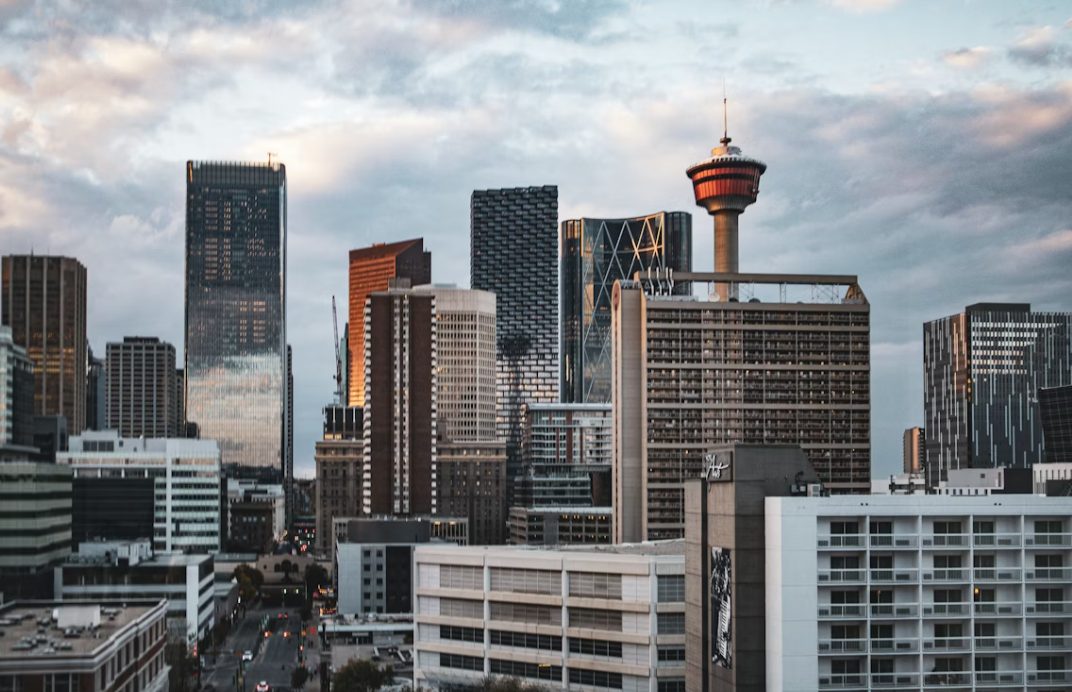
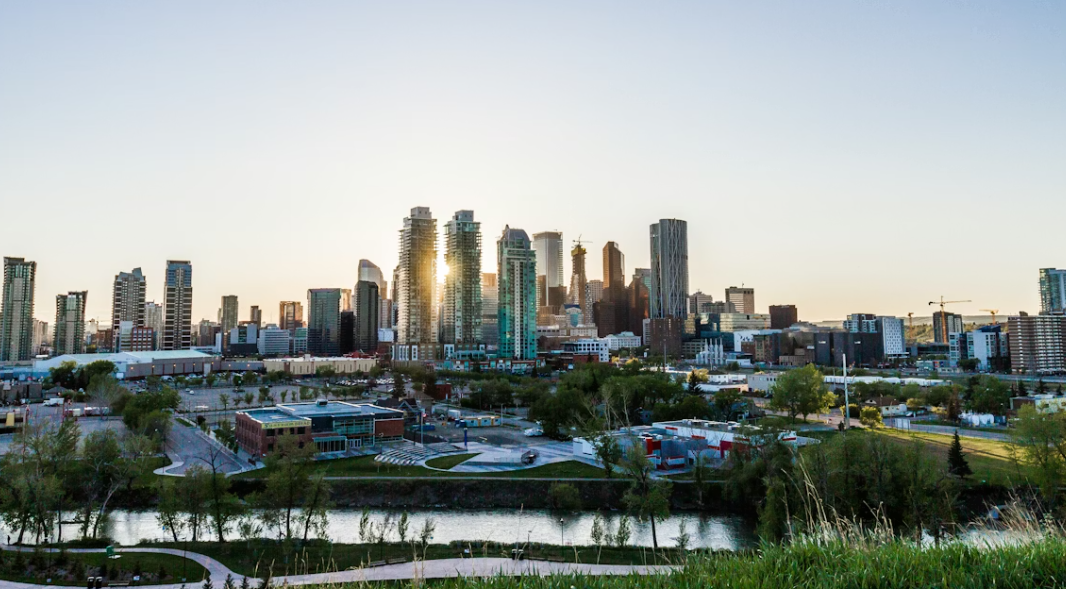
Calgary is Alberta's largest city, a metropolitan area of about 1.67 million people at the point where the prairie meets the foothills of the Rockies. It sits at an elevation of about 1,045 metres, which is higher than Denver — a fact that explains, among other things, why the air is drier and the sunsets are more dramatic than on the flat prairie.
Is Calgary just cowboys and oil?
That's the stereotype and it's not completely wrong. The Calgary Stampede every July is a huge civic event (more than 1.2 million attendees) and the energy sector is still the largest private employer. But Calgary has diversified significantly since 2015. Tech companies (Shopify's Canadian engineering hub, RBC Ventures, various fintechs) have moved in, film and television production is growing, and the city's population is younger and more international than many people expect. About 32 percent of Calgarians are foreign-born, roughly comparable to Montreal.
What neighbourhoods are worth exploring?
Downtown Calgary has a distinctive street life. The +15 Skywalk — a network of elevated indoor walkways — connects more than 100 buildings across 18 kilometres, which is useful in January when it's -25°C outside. Kensington, across the Bow River from downtown, is the walkable shopping-and-restaurant neighbourhood. Inglewood, east of downtown along 9 Avenue SE, is the oldest part of the city and has been slowly gentrifying for twenty years. Mission, along 4 Street SW, is the patio district.
Outside downtown, Bridgeland (Italian-Ukrainian-turned-hipster), Ramsay (artsy and industrial) and Bowness (west-end river neighbourhood) are worth exploring. Further out, Fish Creek Provincial Park in the south is one of the largest urban parks in North America.
Is Calgary expensive?
Less than Toronto or Vancouver; more than Edmonton. A one-bedroom apartment downtown runs CAD $1,600 to $2,000 in early 2026. The benchmark detached house is around CAD $700,000. No provincial sales tax means your grocery and retail bills are a couple of percent lower than in most other provinces.
What's the weather really like?
Unpredictable. Chinook winds can lift the temperature by 20°C in a few hours in the middle of winter; it's not unusual to have a January day above 10°C followed by a January day below -20°C. Summer is dry, sunny, and comfortably warm (daily highs around 23°C in July). Snow can fall any month of the year; in 2019 Calgary had snow on the first week of September and again in mid-May.
What are the Rockies from Calgary like?
Close. Banff is a 90-minute drive west on the Trans-Canada Highway. Kananaskis Country is 45 minutes. You can leave downtown at 6 a.m., be at Lake Louise by 9, hike for four hours, and be back in Calgary for dinner. Very few large cities in the world have mountains of that calibre that close.
Most Popular Museum: Glenbow Museum
The Glenbow reopened in 2024 after a major renovation that stripped it back to its granite bones and rebuilt the interior into something genuinely contemporary. The centrepiece is the Niitsitapiisinni gallery, developed in close collaboration with the Blackfoot Confederacy, which presents the history, art, and worldview of the Siksika, Kainai, Piikani, and Amskapi Piikani peoples in their own terms rather than the Victorian natural-history-museum frame that distorted so many such collections for a century. The western Canadian history galleries — ranching, the railway, the settlement, the oil boom — are the most readable account of how Alberta came to be that you'll find in any single building.
If the Glenbow is the serious museum, Studio Bell — the National Music Centre on 9th Avenue SE — is the exhilarating one. Five floors of instruments, recording technology, and Canadian music history in a building that looks like a brass instrument exploded elegantly. The Rolling Stones' Mobile Studio, fully restored and parked on the third floor, is the kind of thing you didn't know you needed to see until you're standing in front of it.
Your Best 5 Days in Calgary
Calgary is not just the airport you fly into for Banff. The city has a genuine street life, a river-valley trail network that beats anything in Toronto, and a food scene that has been quietly excellent since the oil boom gave it a cosmopolitan population with money to spend. Five days here is enough to understand why Calgarians bristle at being called a one-industry town.
Stephen Avenue & the Glenbow
Coffee at Phil & Sebastian in the Simmons Building by the Bow River, then walk Stephen Avenue west through the pedestrian mall. The Glenbow Museum opens at 10 — budget three hours for the Blackfoot galleries and the western history wing. Lunch at Native Tongues Taqueria on 10th Street SW. Afternoon on the Bow River pathway from Prince's Island Park to the Peace Bridge and back.
Dinner at Model Milk on 17 Avenue SW — the menu changes with the season and the room stays busy. End at the Calgary Tower observation deck if the sun is still up.
Studio Bell, Inglewood & the Zoo
Cross into Inglewood — Calgary's oldest neighbourhood — for breakfast at Rosso Coffee Roasters and a browse through the vintage shops on 9th Avenue SE. Studio Bell (the National Music Centre) opens at 10 a.m. and will eat two hours without resistance. The Rolling Stones mobile studio alone is worth the admission.
Afternoon at the Calgary Zoo, which runs one of the better Canadian Wilds sections in the country — wood bison, grey wolf, grizzly bear, all native species. Dinner at Pigeonhole on 17 Avenue — small plates, excellent wine list, and genuinely hard to get into without a reservation made the week before.
Kananaskis Day Trip
Drive 45 minutes west on Highway 1 then south on Highway 40 into Kananaskis Country. The Highwood Pass Road (highest paved road in Canada at 2,206 m) is open from mid-June to early December. Stop at the Barrier Lake Information Centre, then hike the Prairie View Trail (6 km, 285 m gain) for a panorama that rivals anything in Banff at a fraction of the congestion. Picnic at Elbow Falls on the way back.
Return to Calgary by 5 p.m. Dinner at Anju on Red Mile (10th Avenue SW) — the Korean-Canadian menu is consistently the most interesting cooking in the city.
Heritage Park & Misson District
Heritage Park Historical Village on the Glenmore Reservoir is North America's second-largest living history museum — 180 acres of reconstructed prairie townsite from the 1860s to the 1930s, with a working steam train, antique midway, and a paddlewheeler on the reservoir. Allow three hours minimum. The Gasoline Alley Museum within Heritage Park is a serious automobile and energy history collection.
Afternoon: Mission District on 4th Street SW for a walk, patio coffee, and browsing. Dinner at Charcut Roast House on Centre Street for whole-animal charcuterie and wood-fired cooking that has earned every award it's received.
Foothills Drive & Departure
Brunch at OEB Breakfast Co. — the smoked salmon eggs benedict is the correct order — then drive south on Highway 22 (the Cowboy Trail) through Bragg Creek and Turner Valley. Stop at Black Diamond for coffee and the Big Rock Erratic, a 15,000-tonne boulder deposited by a glacier 10,000 years ago and the largest glacial erratic in the world. Back to YYC by 3 p.m., which leaves comfortable time for security and the US pre-clearance if you need it.
Edmonton
Edmonton is the provincial capital, a metropolitan area of about 1.5 million in the geographic centre of Alberta. It sits on the North Saskatchewan River, much of it along a spectacular river valley that is one of the largest urban parks in North America (larger, by area, than Central Park, Stanley Park and Vondelpark combined).
How is Edmonton different from Calgary?
Edmontonians will tell you their city has a culture Calgary doesn't. Edmonton has the provincial government, the University of Alberta, the legislature, the Fringe Festival (the largest and longest-running fringe theatre festival in North America), and more publicly subsidized arts institutions than Calgary. It's also colder in winter (further north, no Chinook effect), flatter, and has a smaller skyline. Calgary is the corporate headquarters city; Edmonton is the government-and-arts city.
Is West Edmonton Mall actually worth visiting?
It was the largest shopping mall in the world from 1981 to 2004 and it's still North America's largest. It has a water park, an indoor ice rink, an amusement park, a replica of Santa Maria in a lake, and somewhere around 800 stores. It's a genuinely strange place. If you have a half-day and you like kitsch-on-an-epic-scale, go. If you hate malls, skip.
What else should I do in Edmonton?
Walk the river valley. Go to the Muttart Conservatory (four glass pyramids full of different climate biomes, very photogenic). Take a tour of the Alberta Legislature. Eat on 124 Street or in Old Strathcona, the neighbourhood around Whyte Avenue across the river. If you're there in August, the Fringe Festival is the city at its best.
Most Popular Museum: Royal Alberta Museum
The Royal Alberta Museum opened its new downtown building in 2018 after more than a decade in design and construction, and the result is the largest museum in western Canada — a 388,000-square-foot repository of Alberta's natural and human history that finally does justice to a collection that was cramped and awkward in its previous Glenora home. The Wild Alberta galleries on the main floor are a comprehensive walk through the province's biodiversity: everything from Precambrian fossils through the Pleistocene megafauna — including an articulated mammoth skeleton — to the prairie, boreal, and alpine ecosystems of the present day.
The centrepiece for cultural history is the Manitou Stone (Iron Creek Meteorite) gallery, built around a sacred Cree and Blackfoot iron meteorite that was removed to Ontario in 1866 and returned to Alberta in 2021 after a 155-year repatriation effort. The return of the meteorite was a significant moment in Indigenous-Crown relations in the province, and the gallery that now houses it was designed in consultation with Iron Confederacy First Nations. Set aside a full day.
Your Best 5 Days in Edmonton
Edmonton is the festival city, the river-valley city, and the one Alberta actually lives in rather than performs for tourists. It's colder, flatter, and less conventionally beautiful than Calgary — but it has more live culture per capita, a more interesting food neighbourhood in Old Strathcona, and a river valley park system that runs 160 km through the centre of the metropolitan area.
Old Strathcona & the River Valley
Start at Old Strathcona's Saturday farmers' market (year-round, 109th St), Edmonton's finest single morning. Walk Whyte Avenue for bookstores (Wee Book Inn, the Almanac), brunch at Highlevel Diner, and a Transcend coffee. Cross the High Level Bridge on foot and descend into the river valley trails on the north bank. Walk west under the Groat Bridge and back up through Louise McKinney Riverfront Park.
Evening at the Varscona Theatre or the Citadel — Edmonton's professional theatre scene is the strongest west of Toronto. Dinner beforehand at Rostizado (Mexican rotisserie) in the Oliver neighbourhood.
Royal Alberta Museum & Legislature
The Royal Alberta Museum opens at 9 a.m.; arrive early and give it the full morning — the Wild Alberta galleries, the Manitou Stone exhibit, and the Human History Hall. Lunch at the museum café or walk the two blocks to Jasper Avenue.
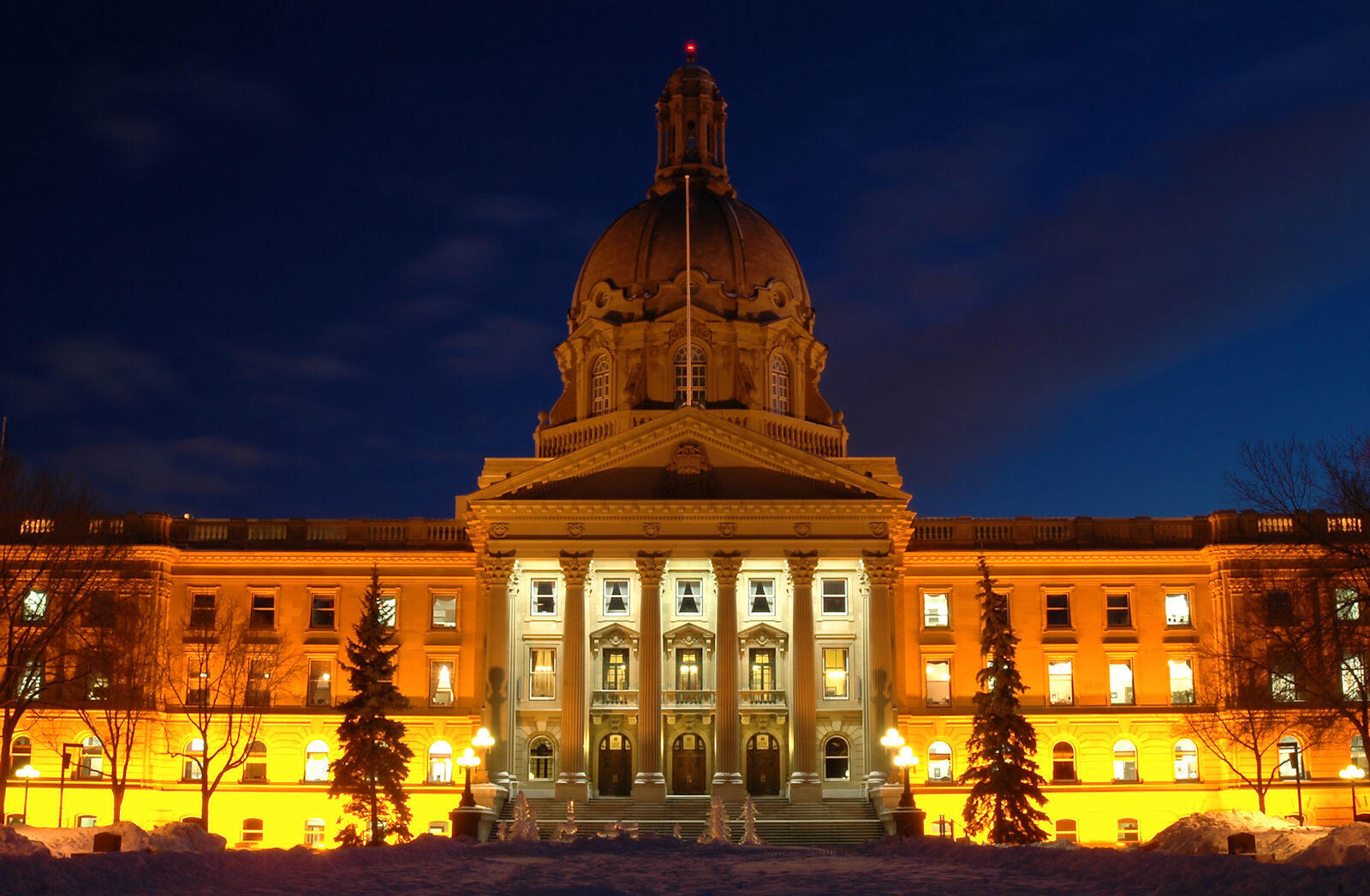
Free tours of the Legislative Assembly run every half-hour on weekdays from the Visitor Centre. The Beaux-Arts-style dome and the Alberta Legislature Grounds (fountains, synchronized water shows in summer) are more interesting than expected. Evening at 124 Street — the gallery walk (Bearclaw Gallery for Indigenous art), dinner at Bar Bricco (Italian small plates and wine), and craft beer at Situation Brewing.
West Edmonton Mall & Muttart Conservatory
West Edmonton Mall in the morning — not for the shopping, but for the spectacle. The indoor water park, the ice rink, the replica of Santa Maria in a lake, and the World Waterpark are a genuine cultural artifact of 1980s Edmonton bravado. Eat at the Sherlock Holmes Pub inside the mall (the irony is part of the experience).
Afternoon at the Muttart Conservatory: four glass pyramid biomes on the south bank of the river, housing temperate, tropical, arid, and a rotating show house. The pyramids are photogenic against the downtown skyline at dusk. Dinner in the Italian Centre Shop neighbourhood: Cibo Bistro or the Italian Centre deli itself for the world's best sandwich.
Elk Island & Ukranian Heritage Village
Elk Island National Park is 45 minutes east — the closest national park to Edmonton and one of the few places in Canada where plains and wood bison coexist in the same fenced reserve. Drive the bison loop at dawn (bison are genuinely close to the road) and walk the Beaver Pond or Hayburger trail. Stay for the noon hour and picnic at Astotin Lake.
Stop at the Ukrainian Cultural Heritage Village on Highway 16 on the return — a 30-building open-air museum of early Alberta Ukrainian immigrant life, with costumed interpreters. Back in Edmonton for dinner at Sabor — Brazilian rotisserie that has been the city's most reliable special-occasion restaurant for fifteen years.
Art Gallery of Alberta & Departure
The Art Gallery of Alberta (AGA) — the ribboned silver building on Sir Winston Churchill Square — is best on a weekday morning when the crowds thin. The permanent collection of Canadian art is strong on Group of Seven, Prairie modernism, and contemporary Indigenous work. The Churchill Square neighbourhood has a farmers' market on summer Wednesdays and Thursdays.
Lunch at the Northern Chicken sandwich bar, Edmonton's most defended casual meal. YEG airport is 25 minutes south on the Henday; allow 90 minutes for check-in and security, two hours for international.
Banff & Lake Louise
Banff is a town of about 8,300 people inside Banff National Park, Canada's oldest national park (1885). Lake Louise is a hamlet of about 1,000 people 55 kilometres further north. Between them they host about 4 million visitors a year.
When's the best time to visit Banff?
Depends what you want. Late June through mid-September is the peak: hiking trails clear of snow, wildflowers out, long daylight hours. Expect crowds, especially at Lake Louise and Moraine Lake. October can be beautiful (larches turn gold in the last two weeks of September into the first of October) but snow can arrive any time. Winter (late November to early April) is quieter in town, busy at the ski resorts (Sunshine Village, Lake Louise Ski Resort, Mount Norquay). May and November are proper shoulder seasons — cheap hotels, limited activities, not much colour.
Is Moraine Lake really closed to cars?
Yes, since 2023. You can only reach it by Parks Canada shuttle bus, by Roam transit bus, by commercial bus tour, on foot (14 km), or by bike. Book the shuttle in advance — in peak season it sells out weeks ahead. Lake Louise still has a parking lot but it fills by 7 a.m. in summer; use the Park & Ride at the Lake Louise Ski Resort.
How much does Banff cost?
A lot. A decent hotel room in Banff town in July runs CAD $400-$800 a night. The Fairmont Banff Springs, the famous castle-like hotel, is upwards of CAD $700 even in shoulder season. Camping is dramatically cheaper (CAD $30-$50 per site) but reservations open five months ahead and sell out in minutes for the best sites. A national park pass is CAD $11 per adult per day or $75 per year for a family.
Is Banff worth it given the crowds?
Yes, if you're willing to walk. The parking lots and the town and the lakeshore viewpoints are crowded. The moment you get two kilometres up a trail, you're essentially alone. A hike to Lake Agnes Tea House from Lake Louise, or to Helen Lake off the Icefields Parkway, will show you what the park actually is.
Most Popular Museum: Whyte Museum of the Canadian Rockies
The Whyte Museum on Bear Street in Banff town is the definitive archive of the Canadian Rockies — not just a museum but a library, an art gallery, and a repository of the mountaineering, Indigenous, and settler history of this particular stretch of the Continental Divide. Founded by artists Catharine and Peter Whyte in 1968, it houses the largest collection of Rocky Mountain art in the world, alongside alpine heritage exhibits, historic photographs from the outfitters and guides who built the mountain tourism economy, and rotating contemporary shows that bring Indigenous voices back into the story of a park that was created partly by displacing them. The Historic Homes of the Whyte Museum grounds — walking access to four historic buildings — extend the visit outdoors.
Older and more quirky is the Banff Park Museum National Historic Site on Banff Avenue — a 1903 log building that is the oldest natural history museum in western Canada, preserved in its original Victorian museum style with taxidermied animals, mineral specimens, and biological displays that look exactly as they did a century ago. It is either charmingly anachronistic or slightly unsettling, depending on your relationship with taxidermy.
Your Best 5 Days in Banff & Lake Louise
Five days in Banff and Lake Louise gives you the famous lakes, the best ridge walks, the Icefields Parkway north to the Columbia Icefield, the hot springs, and enough time to absorb what it actually means to be inside Canada's oldest national park rather than just photographing it. Book accommodation and the Moraine Lake shuttle months in advance.
Banff Town & Sulphur Mountain
Arrive via Banff Airporter from Calgary airport (no rental car needed for the first two days). Walk Banff Avenue, visit the Whyte Museum, and hike the Bow River Loop trail (4.8 km, flat). Afternoon: ride the Banff Gondola up Sulphur Mountain and walk the ridge boardwalk to the Sanson Peak weather observatory. Dinner at the Bison Restaurant on Bear Street.
Johnston Canyon & Hot Springs
Drive the Bow Valley Parkway (quieter and more scenic than the Trans-Canada) to Johnston Canyon. The Lower Falls (2.7 km return) are spectacular even in a dry year; the Upper Falls (5.4 km return) are worth the extra hour. Return to Banff for a late lunch and an afternoon soak at the Banff Upper Hot Springs — the oldest hot springs pool in Canada, fed by natural sulfurous springs at 36–40°C.
Moraine Lake & Lake Louise
Set a 5:30 a.m. alarm. Book the Parks Canada shuttle to Moraine Lake; the first shuttle of the day gets you there before the light goes flat and before the crowds arrive. Hike the Rockpile trail (300 m, the 20-dollar-bill view) and, if time allows, start the Larch Valley trail (mid-September is the gold window). Return shuttle to Lake Louise; hike to the Lake Agnes Tea House (3.4 km up, moderate). Lunch on the tea house deck.
Icefields Parkway North
Rent a car or join a guided bus. Drive Highway 93 north: Bow Lake (Num-Ti-Jah Lodge coffee), Peyto Lake (five-minute walk to a glacially blue viewpoint), Saskatchewan River Crossing, and the Athabasca Glacier. Walk to the toe of the ice on your own or take the Ice Explorer onto the surface — the Columbia Icefield is the largest icefield in the Rockies, and the glacier experience is genuinely sobering in the context of what has melted in the past fifty years.
Tunnel Mountain & Departure
Hike Tunnel Mountain (4.6 km, 260 m gain) before breakfast — the view of Banff town and the Bow Valley from the summit is the best in the area that requires no shuttle or reservation. Breakfast at Wild Flour Artisan Bakery, shopping on Bear Street, and the afternoon bus back to Calgary airport. Allow 2.5 hours for the drive and airport security on a busy summer day.
Jasper
Jasper is Banff's quieter, larger, northern sibling. Jasper National Park is actually bigger than Banff (10,878 km² versus 6,641), the town is smaller (about 4,700 people), and the wildlife is easier to find. Elk and bighorn sheep wander the edge of the town; wolves and grizzly bears are genuinely present in the backcountry.
Is Jasper still recoverable after the 2024 wildfire?
The 2024 Jasper wildfire burned through the townsite in late July, destroying roughly a third of the buildings. Rebuilding has been ongoing since late 2024 and the town is partially operational but not fully; check the current status before booking. The surrounding park, Maligne Canyon, the Columbia Icefield and the Icefields Parkway are largely unaffected and worth the trip.
How do I get to Jasper?
Drive. Jasper is about 4 hours from Edmonton and 4 hours from Banff via the Icefields Parkway. VIA Rail's Canadian transcontinental train passes through Jasper three times a week and is the most scenic way to arrive if you have the time. There is no major airport in Jasper itself.
Most Popular Museum: Jasper-Yellowhead Museum & Archives
The Jasper-Yellowhead Museum and Archives on Pyramid Lake Road, operated by the Jasper-Yellowhead Historical Society, holds the definitive collection of Jasper National Park and the Yellowhead corridor's human history — the Shuswap and Cree peoples who used these mountain passes for millennia, the fur traders and missionaries who followed them, the engineers who drove the Grand Trunk Pacific Railway through in 1911, and the outfitters and trail riders who built the park's early tourism economy. After the devastating 2024 wildfire, which destroyed roughly a third of the townsite, the museum has taken on an added significance as a repository of what existed before.
The museum's archival photograph collection — thousands of images of early 20th-century Jasper life — is particularly strong, and the outfitter heritage exhibits that document figures like Fred Brewster and the Hargreaves family give texture to a mountain economy that is usually flattened into generic "wilderness tourism" descriptions.
Your Best 5 Days in Jasper
Jasper is a quieter, wilder, larger park than Banff — fewer facilities, longer trails, more accessible wildlife, and a townsite that functions like an actual mountain community rather than a high-altitude resort mall. The 2024 wildfire changed parts of the townsite, but the park itself is intact and the wildlife corridors are undisturbed. Check accommodation availability carefully before booking.
Jasper Townsite & Maligne Canyon
Arrive via VIA Rail from Edmonton (the most scenic way; the Canadian passes through Jasper three times weekly) or drive the Icefields Parkway from Banff. Walk the townsite, visit the Jasper-Yellowhead Museum, and hike Maligne Canyon before the afternoon tour buses arrive — the limestone slot canyon is deepest at the sixth bridge.
Maligne Lake & Spirit Island
Drive 48 km to Maligne Lake, the longest natural lake in the Canadian Rockies. Take the 90-minute boat cruise to Spirit Island — the lone spruce in a glacial bay backed by named peaks is one of the most photographed views in Canada. Hike the Bald Hills trail (10.4 km, 480 m gain) for a ridge walk above the treeline with the full length of the lake visible.
Athabasca Falls & Edith Cavell
Athabasca Falls is the most powerful waterfall in the Rockies — the turquoise river drops 23 m through a narrow quartzite canyon. Morning here, then drive the Cavell Road to Mount Edith Cavell. The Angel Glacier hanging off the north face of the mountain has retreated dramatically; the Cavell Meadows trail (8 km loop) gives perspective on both the glacier's recession and the wildflower meadows it has exposed.
Pyramid Lake & Wildlife Drive
Morning canoe or kayak on Pyramid Lake (outfitters at the lakeshore). Afternoon: drive the 16-km Pyramid Lake Road loop at dusk — this is the park's most reliable elk and mule deer corridor, and in September the bull elk are bugling. Dinner at the Jasper Brewing Company or, if the weather holds, at the food trucks in Centennial Park.
Miette Hot Springs & Departure
Miette Hot Springs — at 54°C before cooling to the pools' 40°C — is the hottest natural hot spring in the Canadian Rockies, 61 km east of Jasper townsite. The drive through the Fiddle Valley passes bighorn sheep on the rock faces above the road. Soak for two hours, then drive the Yellowhead west toward Edmonton or south on the Icefields Parkway back toward Calgary for your flight.

Lethbridge & Southern Alberta
Lethbridge, population about 105,000, is the largest city in southern Alberta, 215 km south of Calgary. It's a coulee city (the Oldman River has carved deep ravines through it), a university town, and the traditional service centre for the surrounding ranching country. Just east is the dinosaur country of the Red Deer River badlands and the town of Drumheller, home to the Royal Tyrrell Museum — one of the best paleontology museums in the world. The Canadian Rockies get most of the attention, but the badlands are arguably Alberta's strangest landscape, and the Tyrrell is worth a detour on any trip between Calgary and Saskatoon.
Further south, Waterton Lakes National Park sits on the Montana border and is the quieter, shorter, prettier cousin of Banff. Fewer visitors, smaller lakes, more wildflowers. An overlooked corner of the province that's worth two or three days if you have them.
Most Popular Museum: Royal Tyrrell Museum of Palaeontology
The Royal Tyrrell Museum in Drumheller, 110 km northeast of Calgary, is one of the great natural history museums in the world — not in the polite, we-say-this-about-every-Canadian-cultural-institution way, but genuinely. It holds the world's largest display of dinosaur skeletons, with more than 40 articulated specimens in a single gallery that is jaw-dropping regardless of age. The badlands of the Red Deer River valley around Drumheller produced so many significant dinosaur finds — Albertosaurus, Edmontosaurus, Pachyrhinosaurus — that the museum sits inside the geology that generated its collection.
The museum earns its own day trip from Calgary. Walk the Hoodoo Trail and Horseshoe Canyon viewpoint nearby; they explain what 75 million years of erosion does to soft Cretaceous sediments. The Galt Museum & Archives in Lethbridge itself is worth visiting for the Blackfoot and settler history of the southern Alberta region, with a bluff-edge setting overlooking the Oldman River coulee.
Your Best 5 Days in Southern Alberta
Southern Alberta is the Alberta that gets left off the postcard. No Rockies, no CN Tower equivalent — just the big sky, the coulees, the badlands, the blood quantum of cattle culture, and Blackfoot territory. It rewards slow travel by car and punishes anyone expecting a highlight reel.
Drumheller & Royal Tyrrell Museum
Drive 90 minutes northeast of Calgary through the transition from grain fields to badlands. The Royal Tyrrell Museum opens at 10 a.m.; arrive as the doors open and you'll have the dinosaur hall to yourself for 45 minutes. Afternoon: walk the Hoodoo Trail and Horseshoe Canyon. Dinner in Drumheller (the Nacmine Café or the Log Cabin BBQ); stay overnight in the valley.
Lethbridge & the Oldman River
Drive south to Lethbridge. The Galt Museum sits on the High Level Bridge side of the coulee — spend a morning on Blackfoot and coal-mining history, then walk the coulee trail system below. Afternoon at the Helen Schuler Nature Centre. Dinner at the Pantry restaurant.
Waterton Lakes National Park
Drive an hour and a half south into Waterton Lakes National Park — smaller and quieter than Banff, with the same Rockies backdrop and none of the parking-lot scramble. Hike the Bear's Hump trail (2.8 km, intense) for the view over Upper Waterton Lake into Montana. Take the International Peace Park boat cruise to Goat Haunt, USA, and back (passport required).
Writing-on-Stone Provincial Park
Writing-on-Stone (Áísínai'pi) is a UNESCO World Heritage Site — one of the most concentrated collections of Indigenous rock art on the plains, set in a landscape of sandstone hoodoos along the Milk River. The guided walks to the petroglyph sites run in summer; book ahead. The campsite at the park is one of the quietest in Alberta. It is sixty-odd kilometres south of Lethbridge and absolutely worth the detour.
Head-Smashed-In Buffalo Jump & Return
Head-Smashed-In Buffalo Jump near Fort Macleod is a UNESCO World Heritage Site and the best-interpreted Plains First Nations site in Canada — six floors of exhibits built into the cliff face, covering 6,000 years of communal bison hunting by driving herds over the escarpment. Two hours here, then drive the Cowboy Trail north to Calgary for your flight.
Fort McMurray & the Oil Sands
Fort McMurray sits in northern Alberta on the Athabasca River, population about 68,000 at the 2021 census (down from a 2013 peak of 76,000 after the 2016 wildfire and the oil-price crash). It's the centre of the oil sands industry — bitumen mining and in-situ extraction that produces most of the crude oil Canada exports to the United States. For almost all visitors, Fort McMurray is not a destination; it's the place the oil comes from, and a subject of ongoing environmental and political debate.
Most Popular Museum: Oil Sands Discovery Centre
The Oil Sands Discovery Centre on MacKenzie Boulevard in Fort McMurray is the most honest and comprehensive introduction to the industrial process that has shaped this corner of the planet more than any other human activity in the past century. The museum explains the geology of bitumen — why it's here in such concentration, how it was formed from organic material deposited over 110 million years — the engineering of both open-pit mining (the enormous shovels and hauler trucks visible in scale models) and in-situ steam-assisted gravity drainage, and the environmental context of extraction that neither romanticizes the industry nor demonizes it.
The centre includes outdoor exhibits of mining equipment, including a full-scale Caterpillar 797 mining truck wheel (taller than a house) that visitors can stand beside and suddenly understand the scale at which this operation runs. The Heritage Village section of the centre covers Fort McMurray's history from Cree territory through the fur trade, the early oil sands research of Karl Clark in the 1920s, and the boom cycles of the late 20th and 21st centuries. It's the kind of museum that non-industry visitors leave with a more complicated relationship with their car than when they arrived.
Your Best 5 Days in Fort McMurray & Region
Fort McMurray is not a tourism destination in the conventional sense — but it is one of the most consequential landscapes in Canada, and spending time here changes how you think about energy, environment, and economic trade-offs in ways that reading about it doesn't. The Athabasca River valley, the boreal forest, and the Wood Buffalo National Park to the north are genuinely wild country surrounding one of the world's great industrial complexes.
Oil Sands Discovery Centre & Clearwater River
Start with a full morning at the Oil Sands Discovery Centre. Afternoon: walk the Clearwater River Heritage Trail along the river valley — a 3-km paved trail through the boreal edge, with interpretive signs on the history of the Cree and Dene peoples who used this river junction. Dinner at Moxie's or Sawmill Prime Rib in Timberlea.
Fort McMurray Heritage Village & Borealis Park
The Heritage Village behind the Oil Sands Discovery Centre preserves fourteen historical structures from early Fort McMurray — an old trading post, a one-room schoolhouse, an early oil-sands research cabin. In the afternoon, drive to Borealis Park for northern river views; in summer evenings there are fireworks from the park and free outdoor concerts.
Wood Buffalo National Park
Drive three hours north to Wood Buffalo National Park (the world's second-largest national park). The Salt Plains near Fort Smith are unique in Canada — low-lying alkaline flats where bison congregate and migratory birds stop in enormous numbers. The Peace-Athabasca Delta is one of the great freshwater delta systems in the world. Camp at Pine Lake or drive in and out same-day.
Athabasca River & Boreal Forest
Paddle the Athabasca River in the section above Fort McMurray — outfitters in town offer guided half-day trips that keep you on the river above the industrial zone and in genuine boreal wilderness. Watch for moose along the banks; this stretch of river is one of the most reliable moose-viewing corridors in northern Alberta. Evening aurora viewing in winter (October to April) or midnight sun in June.
Gregoire Lake & Departure
Gregoire Lake Provincial Park, 20 km southeast of town, has a sandy beach, a campground, and fishing for northern pike and walleye — an almost surreally peaceful contrast to the industrial scale of the surrounding landscape. Morning swim or walk, then drive back to the Fort McMurray airport for afternoon flights south to Calgary or Edmonton.

Alberta FAQs
Does Alberta really have no sales tax?
No provincial sales tax, correct. You still pay the 5 percent federal GST on most things. It's the only province in Canada without a PST or HST. A shopping day in Calgary costs meaningfully less than the same day in Toronto — 8 percent less, if the goods were taxable.
What's a Chinook?
A warm, dry wind that comes over the Rockies from the Pacific in winter. It can raise temperatures in Calgary by 15 to 25°C in a few hours. A classic Chinook morning: -20°C at dawn, +8°C by lunch. The price is headaches — Chinooks are widely blamed for migraines — and rapid snowmelt.
Do I need a car to see Alberta?
If you want to see the Rockies, yes. There are shuttle services from Calgary and Edmonton airports to Banff and Jasper (Brewster, SunDog, Banff Airporter) but they're expensive and inflexible. Renting a car in Calgary gives you access to the best of Banff, Kananaskis, the Icefields Parkway and Jasper over a five-to-seven-day trip. Outside the mountains, the cities themselves have decent transit.
What time zone is Alberta in?
Mountain Time (UTC-7 in winter, UTC-6 in summer with daylight saving). Same as Saskatchewan in winter, but different in summer because Saskatchewan doesn't observe DST. Two hours behind Toronto in winter and summer.
Is the Calgary Stampede worth it?
If you're the kind of person who enjoys big civic festivals, yes. It's ten days of rodeo, chuckwagon racing, midway rides, concerts, and a collective agreement to wear Western wear. If you hate crowds and country music, no. Book accommodation six months ahead if you want to go — Stampede week is the busiest hotel week of the year in Calgary.
Can I see the Northern Lights in Alberta?
Sometimes. Northern Alberta (Fort McMurray, Peace River, High Level) sees auroras dozens of nights a year. Edmonton and Calgary catch them a handful of times a winter during strong geomagnetic storms. For reliable viewing, go to Yellowknife in the Northwest Territories instead.
Education & Post-Secondary Institutions
Alberta is home to a strong network of universities, colleges, and polytechnic institutes, anchored by world-class research universities in Edmonton and Calgary and a robust system of technical and community colleges across the province.
University of Alberta
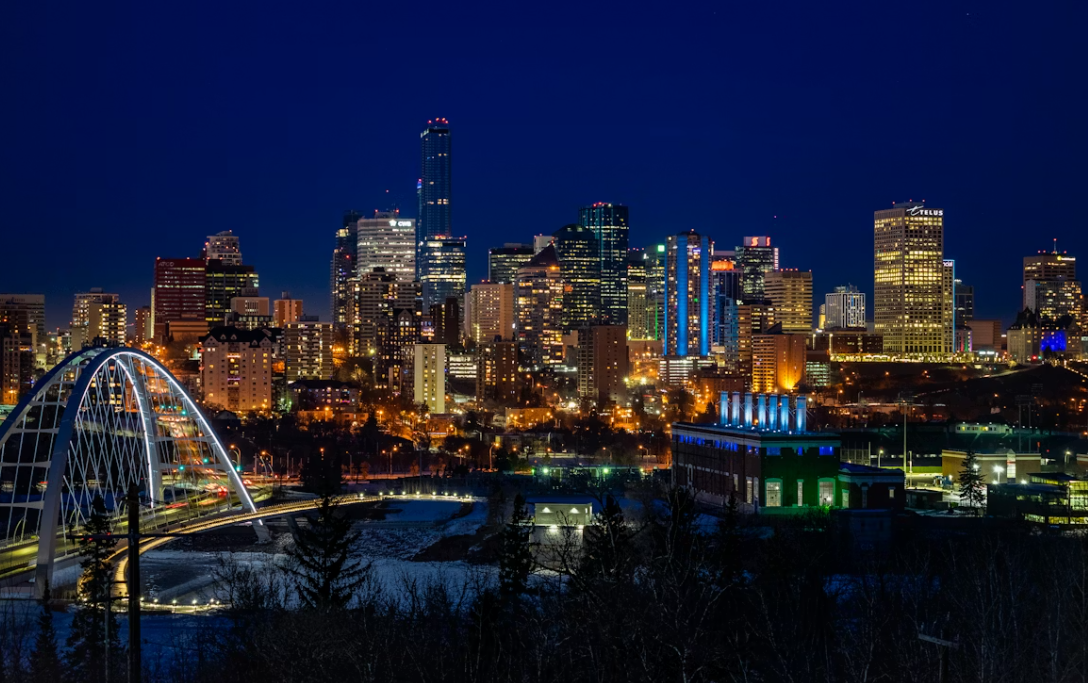
One of Canada's top five research universities, renowned for its Faculty of Medicine & Dentistry, engineering programs, artificial intelligence research (part of the Alberta Machine Intelligence Institute), and one of the largest law schools in Canada. The U of A consistently ranks in the top 100 universities worldwide.
University of Calgary
A leading research university with particular strengths in energy and environmental science, veterinary medicine, law, and the Schulich School of Engineering. The Haskayne School of Business is one of Canada's most respected. UCalgary is a hub for the city's growing tech and startup ecosystem.
Athabasca University
Canada's foremost distance and online university, offering fully remote undergraduate and graduate programs to students across Canada and internationally. A pioneer in flexible, open learning — ideal for working adults and those in remote communities.
NAIT – Northern Alberta Institute of Technology
Alberta's leading polytechnic for trades, technology, and applied sciences. Programs in electrical engineering technology, petroleum engineering, culinary arts, and IT are among the most respected in western Canada. NAIT graduates are highly sought by Alberta's energy and construction sectors.
SAIT – Southern Alberta Institute of Technology
One of Canada's oldest and most respected polytechnics, with top-ranked programs in hospitality and tourism, architecture technologies, energy, business, and health sciences. SAIT's culinary and hospitality school is among the best in the country.
MacEwan University
A primarily undergraduate university known for strong programs in nursing, social work, music, arts, and business. MacEwan emphasizes small class sizes and close faculty-student relationships. Its arts and music conservatory programs are particularly well-regarded.
Mount Royal University
Calgary's undergraduate-focused university with a reputation for business, communications, education, and health studies programs. Known for small class sizes, strong co-op programs, and one of the best journalism programs in western Canada.
Sports Teams & Athletic Culture
The Battle of Alberta — the NHL rivalry between the Calgary Flames and the Edmonton Oilers — is one of the most heated in professional hockey. Both cities also field strong CFL teams and the province produces elite hockey talent at a remarkable rate.
 FLAMES
Calgary Flames
The Flames have called the Scotiabank Saddledome home since 1983. They won the Stanley Cup in 1989 and remain a perennial contender. The C of Red atmosphere on playoff nights is among the loudest in the league.
 OILERS
Edmonton Oilers
Five Stanley Cups between 1984 and 1990 — largely on Wayne Gretzky and Mark Messier. Rogers Place opened in 2016 and gave one of hockey's most storied franchises a world-class downtown arena.
 STAMPS
Calgary Stampeders
One of the CFL's most successful franchises with multiple Grey Cup championships. Calgary fans drape the city in red and white on home game weekends and the Stampede grounds buzz with pre-game tailgates every August.
 ELKS
ELKS
Edmonton Elks
Formerly the Eskimos (renamed 2021), the Elks play at Commonwealth Stadium — one of the CFL's largest outdoor venues. Edmonton has won the Grey Cup 14 times, more than any other franchise.
HITMEN
Calgary Hitmen
Junior hockey at the Saddledome — popular with families looking for high-skill, affordable hockey. The Hitmen have won two Memorial Cups and consistently develop players bound for the NHL.
OIL KGS
Edmonton Oil Kings
The Oil Kings play at Rogers Place, giving Edmonton fans year-round top-level hockey. Their 2022 Memorial Cup championship brought the city its first junior title in decades.
CVALRY
Cavalry FC
Calgary's Canadian Premier League side plays at ATCO Field in Spruce Meadows. Cavalry have won multiple CPL championships and represent Alberta's growing soccer culture.
Culture, Arts & Identity
Alberta's identity is layered — cowboy heritage runs deep, Indigenous cultures are foundational, and an influx of newcomers from across Canada and around the world has made both Calgary and Edmonton surprisingly cosmopolitan. The province has a reputation for conservatism but its cities are genuinely diverse and its arts scenes are often underestimated.
The Calgary Stampede
Every July, Calgary becomes the self-described "greatest outdoor show on Earth." The ten-day Stampede draws over a million visitors, combining rodeo, chuckwagon racing, grandstand shows and midway into something that feels genuinely unlike anywhere else. Even Calgarians who profess mild cynicism about the event tend to get swept up in it — the pancake breakfasts alone are a city-wide ritual.
Indigenous Heritage
The Blackfoot Confederacy, the Tsuut'ina Nation and the Stoney Nakoda peoples have deep roots across southern Alberta. The Blackfoot Crossing Historical Park east of Calgary is one of the most thoughtfully designed Indigenous heritage sites in western Canada. Treaty 6 and Treaty 7 territory covers most of the province, and Reconciliation is an active conversation in both cities.
Ukrainian-Canadian Heritage
Roughly 300,000 Albertans are of Ukrainian descent, giving the province the largest Ukrainian-Canadian population in the country relative to its size. Edmonton's north side has a visible Ukrainian cultural presence — perogie restaurants, Orthodox churches with distinctive onion domes, and events around Ukrainian Christmas in January. The Ukrainian Cultural Heritage Village east of Edmonton is a well-preserved open-air museum of early immigrant life.
Arts in Edmonton
Edmonton hosts one of Canada's largest arts festivals: the Edmonton International Fringe Theatre Festival, the second-largest fringe festival in the world by number of shows. The Chinook winds — warm föhn-type gusts that can push temperatures above zero in January — give the city an unusual energy. The High Level Diner on 114th Street has been a gathering place for artists and writers for decades.
Oil and the Province's Character
The oil industry shapes Alberta more than any other single force. Fort McMurray in the north is the centre of the oil sands operation, one of the world's largest energy projects. The boom-bust cycle is felt personally here in a way that doesn't map onto Toronto or Vancouver experience: a downtown Calgary parking lot that was an active office tower construction site in 2013 might have sat empty for years afterward. That volatility breeds both resilience and a certain fatalism.
Alberta's Hall of Icons
Alberta's combination of mountains, ranchland and resource wealth has produced a curiously specific kind of fame: country singers and hockey players, novelists who set their books on lonely highways, comedians whose timing was sharpened on cold prairie stages. The province punches well above its weight in the cultural conversation, and the names below are only the beginning of the list.
W.O. Mitchell
WPView on Wikipedia →Mitchell wrote the foothills the way Faulkner wrote Mississippi. Who Has Seen the Wind, set in a fictional prairie town that is unmistakably southern Alberta, remains one of the most-assigned Canadian novels in the country's classrooms — and he could read it aloud, in his rasping public-radio voice, better than any actor.
Joni Mitchell
WPView on Wikipedia →Joni's earliest gigs were in a Calgary coffeehouse called the Depression on 4th Street SW, where she was billed as Joan Anderson. Albertans claim her gently — Saskatchewan claims her too — and the songwriting voice that shaped a generation was already audible by the time she left the foothills for Toronto.
Hayley Wickenheiser
WPView on Wikipedia →Four Olympic gold medals, the first woman to score a goal in a men's professional league, and now a doctor and assistant general manager with the Toronto Maple Leafs. The Wickenheiser Female World Hockey Festival, held in Calgary every November, is the largest girls' hockey tournament in the world.
k.d. lang
WPView on Wikipedia →Raised in a town of 700 on the eastern Alberta prairie, lang built her career out of the same yodelling country tradition that produced Patsy Cline, then quietly reinvented torch singing. Her 1988 cover of "Hallelujah" remains the version Leonard Cohen himself once said he wished he had recorded.
Jarome Iginla
WPView on Wikipedia →The longest-serving captain in Calgary Flames history, an Olympic gold medallist, and one of the few Black superstars in a sport that has been slow to celebrate them. Iginla retired in 2018 with 625 NHL goals and a permanent place in the rafters of the Saddledome.
Michael J. Fox
IMDbView on IMDb →Born in Edmonton, raised partly on Canadian Forces bases across the country, Fox has been the face of resilient Hollywood charm since Family Ties. His Parkinson's foundation has raised more than two billion dollars for research — work he often credits, in interviews, to a stubborn western Canadian streak.
Rudy Wiebe
WPView on Wikipedia →A two-time Governor General's Award winner whose novels (The Temptations of Big Bear, A Discovery of Strangers) reframed prairie history from Indigenous and Mennonite perspectives. He taught at the University of Alberta for decades and shaped a generation of western Canadian writers.
Paul Brandt
WPView on Wikipedia →Calgary's most enduring country singer and one of the most decorated artists in Canadian Country Music Awards history. Beyond the music, his Not In My City foundation has reshaped how Alberta talks about human trafficking, particularly during Stampede week.
Tommy Chong
IMDbView on IMDb →Half of Cheech & Chong, the duo that defined an entire vein of countercultural comedy in the 1970s. Chong's Edmonton childhood — his Chinese-Canadian father drove a truck, his Scotch-Irish mother waitressed — gave him the outsider's eye that the act traded on for decades.
Richard E. Taylor
WPView on Wikipedia →Nobel laureate in Physics (1990) for his work at Stanford on the quark structure of matter. Taylor grew up in southeastern Alberta, the son of a hardware-store owner, and credited his early curiosity to long hours in the back room taking radios apart.
Regional Cuisine: What Alberta Actually Eats
Alberta's food culture is, fundamentally, a beef-and-grain culture — but the past two decades have produced a quietly serious restaurant scene in both big cities, and the prairie pantry has expanded to include Ukrainian, Filipino, Vietnamese and East African flavours that now feel as native as the rib steak. What follows is what's actually on the table.
Alberta Beef
The single ingredient that defines provincial pride. Cattle on the high, dry foothills produce a leaner, grass-finished flavour that ranchers will argue is genuinely different from any other beef on the continent. Caesar's Steakhouse in Calgary has been serving prime rib since 1972; Buchanan's, two blocks away, does a more refined version. At a barbecue, the cut to ask for is the rib eye, the pickle is dill, and the side is potato salad.
Pyrohy & Ukrainian Sausage
Three hundred thousand Albertans of Ukrainian descent built a parallel pantry. Hand-pinched pyrohy (potato-and-cheddar dumplings, often boiled then fried in butter and onions) appear in church-basement fundraisers, deli cases and the freezer aisle of every Edmonton supermarket. Pair with garlicky kovbasa and sour cream and you have a Friday-night dinner that has been Albertan for a hundred and twenty years.
Saskatoon Berry Pie
The saskatoon — a small dark berry, related to the apple, with a flavour somewhere between blueberry and almond — grows wild from the Crowsnest Pass to the Peace River country. A proper saskatoon pie is double-crusted, slightly under-sweetened and served warm with vanilla ice cream. Ask for it at Diane's Restaurant in Beaumont, or at any small-town fall supper.
Calgary's Vietnamese Sub
Calgary's bánh mì shops — Trung Nguyen, Bánh Mì Thi Thi downtown, the dozen counters in the International Avenue strip — produce a sandwich that has become as much a working lunch in Calgary as it is in Saigon. The local style runs heavier on pâté and lighter on chili than the Vancouver version, and rarely costs more than seven dollars.
Ginger Beef
A genuine Alberta invention: deep-fried strips of beef in a sweet, dark, ginger-laden sauce, created at the Silver Inn in Calgary in the 1970s. Order it from any Chinese-Canadian restaurant in the province and you'll get a recognizable variation; ask for it east of Saskatchewan and they'll have no idea what you mean.
Donair
Imported from Halifax in the 1970s and now a Calgary late-night staple. The Albertan version is sweeter than the Maritime original and considerably greasier than the Turkish. Tony's Pizza on 17 Avenue SW and the dozen Pizza 73 outlets across both cities will sell you one at 2 a.m. when nothing else is open.
Top 10 Restaurants in Alberta
Alberta's restaurant scene used to be defined entirely by steak. That's still part of the story — the province raises some of North America's best beef, and you can taste the proof at any of the rooms below — but the past fifteen years have produced a quietly serious group of chef-driven restaurants in both Calgary and Edmonton, plus a handful of mountain rooms in Banff and Lake Louise that hold their own against anything in the country. The list below is the ten I'd send a friend to if they had a week in the province and wanted to eat well.
River Café
On a small island in the Bow River, accessible only by footbridge, the River Café has spent thirty years quietly defining what regional Canadian cooking actually means. The dining room — log walls, a wood-burning hearth, sweeping views back toward downtown — feels like a fishing lodge that wandered into the city. The menu is built around what local farms, foragers and ranchers bring through the door that week, with a serious wine cellar tilted toward Canadian and Pacific Northwest bottles.
Rouge
Set inside an 1891 sandstone heritage home that once belonged to A.E. Cross — one of the founders of the Calgary Stampede — Rouge is the closest thing Alberta has to a destination tasting-menu restaurant. The kitchen tends a two-acre garden out back, and in the summer most of the herbs and produce come from twenty paces away. The cooking is technical but unfussy: smoked bison tartare, sturgeon with brown butter, a chocolate dessert that ends every meal.
Model Milk
A converted 1930s dairy on 17th Avenue, with the original tile floors and exposed brick still visible, Model Milk is the room that announced Calgary had a restaurant scene worth caring about when it opened in 2011. The Sunday Suppers — set-menu communal feasts — became a local institution, and the regular menu still runs through prairie-influenced fish, pasta and grilled meats with a confidence that doesn't need to advertise itself.
Pigeonhole
Justin Leboe's small, dimly lit wine bar two doors down from Model Milk has been one of the hardest reservations in the city since it opened. The format is small plates designed for sharing across an ambitious natural-wine list. Expect raw fish, hand-cut pastas, charcuterie made in-house, and a kitchen that takes more risks than most rooms its size.
Ten Foot Henry
Vegetable-forward without being preachy about it, Ten Foot Henry serves the kind of bright, herb-heavy, lightly Mediterranean food that has become the Calgary lunch standard. The dining room is loud, communal and almost always full; the cacio e pepe and the kale Caesar have both spawned imitators across Western Canada.
Rge Rd
Chef Blair Lebsack's restaurant on the increasingly serious 124 Street strip is the clearest expression of Alberta's farm-to-table ambition outside Calgary. The kitchen butchers whole animals from named ranches, makes its own charcuterie and pickles, and changes the menu often enough that regulars come back specifically to see what's new. The bone marrow with sourdough is the dish to order.
Corso 32
Daniel Costa's cellar-level Italian dining room on Jasper Avenue is the room responsible for raising Edmonton's pasta standards. The menu is short, the room is intimate (just thirty-five seats), and the kitchen makes everything in-house, including the bread, the pasta and the gelato. Reservations open thirty days out and disappear within hours.
The Bothy Wine Bar
On the 104 Street downtown promenade, the Bothy is Edmonton's most credible by-the-glass wine list, paired with a small kitchen that punches above its weight on charcuterie boards, mussels and seasonal vegetable plates. The room is narrow, candle-lit and busy in a way that signals genuine neighbourhood loyalty rather than tourist traffic.
Eden
Alberta's only restaurant to consistently hold a CAA/AAA Five Diamond rating, Eden sits high above the town of Banff in the Rimrock Resort Hotel and serves a tasting menu built around mountain ingredients — Alberta beef, BC seafood, foraged herbs, game in season. The wine cellar is among the best-stocked in the country, the service is precisely choreographed, and the windows look out toward Mount Rundle.
The Post Hotel Dining Room
George and André Schwarz's Relais & Châteaux property in Lake Louise has, for thirty-five years, kept what is probably the deepest wine cellar in Canada — over twenty-five thousand bottles, with a particular strength in Bordeaux and Burgundy. The dining room itself is classic Alpine in the best sense: a wood-fired room with starched linens, a French-Swiss kitchen, and a calmness that has nothing to prove.
Whose Land Are You On?
The province now called Alberta is the traditional territory of many Indigenous nations whose presence here long predates the surveyor's line that became the province in 1905. Treaties 6, 7 and 8 cover almost all of the province between them, signed in the 1870s and 1890s and still in force today.
Treaty 7: The Foothills and Southern Plains
Signed at Blackfoot Crossing on the Bow River in September 1877, Treaty 7 covers the southern third of the province and is the territory of the Blackfoot Confederacy — the Siksika, Kainai (Blood) and Piikani (Peigan) Nations — alongside the Tsuut'ina (a Dene-speaking nation), the Stoney Nakoda (Bearspaw, Chiniki and Wesley), and the Métis. The Kainai reserve south of Lethbridge is the largest First Nation reserve by area in Canada. The Blackfoot Crossing Historical Park, an hour east of Calgary, is one of the most thoughtful Indigenous-led interpretive sites in the country and a recommended day trip.
Treaty 6: The Central Belt
Treaty 6, signed at Fort Carlton and Fort Pitt in 1876, runs across central Alberta and Saskatchewan. It is Plains Cree, Woodland Cree, Stoney and Saulteaux territory, and includes a "medicine chest clause" that has shaped Indigenous health-care advocacy ever since. Edmonton, the legislature, the University of Alberta, and most of the central farm country are within Treaty 6.
Treaty 8: The Boreal North
Treaty 8 (1899) covers the northern half of Alberta, the southern Northwest Territories and the northeastern corner of British Columbia. It is the territory of the Cree, Dene Tha', Beaver, Slavey and Chipewyan, and the Métis communities of the Peace River country. Fort McMurray, Wood Buffalo National Park and most of the boreal forest fall within Treaty 8.
The Métis Nation of Alberta
Alberta is the only province in Canada with legislated Métis settlements — eight of them, established in 1938, the only Métis land base in the country. Métis culture is most visible at Lac Ste. Anne (the annual pilgrimage every July draws tens of thousands), in the fiddle-and-jig traditions of St. Albert and Lac La Biche, and in the Métis Crossing interpretive centre on the North Saskatchewan River, an hour northeast of Edmonton.
Your Best 5-Day Stay in Alberta
The honest answer to "what should I do with five days?" depends on whether you've come for the mountains or the cities. The itinerary below is the one we send to friends visiting for the first time: it begins in Calgary, runs the Bow Valley Parkway to Banff and the Icefields Parkway to Jasper, and turns back toward Edmonton on Day 5. You will need a rental car. You will not regret a single kilometre of the drive.
Calgary — Get Your Bearings
Fly into YYC in the morning, drop your bags, and walk the Stephen Avenue pedestrian mall before lunch. Eat at Native Tongues Taqueria or grab a sandwich from Bánh Mì Thi Thi and take it to Prince's Island Park along the Bow River. Spend the afternoon at the Glenbow Museum (newly reopened after a major renovation) for the best one-stop introduction to western Canadian history.
For dinner, Model Milk on 17 Avenue SW or Pigeonhole if you can get a reservation. End the day with a drink on the rooftop of the Hyatt or, if it's clear, a drive up to the Calgary Tower observation deck for the late-evening light over the foothills.
Calgary to Banff — Into the Rockies
Leave Calgary by 8 a.m. and take the Trans-Canada west. Stop in Canmore for a coffee at Communitea or a proper breakfast at Crazyweed Kitchen. Carry on to Banff for an early-afternoon arrival, drop bags, and ride the Banff Gondola up Sulphur Mountain — the views from the boardwalk at the top take in six mountain ranges and require almost no walking.
In the late afternoon, soak at the Banff Upper Hot Springs (CAD $17, towel rental available, surprisingly uncrowded after 6 p.m.). Dinner at the Bison Restaurant on Bear Street — the elk burger is the move. Sleep in town if you can; the in-park rate triples your money but saves an hour every morning.
Lake Louise & Moraine Lake — The Postcard Day
Set an alarm for 5:45 a.m. Drive the 55 minutes to Lake Louise, park at the Park & Ride at the ski hill, and take the Parks Canada shuttle to Moraine Lake (booked weeks in advance). The first light on the Valley of the Ten Peaks is what you came for. Hike up to Larch Valley if it's mid-September into early October — the larches turn gold for about ten days a year and it's the single most photographed two-week window in Canada.
Back at Lake Louise, hike to the Lake Agnes Tea House (3.4 km, moderate, about an hour up). Lunch on the deck. Drive back to Banff via the slower, prettier Bow Valley Parkway and watch for elk in the meadows around Johnston Canyon.
The Icefields Parkway — Banff to Jasper
The Icefields Parkway, all 232 km of it, is the single most beautiful drive in Canada and possibly in North America. Plan a full day. Stop at Bow Lake (Num-Ti-Jah Lodge, where you can have coffee on the porch), Peyto Lake (a five-minute walk to a viewpoint that turns the lake glacial blue under any weather), the Saskatchewan Crossing, and the Athabasca Glacier — where you can walk to the toe of the ice or take an Ice Explorer onto the surface itself.
Carry on to Athabasca Falls, then Jasper townsite. The town is partially rebuilding after the 2024 wildfire; check ahead for accommodation and confirm your booking. Dinner at the Jasper Brewing Company or, if you're camping, a cookout at Wapiti Campground with the elk grazing on the next loop over.
Maligne Canyon & Home Through the Foothills
Walk the Maligne Canyon trail before breakfast (it's quietest from 7 to 9 a.m.) — the limestone slot canyon is more dramatic than its photographs suggest. If you have time, a 45-minute drive out to Maligne Lake will get you to Spirit Island; the boat cruise runs every two hours in summer.
For the drive home, choose your ending. Loop back to Edmonton (4 hours) for the Muttart Conservatory, dinner on 124 Street and an evening flight out of YEG; or retrace the Icefields Parkway south and stop in Drumheller's badlands en route to Calgary — the Royal Tyrrell Museum is one of the great paleontology collections in the world and a fitting last stop.
Five Days in Calgary
Calgary rewards visitors who stop pretending it's only a launchpad for Banff. Five days here gives you the rodeo grounds, the river paths, the foothills, and a proper taste of why a quarter of a million Albertans wear cowboy boots without irony. Stay downtown or in Inglewood for walkability; rent a car for at least Days 3 and 4.
Stephen Avenue, Glenbow & the Bow River
Start with coffee at Phil & Sebastian in the Simmons Building, then walk west along the +15 indoor pedestrian network if it's cold or down Stephen Avenue if it isn't. The newly renovated Glenbow Museum is the city's anchor; budget two hours for the western Canadian galleries and the Niitsitapiisinni exhibit on Blackfoot history. Lunch at Native Tongues Taqueria in the Beltline.
Spend the afternoon walking the Bow River pathway from Prince's Island Park to Eau Claire and across the Peace Bridge. Climb the Calgary Tower at sunset (CAD $22) for the foothills-to-Rockies horizon. Dinner at Model Milk on 17 Ave SW; the menu changes weekly and the dining room buzzes.
Inglewood, the Zoo & Studio Bell
Cross into Inglewood, Calgary's oldest neighbourhood, for breakfast at Rosso Coffee Roasters and a slow wander through the vintage shops on 9th Avenue. The Calgary Zoo's Land of Lemurs and Canadian Wilds passes the morning easily; stop at the adjacent Inglewood Bird Sanctuary for an hour of riverside trails.
In the afternoon, Studio Bell — the National Music Centre — is the surprise of any Calgary trip. Five floors, 2,000 instruments, restored Rolling Stones mobile studio, and rotating exhibits on Canadian music. Dinner at Pigeonhole if you can land a reservation; Ten Foot Henry is the always-reliable backup.
Heritage Park & Kananaskis
Heritage Park Historical Village, on the Glenmore Reservoir, is North America's second-largest living history museum. The 1860s-to-1930s prairie townsite, the steam train, and the antique midway are all genuinely well done. Allow three hours and ride the SS Moyie paddlewheeler if it's running.
Drive an hour west into Kananaskis Country in the afternoon. The Highwood Pass, when it's open, is the highest paved road in Canada. Even if you don't drive the whole loop, getting to Barrier Lake and walking the Prairie View trail puts you in Rocky Mountain wilderness with a fraction of Banff's crowds. Dinner back in town at Anju, a Korean-Canadian fusion spot that locals quietly defend as the city's best.
The Stampede Grounds & Drumheller Day Trip
If you're here in early July, the Stampede itself fills this day. Otherwise, take the 90-minute drive northeast to Drumheller and the Royal Tyrrell Museum — one of the world's great paleontology collections, set in the badlands where many of its dinosaurs were dug up. Walk the Hoodoo Trail and the Horseshoe Canyon viewpoint on the way back.
Return to Calgary for an early supper at Charcut Roast House and an evening at the Stampede grounds even off-season — the BMO Centre, the casino, and the Saddledome host events year-round, and the Flames play October through April.
Brunch, Foothills Drive & Departure
Brunch at OEB Breakfast Co. is the local rite of passage; the soul-in-a-bowl is worth the line. Drive south on Highway 22 — the Cowboy Trail — through Bragg Creek and Black Diamond for an hour of golden foothills, then loop back via Okotoks and the Big Rock erratic, the largest glacial erratic in the world.
Back in town, swing through Bridgeland for one last meal at Una Pizza or Tom's House of Pizza (the eccentric local institution), then leave time for YYC's security; the airport runs efficiently but the US preclearance side gets backed up by 4 p.m.
Five Days in Edmonton
Edmonton is the festival city, the river-valley city, and the one Albertans live in rather than perform for. Five days lets you cover the river-valley parks, the legislature, Old Strathcona, the gallery and museum quarter, and a day trip to Elk Island. Summer is the prime window — June through August is when 25 festivals run back to back — but a winter visit catches the ice castle, the Silver Skate Festival, and the underrated Christmas markets.
Old Strathcona & Whyte Avenue
Begin in Old Strathcona, the brick-and-iron neighbourhood south of the river that holds Edmonton's best independent bookstores, vintage shops, and weekend farmers' market. Coffee at Transcend, breakfast at Highlevel Diner, and a slow Whyte Avenue walk before the afternoon pulls you across the High Level Bridge into downtown.
The Art Gallery of Alberta — the silvery, ribboned building by Randall Stout — is worth two hours and a meal at its third-floor restaurant. End the day at the Yardbird Suite for live jazz; the room is small, the bookings are serious, and tickets sell out the day they open.
The Legislature, the River Valley & Fort Edmonton
Tour the Alberta Legislature in the morning (free, hourly, and the dome's interior is more impressive than the exterior suggests). Walk down through the Legislature Grounds to the river valley — North America's largest urban park system at over 7,400 hectares.
Spend the afternoon at Fort Edmonton Park, which reconstructs four eras of the city from 1846 to 1929 across four streetscapes. The new Indigenous Peoples Experience, opened 2021, reframes the entire site and is the most thoughtful interpretive addition any Canadian living-history park has made in years.
West Edmonton Mall & the Royal Alberta Museum
You can roll your eyes at West Edmonton Mall right up until you're inside it. World Waterpark, Galaxyland indoor amusement park, the ice rink, the sea-lion show, the replica Santa Maria — three hours minimum, more if you have kids. Lunch in the food court is fine; Sherlock Holmes Pub on Bourbon Street is better.
The Royal Alberta Museum, downtown in its 2018 building, is the largest museum in western Canada. The Manitou Stone (Iron Creek meteorite) gallery is the centrepiece. Allow three hours and finish the day at Rostizado for Mexican rotisserie that has earned every Best New Restaurant nod thrown at it.
Elk Island National Park
Drive 35 minutes east to Elk Island, the only fully fenced national park in Canada and the source herd for plains bison reintroductions across North America. The park is small, walkable, and almost guarantees bison sightings on the auto loop. Astotin Lake is the picnic centre; the Beaver Pond Trail is the easy short walk.
Stay until dusk if it's clear — Elk Island is a Dark Sky Preserve and the Milky Way over the lake is staggering. Dinner back in town at Biera in the Ritchie Market, where local brewing meets Austrian-influenced sharing plates.
124 Street, the Muttart & Departure
Brunch at Café Bicyclette in La Cité Francophone, the city's francophone cultural centre, then walk 124 Street's gallery walk: Bearclaw Gallery for Indigenous art is the don't-miss. Afternoon at the Muttart Conservatory — four glass pyramids of climate-controlled biomes set against the river-valley skyline.
If you have time before the flight, Italian Centre Shop in Little Italy assembles the best sandwich in the city for the road. YEG is well-run and 25 minutes south of downtown; Edmontonians regard it with the affectionate exasperation reserved for an aging but functional family member.
Commerce & Industry
Alberta's economy is the most volatile in Canada precisely because it is the most resourced. The province's GDP swings with the price of a barrel of West Texas Intermediate in ways that Ontario's diversified economy does not, and Albertans have learned to live with boom-and-bust rhythms that would unsettle most Canadians east of the Manitoba border. What follows is where the money actually comes from.
1. Oil & Natural Gas
The Alberta oil sands — concentrated in three deposits near Fort McMurray, Peace River, and Cold Lake — hold the third-largest proven oil reserves on the planet after Saudi Arabia and Venezuela. Surface mining and in-situ steam-assisted gravity drainage (SAGD) operations together produce more than three million barrels of oil equivalent per day. Trans Mountain, Keystone XL's cancellation notwithstanding, and the Enbridge Mainline move that oil east and south. Natural gas from the Deep Basin in northwest Alberta runs almost every furnace in western Canada.
2. Agriculture
South and central Alberta produces beef, wheat, canola, barley, and a dozen specialty crops. The province has more cattle per capita than any other, and the feedlots east of Calgary are among North America's largest. The Peace River country in the northwest is some of the most productive grain land on the continent, where the long summer days compensate for a short growing season. Alberta's farm gate receipts top $16 billion annually — not bad for a province people mostly think of as an oil patch.
3. Tourism
Banff National Park alone draws three to four million visitors a year, and Jasper, Kananaskis, Writing-on-Stone, and the Badlands add millions more. The Calgary Stampede generates a billion dollars in direct economic activity in ten days. Tourism is Alberta's third-largest industry and, unlike oil, it is not subject to commodity price swings.
4. Financial Services
Calgary is Western Canada's financial capital, home to the head offices of the major energy companies and the banks and law firms that service them. ATB Financial, a Crown corporation, is the largest Alberta-based financial institution. The Alberta Investment Management Corporation (AIMCo) manages more than $160 billion in assets.
5. Technology
Calgary and Edmonton are both building credible tech ecosystems. Calgary's Opportunity Calgary Investment Fund has seeded dozens of companies; Edmonton's ties to the University of Alberta (particularly in artificial intelligence and machine learning) have produced spinoffs that are attracting national venture capital. The province now has more tech workers than oilfield workers in some labour surveys.
6. Construction & Real Estate
Population growth driven by interprovincial migration — Alberta remains the destination of choice for Ontarians and BCers priced out of their home markets — has kept residential and commercial construction running hot. Calgary has consistently ranked among the fastest-growing cities in Canada, which means cranes on the skyline even in down years for oil.
7. Forestry
Northern Alberta's boreal forest supports a significant timber and pulp industry centred on towns like Hinton, Whitecourt, and Grande Prairie. West Fraser Timber and Weyerhaeuser both operate in the province. Wildfire risk — underscored by the 2016 Fort McMurray fire and the 2023 season — has complicated long-term planning.
8. Healthcare & Life Sciences
Alberta Health Services is the province's largest single employer. The University of Alberta and University of Calgary both run major research hospitals that are generating biotech and medtech companies at a growing rate. Edmonton's medical district, clustered around the Stollery Children's Hospital and the Cross Cancer Institute, is a significant economic anchor.
9. Petrochemical Manufacturing
The Industrial Heartland northeast of Edmonton is one of North America's largest hydrocarbon-processing zones. Companies like Dow, Shell, and Inter Pipeline convert Alberta's raw bitumen and natural gas liquids into plastics, fertilizers, and other chemicals. The province has been actively courting petrochemical investment with targeted royalty incentives.
10. Retail & Consumer Trade
Alberta has no provincial sales tax — a fact that drives cross-border shopping from Saskatchewan and BC and makes the province a retail magnet. West Edmonton Mall was for decades the largest shopping centre in the world and still anchors the city's retail economy. Higher disposable incomes in boom years produce consumer spending data that retail analysts nationwide watch carefully.
Politics
Alberta has been governed by the right since Social Credit held power from 1935 to 1971, and by the Progressive Conservatives from 1971 to 2015 — a 44-year unbroken run that remains Canada's longest continuous provincial government by one party. The NDP's surprise 2015 majority under Rachel Notley was genuinely historic, but the United Conservative Party swept back in 2019 and retained power in 2023 under Premier Danielle Smith, who won the UCP leadership in 2022 after Jason Kenney's rocky tenure.
The United Conservative Party & Premier Danielle Smith
Smith's UCP government sits firmly on the right of the Canadian political spectrum, with a platform grounded in fossil fuel industry support, Alberta sovereignty, and resistance to federal intervention in provincial affairs. The government's most significant legislative move was the Alberta Sovereignty Within a United Canada Act, which asserts the province's right to disregard federal laws it considers unconstitutional overreach into provincial jurisdiction. The practical application of the Act remains contested in courts, but it signals the ideological temperature of the administration.
On climate, the Smith government has opposed the federal carbon price, capped methane regulations, and pushed for more permissive timelines on oil sands emissions reductions. On the fiscal side, the province has run surpluses in years of high oil prices and consistently rejected the idea of a provincial sales tax, even to smooth out revenue volatility. The UCP's social policy leans conservative on education curriculum and transgender youth policy, areas that have drawn national attention and significant protest within the province.
The opposition Alberta NDP, still led by Rachel Notley as of this writing, remains competitive in Edmonton and competitive enough in Calgary suburban seats to position itself for the next election. Alberta politics are not as monolithic as they appear from the outside — the cities vote differently from the rurals, the south differently from the Peace Country — but the structural advantage of the resource economy tends to favour whoever most convincingly champions it.
A Poem for Alberta
A poem for the foothills province
The Rockies break the sky in half out west,
a rampart where the clouds come home to die,
and in the east the wheat fields stretch unguessed
beneath an unimaginable sky.

I've driven straight roads ruled across the plain
where distant grain elevators rise like prayer,
and watched the summer lightning work the rain
across ten thousand acres of open air.

Calgary burns its towers in the south
and Edmonton reads long into the cold —
two cities with the prairies in their mouth,
the crude oil and the futures to be told.

The foothills hold the memory of snow
from ranges where the glaciers still retreat.
Here people drive long distances to know
each other — and the loneliness is sweet.

This is the province built on what lies under,
on Athabasca bitumen and spring runoff's thunder —
on land the Siksika held when bison ran
in millions where the fence lines now begin.

Alberta: complicated, proud, and vast,
not finished yet, not finished with its past.
Airports & Getting There
Alberta's two main international gateways sit at opposite ends of the province, and between them they handle the overwhelming majority of the province's air traffic. For most travellers arriving from outside Canada, the entry point will be one of these two airports, though a handful of smaller regional facilities do a steady trade in domestic connections and industrial charter flights.
Calgary International Airport (YYC)
Calgary International Airport (YYC) is the province's busiest airport and, most years, one of the four busiest in Canada. It sits about 17 kilometres northeast of downtown Calgary — close enough that on a clear day you can see the Rockies from the terminal windows on the west side. The airport was substantially expanded in 2016 with a new international terminal, and that addition brought in several carriers that previously bypassed Calgary entirely. Air Canada and WestJet together account for the bulk of seats out of YYC, with both airlines operating high-frequency service to Toronto (roughly 3.5 hours), Vancouver (about 1 hour 20 minutes), and Montreal (around 3 hours 40 minutes). WestJet has its headquarters in Calgary, and the airline's domestic network radiates out of YYC more than anywhere else — you can catch a WestJet flight from here to nearly every Canadian city of any size.
International nonstop service from YYC has grown considerably. United Airlines connects Calgary to Houston and Denver; Delta flies to Salt Lake City, Minneapolis, and Atlanta; British Airways operates a nonstop to London Heathrow that runs daily through summer and drops to several-times-weekly in winter; KLM covers Amsterdam; and Air Transat and Sunwing operate seasonal sun-destination charters to Mexico, Cuba, and Caribbean islands. Japan Airlines briefly operated a Calgary–Tokyo route, and that market has attracted renewed carrier interest as well. Getting into the city from the airport is easy: the CTrain's Red Line runs directly from the terminal to downtown via a short spur, a ride of about 25 minutes and a fraction of what a taxi will cost.
Edmonton International Airport (YEG)
Edmonton International Airport (YEG) is located about 30 kilometres south of downtown Edmonton in Leduc County, which means the drive into the city takes 30 to 45 minutes depending on traffic. The airport has a direct bus connection — the Edmonton Transit Route 747 runs frequently from the terminal to Century Park station on the LRT, where you can connect to the rest of the system. YEG is Air Canada and WestJet's main hub for flights heading into northern Alberta and the territories — Fort McMurray, Fort Smith, Yellowknife, and Inuvik are all most easily reached through Edmonton. Domestic frequencies match demand: Toronto is about 3 hours 40 minutes nonstop, Vancouver around 1 hour 25 minutes. International routes from YEG include London Heathrow via Air Canada, and the airport has been actively courting additional transatlantic services. The terminal was upgraded with a new main hall in recent years, and the facility now handles around 8 million passengers annually.
Regional Airports
Fort McMurray Airport (YMM) is an industrial workhorse that happens to also serve the local community. The airport has expanded significantly over the years to accommodate the shift-rotation workforce of the oil sands — on any Monday morning you'll find it packed with workers heading to or from two-week rotations at sites north of the city. Air Canada and WestJet both operate jet service between YMM and Calgary and Edmonton several times daily. Lethbridge Airport (YQL) offers Air Canada Express turboprop connections to Calgary, useful for residents of the southern Alberta cities who'd rather skip the two-hour highway drive. The service is limited but reliable for the business traveller who needs to be in Calgary for a morning meeting and back in Lethbridge the same evening.
Cost of Living & Housing
Alberta occupies an interesting position in the Canadian cost-of-living landscape. It does not have a provincial sales tax — that 5% saving on most purchases matters when you're buying a car or outfitting a home — and incomes in the province tend to run higher than the national average due to the concentration of energy-sector employment. But real estate in Calgary and Edmonton has climbed steadily over the last several years, and the cost of everyday life in the cities no longer looks as cheap relative to Toronto or Vancouver as it did a decade ago.
Rental Market
In Calgary, the rental market tightened sharply after 2022 as interprovincial migration accelerated. A one-bedroom apartment in the Beltline or Kensington neighbourhoods — the most central, walkable parts of the city — now typically runs $1,500 to $1,900 per month, while the same unit in the suburbs of Airdrie, Cochrane, or Chestermere might come in at $1,200 to $1,500. A two-bedroom in a mid-range Calgary neighbourhood like Inglewood or Mahogany will generally land between $1,800 and $2,400. Edmonton remains meaningfully cheaper: a one-bedroom in the Oliver or Glenora neighbourhoods of Edmonton averages $1,200 to $1,600, and two-bedrooms in areas like Windermere or the southwest suburbs can be found for $1,500 to $2,000. Utilities — electricity, heat, water — add roughly $150 to $250 a month in winter when natural gas furnaces run hard, though in summer the bill drops substantially.
Home Prices & Ownership Costs
The Calgary resale market has been one of the hottest in Canada since 2023. A detached single-family home in a southeast Calgary neighbourhood like Mahogany or Auburn Bay was averaging around $650,000 to $750,000 in late 2024; the same kind of property in older, established inner-city neighbourhoods like Mount Royal or Altadore can easily cross $900,000 to $1.1 million. Condominiums downtown remain more accessible — a one-bedroom condo in the Beltline can be found in the $280,000 to $400,000 range, though that gap has been closing. Edmonton is still noticeably more affordable: detached homes in family-oriented south Edmonton neighbourhoods like Summerside or Windermere typically list in the $500,000 to $650,000 range, and the condo market offers genuine entry-level options in the $180,000 to $280,000 range for one-bedrooms.
Groceries, Dining, and Daily Costs
A weekly grocery run for one person eating at home most nights will cost between $80 and $130 depending on diet and whether you're shopping at a Superstore or a Safeway. Dining out in Calgary has become expensive in the urban core — a lunch at a sit-down restaurant in the downtown or 17th Avenue area will rarely come in under $20 with a drink, and a dinner for two with wine at a mid-range restaurant is typically $80 to $130. Edmonton is broadly comparable. Gas prices track with global oil markets but have generally been 10 to 20 cents per litre cheaper than in Vancouver or Toronto, which matters in a province where most people commute by car. A monthly transit pass in Calgary (CTrain and bus) costs $112 as of 2025; Edmonton's equivalent is $100 per month. Internet packages from Shaw (now Rogers) or TELUS run $70 to $110 monthly for reliable home broadband.
Climate & Seasonal Weather
Alberta's climate is one of the most dramatic in Canada, and not just because of the cold. The province experiences sharper temperature swings, more sunshine hours, and more weather surprises per calendar year than almost anywhere else in the country. If you're moving here or planning a visit, understanding what the seasons actually feel like — as opposed to what the averages suggest — will save you some genuine discomfort.
Winter: Cold, Dry, and Full of Surprises
January in Calgary averages around -7°C, but that number hides a lot. Cold snaps of -25°C or colder are not unusual, and the wind chill along the Bow River valley can push the felt temperature down to -35°C or beyond. At the same time, Calgary sits at the east end of the Rockies, and when a Chinook wind comes rolling down the mountain slopes — which can happen any time from October through March — the temperature can rise 20°C in a matter of hours. People who grew up here talk about Chinooks with real affection; there's nothing quite like a January afternoon that starts at -20°C and reaches +12°C by lunch. Edmonton, further north and without the Chinook influence, runs colder on average: January lows of -17°C to -22°C are typical, and the city deals with more persistent deep cold. Both cities compensate with serious indoor infrastructure — Calgary's +15 elevated walkway connects dozens of downtown buildings; Edmonton's extensive LRT-linked indoor path network does similar work. Pack layered wool or synthetic base layers, a down-filled parka rated to at least -30°C if you'll be outside for any length of time, and proper winter boots. Cotton is genuinely a liability in these temperatures.
Spring and Summer: Short, Intense, and Beautiful
Spring in Alberta is a tease. March still brings blizzards — sometimes the worst of the year — and April can deliver snow followed by warm sunshine in the same week. By May things begin to stabilize, and June through August is genuinely wonderful: long days (Calgary gets about 17 hours of daylight in late June), warm temperatures averaging 23°C to 26°C, and an extraordinary sky. Summer thunderstorms roll across the prairie in late afternoon with a drama that's hard to describe to someone who's only seen Atlantic weather — towering cells moving fast, hail a real possibility, and rainbows afterward that span the whole eastern horizon. July and August in the mountain parks — Banff, Jasper, Kananaskis — are the most visited months and for good reason. The wildflowers in the alpine meadows, the turquoise glacier-fed lakes, and the long summer evenings make this the province at its finest.
Fall and the Best Time to Visit
September is arguably Alberta's most underrated month. The crowds in the national parks thin out after Labour Day, the larches in Larch Valley near Moraine Lake turn gold in late September (a genuinely spectacular display), temperatures are comfortable in the 10°C to 18°C range, and the whole province seems to exhale after summer. October brings the first real frosts and the occasional early snowfall, but can also deliver weeks of clear, crisp, golden weather. The first snowfall that sticks in Calgary typically arrives in October, though some years it holds off until November. For visitors, the combination of September's weather, lower accommodation rates, and the autumn colour in the Rockies makes it a strongly recommended travel window. For winter sports enthusiasts, the ski season at Norquay, Nakiska, Lake Louise, and Sunshine Village typically opens in November and runs through April.
Provincial Healthcare & Documentation
Alberta's publicly funded healthcare system is administered through Alberta Health Services (AHS), which operates hospitals, emergency departments, and a network of community health centres across the province. Coverage is provided under the Alberta Health Care Insurance Plan (AHCIP), and understanding how to register and what to expect will save new residents significant stress in their first months.
Getting Your Alberta Health Card
New residents of Alberta — whether arriving from another province or from outside Canada — must apply for AHCIP coverage and then wait three months before coverage begins. This waiting period is a critical thing to plan around. If you are moving from another Canadian province, your previous provincial coverage should remain in effect during the gap; check with your home province before you go. If you're arriving from outside Canada on a work permit, study permit, or as a permanent resident, you will need to arrange private health insurance to cover the three-month gap. Applications for the Alberta Health Card are made through Alberta Health; you'll need documentation of identity, proof of Alberta residency (a lease agreement or utility bill works), and proof of immigration status if applicable. Once registered, you'll receive a personal health number that you'll use for all interactions with the provincial health system. The physical card typically arrives within four to six weeks.
Finding a Family Doctor and Walk-In Clinics
Alberta, like most of Canada, has a genuine shortage of family physicians accepting new patients. In Calgary and Edmonton, finding a family doctor who will take you on can take months — sometimes over a year — and rural areas face even more severe shortages. The province operates a Find a Doctor registry through the College of Physicians and Surgeons of Alberta website, which lists physicians accepting new patients, but availability fluctuates. In the meantime, walk-in clinics fill much of the gap for non-emergency care. Calgary has dozens of walk-in clinics operating under the Medicentres, Appletree, and independent banners; waits of one to two hours are typical without an appointment, though many clinics now offer online booking that cuts wait times significantly. Edmonton's walk-in network is similarly extensive. For serious emergencies, the major hospitals — Foothills Medical Centre and the Peter Lougheed Centre in Calgary; the University of Alberta Hospital and the Royal Alexandra in Edmonton — operate 24-hour emergency departments, though like anywhere in Canada, wait times in the ER for non-life-threatening conditions can stretch to several hours.
Dental, Vision, and Supplemental Coverage
AHCIP covers medically necessary physician and hospital services but does not include dental, vision, prescription drugs (with some exceptions for seniors and low-income residents), or physiotherapy. Most people employed in Alberta get supplemental coverage through their employer's group benefits plan. If you're self-employed or between plans, expect to budget $80 to $150 per month for individual supplemental insurance covering dental, vision, and prescriptions. The federal Canadian Dental Care Plan, introduced in 2024, has extended some basic dental coverage to adults without workplace plans who earn under $90,000 annually — worth investigating if it applies to your situation. Alberta Blue Cross is the largest provincial supplemental insurer and offers individual plans that many self-employed Albertans use as their baseline coverage.
Outdoor Activities & Provincial Parks
Alberta is one of the best places in North America to spend time outdoors. The province contains two of Canada's flagship national parks, a string of excellent provincial parks, and a culture of outdoor recreation that shapes how Albertans live — trails are packed on weekday evenings, camping reservations fill up months in advance, and the mountains are within two hours of Calgary, close enough that many city residents are up there on a Friday night.
▶ Watch: 10 Days: Banff, Lake Louise & Jasper Full Road Trip — Kara and Nate
Banff and Jasper National Parks
Banff National Park, established in 1885, is Canada's oldest national park and one of the most visited in the world. The town of Banff sits inside the park at 1,383 metres elevation, and from there the hiking is staggering in both quantity and quality. The Plain of Six Glaciers trail from Lake Louise winds up beside Victoria Glacier for views that take a minute to fully register. The Larch Valley trail above Moraine Lake — best done in late September when the larches are yellow — is one of the most beautiful walks in the country. Sulphur Mountain can be done on foot (a steep 5.5 km gaining 655 metres) or by gondola. Lake Minnewanka offers boat tours in summer and ice fishing in winter. Johnston Canyon's ice walks in February, when the waterfalls freeze solid, are one of Alberta's better-kept secrets. Jasper National Park, four hours north of Banff along the Icefields Parkway, is bigger, quieter, and often overlooked by international visitors who stop at Banff. The Skyline Trail — a two- to three-day backcountry route along a high ridge above the treeline — is widely considered one of the great long-distance hikes in Canada. The Columbia Icefield, halfway between the two park townisites on the Icefields Parkway, offers ice walks on the Athabasca Glacier with guides and is accessible from the highway.
Kananaskis Country and Provincial Parks
Kananaskis Country, administered as a series of provincial parks and recreation areas west of Calgary, provides a less crowded alternative to Banff that many Calgarians prefer for that reason. Peter Lougheed Provincial Park within Kananaskis has excellent trail networks around Upper and Lower Kananaskis Lakes, and the camping at Boulton Creek and Interlakes campgrounds books up quickly in summer. The Rockwall Trail in Kootenay (just over the BC border) is accessible from the Alberta side and less trafficked than equivalent Banff routes. Closer to Calgary, Fish Creek Provincial Park is one of the largest urban parks in Canada — a wide river valley running through the south of the city that provides 80 kilometres of trails within the city limits. Cypress Hills Interprovincial Park, straddling the Alberta–Saskatchewan border in the extreme southeast of the province, protects a forested plateau that rises incongruously from the surrounding plains and offers good mountain biking, hiking, and birdwatching.
Water Sports, Camping, and Winter Activities
The Bow River running through Calgary is a world-class fly-fishing river, with brown and rainbow trout that draw anglers from across North America. Guided wading trips out of Calgary are easy to arrange through a handful of outfitters. Canoe and kayak trips on the North Saskatchewan River through Edmonton are popular in summer, and the river valley park system there — at 7,400 hectares, one of the largest stretches of urban parkland in North America — offers trails, golf courses, and toboggan hills within the city. In winter, Nakiska ski resort in Kananaskis (the venue for the 1988 Olympic alpine events) and Norquay near Banff offer affordable day-trip skiing from Calgary. Sunshine Village and Lake Louise, both inside Banff National Park, have longer seasons — Lake Louise often opens in early November and runs to mid-May — and terrain to satisfy expert skiers. For cross-country skiing, Canmore Nordic Centre (another 1988 Olympic legacy venue) has 65 kilometres of groomed trails that are free to ski but require a trail pass, and the views up the Bow Valley from the upper trails are exactly what you'd expect.
Travel Logistics & Transportation
Getting around Alberta requires a realistic assessment of distances. The province is large — Edmonton to Calgary is 300 kilometres; Calgary to the BC border at the Trans-Canada is another 130 kilometres; Fort McMurray sits 450 kilometres north of Edmonton. Outside of the two main cities, public transit effectively doesn't exist, and a car is not optional. Within Calgary and Edmonton, however, transit systems are reasonable for a North American city, and both have expanded their LRT networks significantly in recent years.
Calgary and Edmonton Transit
Calgary Transit operates the CTrain light rail network, which runs along two lines: the Red Line from Tuscany in the northwest through downtown to Saddletowne in the northeast, and the Blue Line from 69th Street in the west through downtown to Saddletowne in the east. The downtown stretch of both lines is free to ride within the city centre zone, which is a useful detail for visitors staying downtown. The CTrain runs frequently — every five to ten minutes during peak hours — and the network is reliable year-round. Edmonton's LRT system, operated by Edmonton Transit Service, has expanded substantially with the Valley Line Southeast opening in 2023, connecting Mill Woods to downtown via a street-running section. The Metro Line and Capital Line form the backbone of the system and link major destinations including the airport bus connection at Century Park. Both cities operate extensive bus networks that fill in areas the trains don't reach. Ride-hailing through Uber and Lyft operates in both cities without the restrictions that apply in some Canadian markets.
Intercity Routes: Driving and Buses
The Queen Elizabeth II Highway (QEII / Highway 2) is the main artery between Calgary and Edmonton and is a four-lane divided highway virtually the entire 300-kilometre distance. The drive takes about three hours in good conditions — and that qualifier matters, because winter blizzards can close the highway entirely or reduce visibility to dangerous levels with short notice. Red Deer sits roughly halfway between the two cities and makes a logical rest stop. Red Arrow operates premium motor coach service between Calgary, Red Deer, and Edmonton several times daily — the coaches are comfortable with Wi-Fi and reserved seating, and the trip takes about three and a half hours end to end. For travel to the mountain parks, Banff Airporter runs several daily shuttles between Calgary airport and Banff townsite, and Roam Transit operates regional bus service within the Bow Valley corridor between Canmore, Banff, and Lake Louise.
Getting to the Mountains and Beyond
No train currently connects Calgary to the mountain parks — VIA Rail's former route was discontinued, and the Rocky Mountaineer operates a premium tourist train between Vancouver and Banff/Calgary but not as a commuter or point-to-point transport option. For most people, the mountains are a driving destination. The Trans-Canada Highway (Highway 1) west from Calgary to Banff takes about 90 minutes; continuing to Lake Louise adds another 45 minutes; the Icefields Parkway (Highway 93) from Lake Louise to Jasper is 232 kilometres of spectacular scenery and takes about three and a half hours without stops, though most people take considerably longer. Car rental is available at both Calgary and Edmonton airports through all major agencies — Hertz, Avis, Enterprise, National, and Budget all have airport desks. For road trips in winter, ensure any rental includes winter tires; Alberta law requires adequate tires in mountain conditions, and most agencies automatically fit winter rubber from November through March.
Major Landmarks & Iconic Destinations
Alberta's landmark destinations split fairly evenly between the natural and the built. The mountain parks are genuinely world-class and well known internationally; some of the province's most interesting human-made sites are less famous outside Canada but reward a visit.
Banff Townsite and Lake Louise
Lake Louise needs little introduction but benefits from some context. The famous turquoise colour of the water comes from rock flour — finely ground glacial sediment suspended in the meltwater flowing from Victoria Glacier at the head of the lake. The Fairmont Chateau Lake Louise, opened in 1890 as a modest railway hostelry, grew into the grand lakeside hotel that now anchors the view. In summer the lakeshore path is crowded, and for good reason — the reflections of the glacier and the surrounding peaks in that impossible blue-green water are exactly as impressive as the photographs suggest. Canoe rentals operate from the boathouse on the north shore. The town of Banff itself, 55 kilometres east of Lake Louise, has been a tourist destination since the late 19th century when the Canadian Pacific Railway advertised it to European travellers. The gondola to the top of Sulphur Mountain offers a 360-degree panorama of the Bow Valley, and the Upper Hot Springs pool — fed by genuine thermal springs — has been in continuous operation since 1886.
Calgary Tower and the Stampede Grounds
The Calgary Tower, opened in 1968, stands 190 metres tall in the centre of downtown and served as the Olympic cauldron during the 1988 Winter Games. The observation deck with its glass floor insert is a standard first-visit activity. More interesting architecturally is the adjacent Scotiabank Saddledome (now the Scotiabank Saddledome, though Calgarians mostly still call it the Dome), the arena whose distinctive saddle-shaped roof was also an Olympic venue in 1988. The Stampede grounds south of downtown expand massively every July for the Calgary Stampede — the ten-day rodeo and exhibition that has been running since 1912 and draws over a million visitors annually. Even if you aren't in Calgary for the Stampede itself, the BMO Centre convention facility and the Agriculture Building on the grounds are worth understanding as year-round venues. The Studio Bell National Music Centre nearby on 9th Avenue SE is one of Canada's best music museums, housing the Canadian Music Hall of Fame and an extraordinary instrument collection across a dramatic purpose-built building.
Head-Smashed-In Buffalo Jump and the Badlands
Head-Smashed-In Buffalo Jump, a UNESCO World Heritage Site about 18 kilometres west of Fort Macleod in southern Alberta, is one of the oldest, largest, and best-preserved buffalo jump sites in the world — a clifftop where Indigenous peoples drove bison herds over the edge for at least 6,000 years before European contact. The interpretive centre built into the cliff itself tells this history with real depth and care, and the site is operated in partnership with the Piikani Nation. It's a two-hour drive south of Calgary and absolutely worth the trip. The Alberta Badlands, centred on the town of Drumheller about 135 kilometres northeast of Calgary, offer a completely different landscape — eroded hoodoos, river-carved canyons, and the Royal Tyrrell Museum of Palaeontology, which houses one of the world's largest displays of dinosaur skeletons. The Horseshoe Canyon overlook west of Drumheller and the hoodoo trail near East Coulee give a sense of the scale of the landscape. Drumheller is a day trip from Calgary; the drive across the prairie and then down into the valley is itself part of the experience.
Videos Worth Watching
These videos show Alberta as it really is — the morning silence on the Icefields Parkway, the first light turning the face of Mount Rundle orange, the noise of Stampede week in Calgary.
Major City Videos
Promotional films for the major cities within this province.