Canada — The Great Wide Country
Use this page as your national overview, then jump into travel planning, classroom resources, famous Canadians, regions, food, culture, history, and province-by-province guides when you are ready to go deeper.
Capital: Ottawa · Population: approximately 41 million · Confederation: July 1, 1867 · Official Languages: English and French
There is no single Canada. There is the Canada of the Rocky Mountains and the Canada of the Atlantic fog; the Canada of Montreal's joie de vivre and the Canada of the Saskatchewan wheat horizon; the Canada of the Arctic tundra and the Canada of the Niagara wine country. What binds all of it together is harder to define than the sum of its geography: a particular quality of understatement, a genuine if complicated commitment to pluralism, and a sense of humour about its own contradictions that its neighbour to the south has always found puzzling.
Canada stretches 9.98 million square kilometres from the Atlantic to the Pacific to the Arctic — roughly the same area as Europe. Yet it holds only about 41 million people, most of them concentrated within 200 kilometres of the American border. The vast boreal forest, the Canadian Shield, the tundra, and the subarctic archipelago that constitutes most of the country's northern half are among the least-visited landscapes on the planet, which is either a problem or a feature, depending on your perspective.
For the traveller, Canada divides into manageable chapters. British Columbia's mountains and raincoast. The prairie provinces — Alberta, Saskatchewan, Manitoba — with their extraordinary skies and their complicated relationship with the land. Ontario, the economic engine, holding Toronto (Canada's largest city) and Ottawa (its capital). Quebec, French-speaking and culturally distinct, with Montreal as one of the great cities of North America. Atlantic Canada — New Brunswick, Nova Scotia, Prince Edward Island, Newfoundland and Labrador — the oldest, most European-flavoured corner of the country. And the North — the Yukon, Northwest Territories, and Nunavut — where Canada is at its most elemental and least mapped.
Canada's Six Time Zones
From the eastern edge of Newfoundland to the Yukon-Alaska border, Canada spans 88 degrees of longitude — second only to Russia in east-west reach. The result is six standard time zones, including Newfoundland Time, the only major mainland zone offset by 30 minutes from its neighbour.
Canada in the World — A Quick Comparison
A side-by-side look at Canada against the United States, the United Kingdom, Australia and France using the most recent World Bank, OECD and Statistics Canada figures available.
By the numbers — Canada vs. the world
A side-by-side look using the most recent World Bank, OECD and Statistics Canada figures available.
| Metric | Canada | USA | UK | Australia | France |
|---|---|---|---|---|---|
| Population (millions) | 41 | 340 | 68 | 27 | 68 |
| Total area (million km²) | 9.98 | 9.83 | 0.24 | 7.69 | 0.55 |
| Population density (per km²) | 4.2 | 37 | 281 | 3.5 | 123 |
| GDP (nominal, US$ trillion) | 2.3 | 27.4 | 3.4 | 1.7 | 3.0 |
| GDP per capita (US$) | ~56,000 | ~80,000 | ~50,000 | ~63,000 | ~44,000 |
| Life expectancy (years) | 82.7 | 77.5 | 81.3 | 83.4 | 82.5 |
| Foreign-born population (%) | 23.0 | 14.5 | 14.5 | 30.0 | 13.4 |
| Universal healthcare | Yes | No | Yes | Yes | Yes |
| HDI rank (2024) | 18 | 21 | 15 | 10 | 26 |
| Time zones | 6 | 9 (incl. territories) | 1 | 3 | 12 (incl. overseas) |
National Symbols
Maple Leaf
The eleven-pointed leaf at the centre of the national flag, adopted February 15, 1965 — Flag Day. The leaf has symbolised Canada since the 18th century.
Beaver
National animal since 1975. The fur trade that built early Canada was a beaver economy. The beaver appears on the five-cent coin.
Canadian Horse
The national horse — descended from horses sent by Louis XIV in the 1660s. A federally protected breed since 2002.
O Canada
National anthem since 1980, music by Calixa Lavallée (1880), original French lyrics by Adolphe-Basile Routhier, English version by Robert Stanley Weir.
Royal Coat of Arms
Bears the Latin motto A Mari Usque Ad Mare — "from sea to sea." Adopted 1921, modified 1957 and 1994.
Lacrosse & Hockey
Lacrosse is Canada's official summer sport (since 1859); ice hockey, the official winter sport, was codified in Montreal in 1875.
Common Loon
The national bird, immortalised on the one-dollar coin (the loonie, in circulation since 1987).
Sugar Maple
The national tree (since 1996). Quebec produces over 70 percent of the world's maple syrup.
🍁 Did You Know?
A short tour of facts about Canada that surprise even Canadians.
A Nation's History
The land now called Canada has been inhabited for at least 15,000 years — and possibly much longer. The Indigenous peoples who have called these territories home represent extraordinary cultural and linguistic diversity: over 630 distinct First Nations, Métis communities, and Inuit peoples whose knowledge of this landscape runs to geological depth. Any account of Canadian history that begins in 1534 with Jacques Cartier's arrival in the Gulf of St. Lawrence is missing its first chapter — or its first several thousand.
European colonization proceeded through competing French and British imperial projects. New France, established in the early 17th century, spread from the St. Lawrence valley into the Great Lakes and down the Mississippi. The British presence, centred on the Hudson's Bay Company's fur trade and the Atlantic colonies, expanded steadily through the 18th century. The Seven Years' War (1756–1763) — what Canadians call the Conquest — transferred French Canada to British rule and established a tension between the two European traditions that has shaped the country ever since.
The American Revolution created Canada in a sense that is rarely acknowledged south of the border. The Loyalists who refused to join the American cause — some 40,000 to 50,000 of them — flooded into what would become Ontario and the Maritime provinces, giving British North America a distinct identity precisely through its refusal to be part of the new republic. Confederation in 1867 brought Ontario, Quebec, New Brunswick, and Nova Scotia together in a new federation, with the explicit purpose of providing a counterweight to American expansion. British Columbia joined in 1871; Prince Edward Island in 1873; the prairie provinces at the turn of the century; Newfoundland — reluctantly — in 1949.
The 20th century gave Canada its own fully formed national identity, forged in part through two world wars in which Canada punched significantly above its demographic weight. Vimy Ridge in 1917 — where Canadian troops captured a position that had defeated both French and British assaults — became a founding myth of Canadian nationhood. The social welfare state built between the 1940s and the 1970s, culminating in universal health care (the Canada Health Act, 1984), defined what Canadians meant when they spoke of themselves as different from Americans. The Constitution Act of 1982, which patriated the constitution from Britain and added the Canadian Charter of Rights and Freedoms, completed the formal architecture of modern Canada.
The last forty years have transformed Canada demographically. Immigration, once drawn primarily from Europe, now arrives predominantly from Asia, Africa, and the Middle East. Almost a quarter of Canadians are foreign-born — one of the highest proportions of any country in the world. The process has not been painless, and the reckoning with Canada's history of colonialism — the residential school system, the displacement of Indigenous peoples, the ongoing land and rights claims — is an unfinished national project. But the Canada that exists in 2026 is, more than any other word, diverse: in its peoples, its landscapes, its languages, and its definitions of what it means to be Canadian.
Key Dates in Canadian History
15,000+ BCE: First peoples inhabit the land; 1534: Jacques Cartier explores the St. Lawrence; 1608: Samuel de Champlain founds Quebec City; 1670: Hudson's Bay Company chartered; 1763: New France ceded to Britain; 1791: Upper and Lower Canada created; 1812: War of 1812 cements the border with the US; 1867: Confederation — Canada becomes a Dominion; 1885: Canadian Pacific Railway completed; 1917: Vimy Ridge; 1919: Winnipeg General Strike; 1939–1945: Second World War; 1949: Newfoundland joins Canada; 1965: Maple Leaf flag adopted; 1969: Official Languages Act; 1982: Constitution patriated; Charter of Rights enacted; 1988: Meech Lake Accord; 1995: Quebec referendum (50.6% vote to remain); 1999: Nunavut created; 2008: Federal apology for residential schools; 2021: National Day for Truth and Reconciliation established.
Geography: A Country of Regions
Canada's geography is not simply large — it is geologically and ecologically extraordinary. The country contains six distinct physiographic regions, each with its own character, climate, and relationship to the people who inhabit it.
The Canadian Shield
The ancient bedrock that underlies most of northern and central Canada, the Shield is one of the oldest geological formations on earth — some of its rocks date to 4 billion years ago. It encompasses most of Quebec and Ontario above the St. Lawrence lowlands, all of Labrador, much of Manitoba and Saskatchewan, and extends into the Northwest Territories. The Shield is the Canada of boreal forest and muskeg, of a million lakes, of canoe routes that the fur traders used and that recreational paddlers still follow. Its mineral wealth — gold, copper, nickel, uranium, diamonds — has driven several chapters of Canadian economic history.
The Interior Plains
The great prairie stretching from the Manitoba escarpment to the Rocky Mountain foothills is Canada's agricultural engine: the winter wheat, canola, and barley fields that make Canada one of the world's most significant food exporters. The prairie is also where Canada's sky is most dramatic — sunsets that go on for forty minutes, thunderstorms that can be seen approaching from an hour away, and winter cold that the eastern provinces claim to understand but don't.
The Rocky Mountain Cordillera
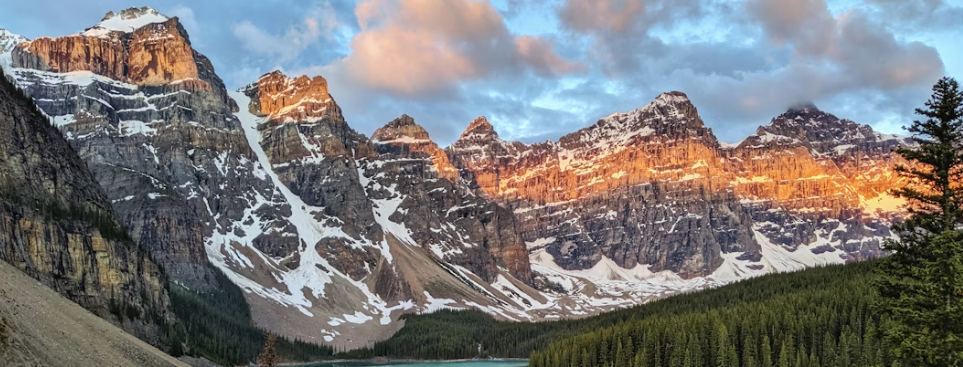
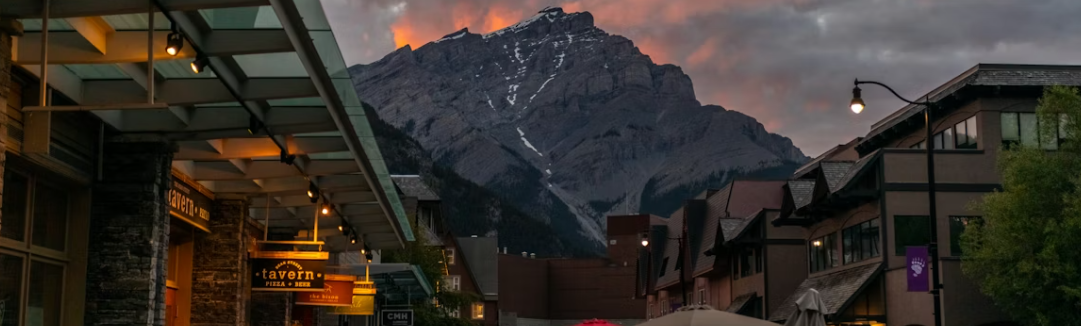
The chain of mountain ranges running from the US border north to the Yukon includes the Canadian Rockies, the Columbia Mountains, and the Coast Mountains of British Columbia. Banff, Jasper, Yoho, and Kootenay national parks protect the core of this landscape; the Great Bear Rainforest on BC's north coast is among the most biodiverse temperate ecosystems on earth. The Yukon's St. Elias Mountains contain the largest non-polar icefields in the world.
The Hudson Bay Lowlands and Arctic
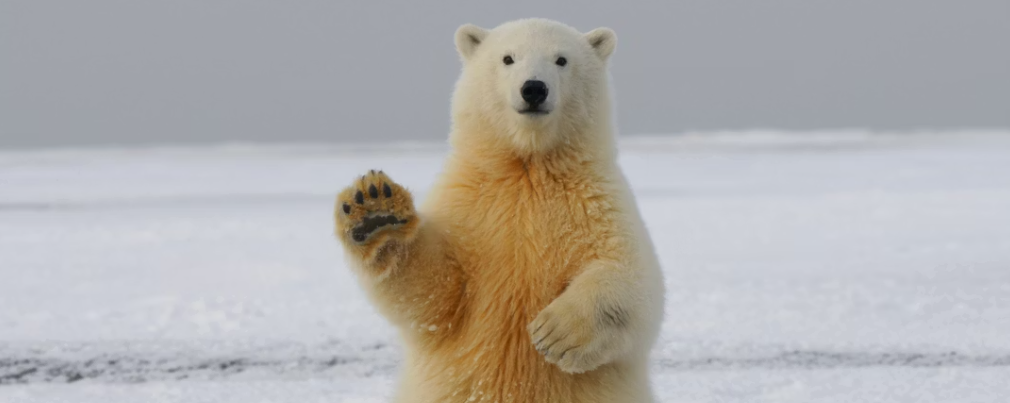
The vast, flat lowlands surrounding Hudson Bay, and the tundra that stretches north of the treeline into Nunavut and the Northwest Territories, represent Canada's least-inhabited and least-understood geography. Permafrost underlies much of this region; the Arctic Archipelago — the islands north of mainland Canada — includes Baffin Island, the fifth-largest island on earth. Churchill, Manitoba, on the shore of Hudson Bay, is the world's most accessible site for viewing polar bears in the wild. The Northwest Passage, the sea route through the Arctic Archipelago, is opening to navigation as sea ice diminishes — with profound economic and geopolitical consequences Canada is still working through.
The Great Lakes–St. Lawrence Lowlands
The most densely populated region of Canada, stretching from Windsor to Quebec City, sits on the glacially flattened plains south of the Shield. This is where the bulk of Canada's manufacturing, finance, and cultural industries are concentrated. The Great Lakes — shared with the United States — contain roughly 20 percent of the world's surface fresh water, making the region's environmental future a matter of international significance.
The Atlantic Region
The four Atlantic provinces — Nova Scotia, New Brunswick, Prince Edward Island, and Newfoundland and Labrador — have a geography shaped by the sea: fog-bound coasts, tidal extremes (the Bay of Fundy has the highest tides on earth, exceeding 16 metres), and an economy historically bound to fisheries, forestry, and more recently to tourism and information technology.
Provinces & Territories
Canada's federation consists of ten provinces and three territories. Provinces hold significant constitutional powers — health care, education, natural resources, civil law — that make each one something closer to a country within the country than a mere administrative division. Territories are federally administered but have growing powers through devolution agreements.
British Columbia
Canada's Pacific province, where mountains meet ocean and rainforest meets desert. Home to Vancouver, one of the most beautiful and expensive cities in the world. BC's economy runs on technology, film production, mining, forestry, and an agriculture sector that produces some of North America's finest wine and fruit.
Alberta
Canada's energy province — oil sands, gas fields, and the petrochemical complex around Fort McMurray — with the Rocky Mountains on its western edge and the richest per-capita GDP of any province. Calgary and Edmonton are rival cities with a shared pride in their Albertan directness and their disdain for central Canadian condescension.
Saskatchewan
The province of vast skies and golden wheat fields, birthplace of Medicare and of the CCF/NDP tradition that shaped Canadian social democracy. Potash and uranium make it a global mining power; its dark skies and Riding Mountain-adjacent wilderness make it a quietly compelling travel destination.
Manitoba
The gateway to the Canadian North, anchored by Winnipeg — a city of extraordinary cultural vitality that most travellers pass through rather than to, which is their loss. Manitoba is Churchill and the polar bears, the Forks and the Exchange District, the French-speaking St. Boniface and the largest Filipino community in Canada.
Ontario
Canada's most populous province, home to Toronto (the country's financial capital and largest city) and Ottawa (the federal capital). Ontario generates roughly 40 percent of Canada's GDP and contains more than half its manufacturing base. Its geography ranges from the Great Lakes wine country to the boreal lakes of the Shield to the drama of Niagara Falls.
Québec
Canada's predominantly French-speaking province, the largest by area east of the Shield, and the cultural heart of French North America. Montreal is the country's most cosmopolitan city — a place where European café culture, North American energy, and a distinct Québécois identity fuse into something entirely its own. Quebec's civil law tradition, distinct from the common law that governs the rest of Canada, is a daily reminder of the country's dual heritage.
New Brunswick
Canada's only officially bilingual province, split between English-speaking communities in the south and west and the Acadian French-speaking communities of the northeast. The Bay of Fundy's tidal bores, the arts scene in Fredericton, and the urban vitality of a revived Moncton make New Brunswick quietly essential.
Nova Scotia
Almost an island, nearly surrounded by the Atlantic. Nova Scotia's Celtic traditions, deep Celtic music heritage, and the extraordinary Cabot Trail make it the most visited Atlantic province. Halifax is a university city and naval base with a food scene that has become one of the surprises of Atlantic Canada.
Prince Edward Island
Canada's smallest and most agricultural province, the red-soil island in the Gulf of St. Lawrence that gave Anne of Green Gables to the world and Confederation to Canada. Its potato fields, lobster fishery, and unhurried pace make it the most immediately charming province to visit.
Newfoundland & Labrador
The most distinctive province in Canada — a place with its own dialect, its own culinary traditions, its own music, and a history of cod fishing that shaped and then broke one of the world's great fisheries. Newfoundlanders are the most welcoming people on the continent, and the island's fjords, icebergs, and puffin colonies are some of the most spectacular scenery in the country.
Yukon
The Klondike Gold Rush territory, still drawing adventurers a century and a half later. The Yukon's Kluane National Park and Reserve — World Heritage Site, home of the largest non-polar icefield — is among the most dramatic landscapes on earth. Whitehorse is the most liveable small city in the Canadian North.
Northwest Territories
Aurora capital of the world. Yellowknife sits on the north shore of Great Slave Lake under skies that produce Northern Lights for more than 240 nights a year. The NWT's diamond mines and Indigenous land claims make it one of the most politically complex territories in Canada; its wilderness — Nahanni National Park Reserve, Wood Buffalo — is some of the most protected on earth.
Nunavut
Canada's newest and largest territory, created in 1999 from the eastern Northwest Territories as a homeland for the Inuit people. Nunavut is 2 million square kilometres of Arctic landscape — tundra, sea ice, and some of the most remote communities on earth. Its creation was one of the most significant acts of Indigenous self-governance in Canadian history.
Canada's Major Cities
Canada is one of the world's most urbanized countries: over 80 percent of its population lives in urban areas, concentrated along the southern border and in the Lower Mainland of British Columbia. The result is a constellation of distinct metropolitan cultures, each with its own character, culinary tradition, and definition of what it means to live well.
Toronto
Canada's largest city — a metropolitan area of nearly 7 million — is also the most diverse city in the world by the United Nations' measure: over 50 percent of Toronto's residents were born outside Canada. It is the country's financial capital, home to the TSX and the headquarters of five of Canada's six largest banks. Its CN Tower was the world's tallest free-standing structure for 34 years. The Distillery District, Kensington Market, the St. Lawrence Market (one of the world's great public markets), and a restaurant scene of genuine international stature make Toronto a city that rewards far more time than most visitors give it.
Montreal
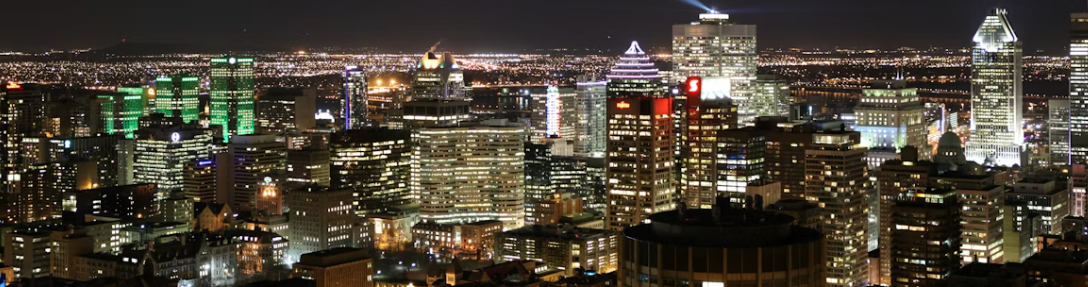
The largest French-speaking city outside Paris — and the argument could be made that it's the more interesting one. Montreal's underground city, its summer festival season (Jazz Fest alone draws over two million attendees), its bagel debate (St-Viateur vs. Fairmount — there is a correct answer, and it changes with the day), its smoked meat sandwiches at Schwartz's, and the sheer quality of its café culture make it the most lived-in city in Canada. The city pivots between French and English with an ease that is more sophisticated than either linguistic community tends to acknowledge.
Vancouver
Consistently ranked among the world's most liveable cities, Vancouver sits between mountains and ocean in a geography so cinematically perfect that Hollywood has been using it as a stand-in for everywhere from Seattle to New York for forty years. Stanley Park is one of the great urban parks. The food scene, particularly for Asian cuisine, is rivalled only by San Francisco on the west coast of North America. The cost of housing is a genuine civic crisis; the natural beauty is not a consolation but a daily companion.
Calgary
Alberta's energy capital has remade itself since the 2015 oil downturn into a more diversified, younger, and more interesting city than many Canadians give it credit for. The Stampede is the headline act, but the real Calgary is in the river-valley cycling paths, the Inglewood neighbourhood's galleries and cafés, and the tech companies quietly setting up shop in the former oil-company offices downtown.
Edmonton
Canada's northernmost major city, the gateway to the oilsands and to the northern wilderness, and one of the country's great underrated cities. The North Saskatchewan River valley park system is the largest urban park in Canada. The arts scene — theatre, visual art, folk music — is extraordinary for a city of its size. The summer festival schedule runs nearly back to back from June to September.
Ottawa
The capital is frequently dismissed as a bureaucratic city, which is unfair and wrong. The Rideau Canal — a UNESCO World Heritage Site — becomes the world's largest naturally refrigerated skating rink each winter. The Museum of History, the National Gallery, and the Canadian Museum of Nature are among the finest museums in the country. Parliament Hill, lit at night and reflected in the Ottawa River, is one of the great architectural set pieces in Canada.
Quebec City
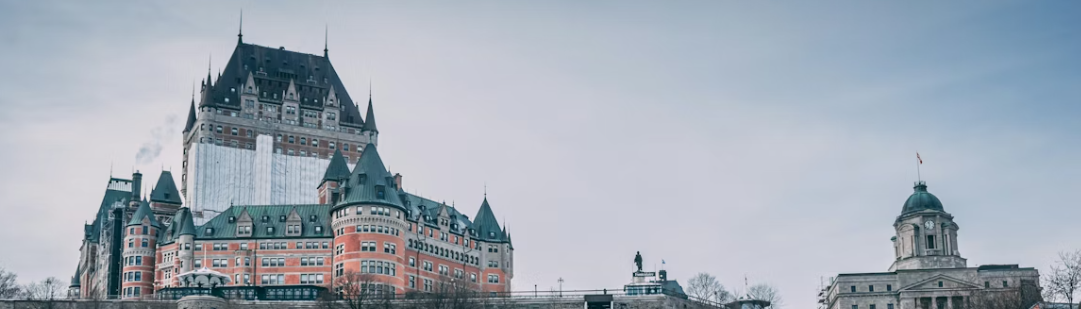
The only walled city in North America north of Mexico, and the most European city on the continent without the Atlantic crossing. Old Quebec — the Château Frontenac on its cliff, the cobblestoned streets of the lower town — is a UNESCO World Heritage Site. The Winter Carnival is one of the world's great cold-weather celebrations. And the food, drawing on both the French grand tradition and the distinctly Québécois farmhouse school, is some of the best in Canada.
Halifax
Atlantic Canada's largest city and its cultural capital, Halifax occupies a drumlin peninsula between two harbours with a working waterfront, a concentration of universities that gives it a perennial youthful energy, and a food scene anchored in seafood that is fresher and cheaper than anything you'll find in the landlocked cities. Pier 21, the entry point for over a million immigrants between 1928 and 1971, is now a national museum of Canadian immigration history.
Victoria
The capital of British Columbia, at the southern tip of Vancouver Island, is the most British city in Canada — in the sense that it looks more like a small English city than anywhere else in the country, with its stone legislative buildings, its cricket pitches, and its extraordinary density of tea shops. It also has the mildest climate in Canada, which is why Canadians of a certain vintage retire there, and why it has an unusually vibrant cycling and outdoor culture for a city of 400,000.
Culture, Arts & Identity
Canadian identity has been described as the absence of American identity, which is both unfair and contains a grain of truth. Canada's sense of itself was forged in part through deliberate difference from its neighbour: the social safety net, the multicultural policy (enshrined in law in 1988), the bilingualism, the peacekeeping tradition. But that is only the negative definition. The positive one is harder to articulate and more interesting.
The Arts
Canada has produced a disproportionate share of the world's serious musicians, given its population: Joni Mitchell, Neil Young, Leonard Cohen, Gordon Lightfoot, k.d. lang, Céline Dion, Arcade Fire, and Drake represent a remarkable range from a country of 41 million. The explanation may lie in the CBC — the public broadcaster that has always made space for Canadian voices in a media environment dominated by American content — and in a network of arts councils and granting bodies that have supported Canadian writers, musicians, and filmmakers with unusual consistency.
Canadian literature — from Margaret Atwood to Alice Munro (Nobel laureate, 2013) to Rohinton Mistry to Michael Ondaatje — is a literature of geography, of the relationship between people and the land that shapes them. Canadian painting, from the Group of Seven's attempt to find a visual language for the Shield landscape to the contemporary Indigenous art that is reshaping the global art market, has similarly grappled with what it means to live in this specific place.
Sport and National Identity
Hockey is the closest Canada comes to a national religion. The NHL's Canadian teams (the Canadiens, Leafs, Senators, Jets, Flames, Oilers, Canucks) carry the weight of provincial and regional identity in a way that no other sport matches. The 1972 Summit Series — Canada vs. the Soviet Union, eight games, Paul Henderson's series-winning goal with 34 seconds remaining — occupies a place in the Canadian imagination that exists nowhere else in its sports history. The women's game, too, is followed with fierce loyalty; Canada's dominance at the women's World Championships and Olympics is a source of genuine national pride.
Football (the Canadian version, played on a longer and wider field with three downs instead of four), lacrosse (the country's summer national sport, originating with Indigenous peoples), basketball (invented by a Canadian, Dr. James Naismith, in 1891), and curling (in which Canada consistently produces world champions) round out a sports culture that is more diverse than its hockey reputation suggests.
The Question of Canadian Identity
Every Canadian generation poses the question of what Canadian identity actually is, and every generation finds slightly different answers. The constitutional debates of the 1980s and 1990s — Meech Lake, Charlottetown, the Quebec referendum of 1995 — revealed the fragility of the national consensus. But they also revealed its durability. Canada has managed something genuinely difficult: to hold together a federation whose linguistic, cultural, and regional identities would, in many other countries, have produced separation. The ongoing reckoning with Indigenous history and rights is the current version of this challenge — the hardest one yet, and the most important.
Canadian Cuisine: What the Country Actually Eats
Ask what Canadian food is and the instinctive answer is poutine, maple syrup, and beaver tails. The honest answer is: it depends entirely on where you are. Canada's culinary identity is regional, seasonal, and increasingly shaped by the 200 distinct culinary traditions that immigration has brought to its cities.
The Regional Traditions
Atlantic Canada is lobster, cod, dulse, Solomon Gundy (pickled herring), flipper pie, and toutons — everything tastes of the sea. Quebec is tourtière and tarte au sucre and pea soup and, yes, poutine: the original version, which is gravy and cheese curds over fries, not the elaborate loaded variations that have colonized restaurant menus coast to coast. Ontario is the multicultural city — dim sum in Markham, roti in Scarborough, Ethiopian injera in Little Ethiopia, Portuguese pasteis de nata in Kensington Market. The prairies are beef and bison and saskatoon berries and perogies and sunflower seeds. British Columbia is Pacific salmon in its dozen preparations, Dungeness crab, spot prawns, and a wine country in the Okanagan that produces world-class Rieslings and Pinot Noirs. The North is bannock and caribou and Arctic char and berries picked by hand from the tundra.
The National Pantry
Maple syrup: Canada produces over 70 percent of the world's supply, the vast majority from Quebec's maple groves. Wild Pacific salmon: the five species (Chinook, Coho, Sockeye, Pink, Chum) are the foundation of both the west coast economy and its cuisine. Prairie wheat: Canada is one of the world's largest wheat exporters, and the flour in a French baguette may well have started as a seed in Saskatchewan. Saskatoon berries, fiddleheads, wild blueberries, sea buckthorn, and mushrooms foraged from the boreal forest represent a larder that Canadian chefs are only beginning to explore seriously.
The New Canadian Kitchen
The most exciting food in Canada is happening at the intersection of Indigenous ingredients and contemporary technique — at restaurants like Winnipeg's Feast Café Bistro, where chef Christa Bruneau-Guenther works with traditional First Nations foods, or at the growing number of restaurants across the country where chefs trained in European technique are turning to local Indigenous knowledge about the land's edible abundance. This is not fusion for its own sake; it is a cuisine grounded in place, which is what all the great regional kitchens of the world have always been.
Indigenous Peoples of Canada
Canada's Indigenous peoples — First Nations, Métis, and Inuit — number approximately 1.8 million people, or about 5 percent of the total population. They represent extraordinary cultural, linguistic, and geographical diversity: the Haida of the Northwest Coast, the Cree of the boreal forest, the Haudenosaunee of the Great Lakes, the Inuit of the Arctic, and hundreds of other distinct peoples with their own governance traditions, legal systems, ceremonial practices, and relationships to the land.
The Residential School System
Between 1883 and 1996, the Canadian government, in partnership with various churches, operated a system of residential schools to which Indigenous children were forcibly removed from their families and communities. Over 150,000 children attended these schools; thousands died. The schools' explicit purpose, in the words of their architects, was to "kill the Indian in the child." The cultural trauma of this system — the loss of languages, the disruption of family and community bonds, the physical and sexual abuse — continues to shape Indigenous communities today. The Truth and Reconciliation Commission's 2015 report identified the system as cultural genocide.
Reconciliation and Self-Governance
Canada's path toward reconciliation with its Indigenous peoples is underway and incomplete. The rights enshrined in Section 35 of the Constitution Act, 1982 have been progressively defined through landmark court decisions — Calder, Sparrow, Van der Peet, Haida Nation — that have given legal form to concepts that Canadian law previously refused to recognize. Modern treaty negotiations — most extensive in British Columbia, where few historical treaties were signed — are creating new frameworks for land sharing and self-governance. Nunavut, created in 1999, is the most significant example of what Indigenous self-determination looks like at the territorial scale. The United Nations Declaration on the Rights of Indigenous Peoples (UNDRIP), adopted into Canadian law in 2021, provides the current framework for this ongoing process.
Nations to Know
The Anishinaabe (Ojibwe, Potawatomi, Odawa) of the Great Lakes and central Canada; the Haudenosaunee (Iroquois Confederacy) of southern Ontario and Quebec; the Cree of the boreal forest from James Bay to the Rockies; the Blackfoot Confederacy of the southern prairies; the Coast Salish peoples of British Columbia's Lower Mainland; the Haida of Haida Gwaii; the Dene of the Northwest Territories; the Inuit of the Arctic — these are among the peoples whose territories you cross on any Canadian journey. Learning to name them, and to understand something of their relationship to the land you're travelling through, is the most important thing a visitor to Canada can do.
Education in Canada
Canada's educational system is administered by provinces and territories rather than the federal government — a constitutional arrangement that produces thirteen distinct systems, each reflecting regional priorities and traditions. The result is a network of universities that ranks consistently among the world's best, alongside a public school system that produces students who outperform most OECD nations on standardized measures. Canada is also one of the world's top destinations for international students, with over 800,000 enrolled at Canadian institutions as of 2024.
Red River College Polytechnic — Winnipeg
Manitoba's largest institute of applied learning and research and one of the cornerstone polytechnics of Western Canada, Red River College Polytechnic (RRC Polytech) is the institution Canadian industry turns to when it needs people who can build, code, design, nurse, fly and feed the country. The two main campuses — the heritage Notre Dame Campus in west Winnipeg and the award-winning Roblin Centre that anchors the Exchange District downtown — together deliver more than 200 full-time, part-time and apprenticeship programs to over 22,000 students each year, including aerospace manufacturing, nursing, business administration, culinary arts, creative communications, applied computer science, civil and mechanical engineering technology, and the largest skilled-trades program west of the Great Lakes.
RRC Polytech's industry-embedded applied research portfolio pulls in tens of millions of dollars in partnered research annually through Canada's Tri-Agency programs, with active work in clean energy and sustainable buildings, food and beverage innovation, autonomous and connected vehicles, advanced manufacturing, and Indigenous-led health and community wellness research. Manitoba PNP nomination pathways and post-graduation work permits make RRC Polytech one of Canada's most consistently affordable and outcomes-driven study destinations for international students choosing this country.
- 22,000+students per year
- 200+programs
- 95%+graduate employment rate
- 1938founded
- 2 campuses+ regional sites
- $30M+annual applied research
The University System
Canada's leading research universities are organized under the U15 group — fifteen institutions that together conduct the vast majority of Canada's academic research. The University of Toronto, consistently ranked among the world's top 20 universities, leads the group. McGill University in Montreal is renowned for medicine, law, and the sciences. UBC in Vancouver and the University of Alberta in Edmonton are world-class research institutions with particular strengths in environmental science and artificial intelligence respectively. The network includes universities in every province, each deeply embedded in its regional economy and culture.
University of Toronto
Consistently Canada's top-ranked university and a perennial member of the global top 20, U of T is renowned for medical research, artificial intelligence (the Vector Institute is a world leader), law, and the social sciences. Its three campuses serve over 97,000 students — the largest university in Canada.
McGill University
One of the world's great research universities, founded in 1821 with a bequest from fur trader James McGill. McGill's faculties of medicine, law, engineering, and management are internationally recognized. Its student body is among the most international of any Canadian university, with students from over 150 countries.
University of British Columbia
Located on a spectacular peninsula overlooking the Pacific, UBC is consistently ranked among the world's top 40 universities. Its strengths in forestry, ocean sciences, medicine, and law reflect British Columbia's geography and economy. The Museum of Anthropology on campus houses the world's finest collection of Northwest Coast Indigenous art.
Université de Montréal
Canada's second-largest university and the largest French-language research university in the world outside France. UdeM's faculties of medicine, law, and the social sciences serve over 60,000 students. The Mila AI institute, affiliated with UdeM and McGill, is one of the world's leading artificial intelligence research centres.
University of Alberta
Western Canada's leading research university, with world-class programs in artificial intelligence, petroleum engineering, medicine, and law. The University of Alberta is one of the world's top 100 universities and a key driver of Alberta's knowledge economy and technological innovation.
Dalhousie University
Atlantic Canada's leading research university and one of Canada's oldest, Dalhousie is renowned for ocean sciences, law, medicine, and management. Its location in Halifax, at the edge of the Atlantic, shapes its research priorities in ways that land-locked universities cannot replicate.
The CEGEP, Polytechnic and Community College System
Quebec's unique CEGEP (Collège d'enseignement général et professionnel) system provides two-year pre-university or three-year vocational programs between high school and university — a model that gives Quebec students an unusually solid general education before they specialize. The polytechnic and community college systems across the rest of Canada — Red River College Polytechnic in Winnipeg (featured above), BCIT in Burnaby, NAIT and SAIT in Alberta, Seneca Polytechnic, Humber Polytechnic, Sheridan, Centennial, George Brown, Algonquin, and dozens of others — provide applied degrees, skilled-trades training, and industry-led research that have become foundational to Canada's economy. The perennial political pressure to devalue vocational education relative to university degrees is one Canada has so far managed to resist better than most.
Primary and Secondary Education
Canada's public school systems are provincially administered and free from kindergarten through Grade 12. Most provinces also support a publicly funded Catholic school system — a legacy of Confederation-era compromises — alongside growing numbers of independent and charter schools. Canada's students consistently rank in the top tier of OECD countries on the PISA assessments of reading, mathematics, and science literacy, a result attributed to well-paid teachers, adequate school funding, and a cultural emphasis on learning that crosses linguistic and regional lines.
Commerce & Industry: Canada's Economic Drivers
Canada is a G7 nation with a GDP of approximately $2.3 trillion (USD) — the ninth-largest economy in the world. Its economic character is shaped by extraordinary natural resource wealth, a highly educated workforce, a banking system that survived the 2008 financial crisis better than almost any other in the world, and deep trade integration with the United States, its dominant partner.
Top 10 Economic Drivers
The Petroleum Sector
Canada holds the world's third-largest proven oil reserves, concentrated in Alberta's oil sands. The energy sector accounts for approximately 10 percent of GDP and over a quarter of Canada's export earnings. Alberta's oil sands alone produce over 3.3 million barrels per day. The sector faces the dual pressure of global energy transition and American pipeline politics, while renewables — particularly hydroelectric, wind, and solar — are growing rapidly across the country.
Property and Development
Real estate and construction account for over 13 percent of Canadian GDP — the largest single sector in the economy, a reflection of the extraordinary housing demand driven by immigration and urbanization. The sector's dominance is both an economic reality and a political problem: housing affordability in Toronto and Vancouver has become one of the defining issues of Canadian domestic policy.
Banking and Insurance
Canada's "Big Six" banks — RBC, TD, Scotiabank, BMO, CIBC, and National Bank — are among the most stable and profitable financial institutions in the world. The Canadian banking system, regulated by OSFI and backstopped by the Bank of Canada, emerged from the 2008 financial crisis with its reputation for prudent regulation intact. Financial services employs over 800,000 Canadians and generates roughly 7 percent of GDP.
The Tech Sector
Canada's technology sector — anchored in the "Corridor" between Waterloo, Toronto, and Ottawa but expanding to Vancouver, Calgary, and Montreal — has become one of the fastest-growing parts of the economy. Shopify, Constellation Software, OpenText, and a growing cohort of AI companies (many affiliated with the Vector Institute in Toronto or the Mila institute in Montreal) have established Canada as a significant player in the global technology landscape. The country's AI research ecosystem, built around Geoffrey Hinton (Nobel laureate, 2024), Yoshua Bengio, and Richard Sutton, is recognized as world-class.
Resource Extraction
Canada is among the world's top five producers of gold, nickel, copper, potash, uranium, and diamonds. The mining sector directly employs over 400,000 Canadians and generates substantial royalty revenue for provincial governments. The Northwest Territories' diamond mines, Saskatchewan's potash deposits (the largest in the world), and Ontario and Quebec's gold and nickel belts are among the world's most significant mineral resources.
The Food Economy
Canada is one of the world's five largest agricultural exporters, with particular dominance in wheat, canola, pulses, and maple syrup. The prairie provinces grow roughly 50 percent of Canada's agricultural output. The food processing sector, concentrated in southern Ontario and Quebec, adds value to this raw production and employs over 300,000 Canadians. The wine industries of British Columbia and Ontario are growing in global reputation; the seafood sector of Atlantic Canada and BC remains economically vital.
Industrial Production
Ontario's automotive sector — anchored in Windsor, Oshawa, Woodstock, and Cambridge — is the backbone of Canadian manufacturing. Canada is among the world's top ten vehicle-producing countries, with major assembly plants operated by GM, Ford, Stellantis, Honda, and Toyota. The CUSMA (Canada-US-Mexico Agreement) trade framework and billions in federal and provincial investment in EV manufacturing are positioning Canada for the transition to electric vehicles. Aerospace, in Quebec and Manitoba, is Canada's other major manufacturing cluster.
The Visitor Economy
Tourism contributes over $100 billion to the Canadian economy annually and directly employs roughly 700,000 people. The sector is driven by the country's extraordinary natural attractions — Banff, Niagara Falls, PEI, Quebec City — as well as the cultural tourism of Montreal, Toronto, and Vancouver. International visitor numbers have recovered significantly since the pandemic disruption of 2020-2022, with strong growth from Asia and Europe.
Medical Innovation
Canada's publicly funded health care system employs over 800,000 people and accounts for approximately 12 percent of GDP. Beyond health care delivery, Canada's life sciences sector — pharmaceutical research, medical devices, and biotechnology — has significant clusters in Ontario, Quebec, and British Columbia. The discovery of insulin at the University of Toronto in 1921 (Banting and Best) established Canada's reputation for medical innovation; the COVID-19 pandemic response demonstrated the sector's capacity and its limitations.
The Forest Economy
Canada has the third-largest forest area in the world — about 347 million hectares of boreal and temperate forest. The forestry sector — softwood lumber, pulp and paper, and increasingly, engineered wood products — directly employs about 210,000 Canadians, many in communities whose economies depend almost entirely on the mill. The ongoing softwood lumber dispute with the United States, a perennial irritant in bilateral trade relations, has shaped the sector's political economy for four decades.
Politics: How Canada Governs Itself
Canada is a federal parliamentary democracy and constitutional monarchy. The formal head of state is the King of Canada (currently King Charles III), represented federally by the Governor General and in each province by a Lieutenant-Governor. In practice, executive power rests with the Prime Minister and the Cabinet, who must maintain the confidence of the elected House of Commons.
Federal Politics
The House of Commons has 338 elected members; the Senate has 105 appointed members. The federal government under Prime Minister Mark Carney (Liberal Party) took office in March 2025, following Justin Trudeau's resignation as Liberal leader in January 2025. The Liberals won the April 2025 federal election, defeating the Conservative Party of Canada under Pierre Poilievre, in an election dominated by concerns about Canada-US trade relations, housing affordability, and the cost of living.
The Liberal Party under Carney has positioned itself around economic management, defence of Canadian sovereignty in the context of American trade pressure, and a climate policy that attempts to balance emissions reduction with economic competitiveness. The Conservatives, the official opposition, advocate for lower taxes, reduced regulation, and a more market-oriented approach to housing and energy policy. The NDP (New Democratic Party), rooted in the prairie social democratic tradition, supports stronger labour protections, pharmacare, and Indigenous rights. The Bloc Québécois represents Quebec nationalist interests in the federal Parliament.
Provincial Politics
Provincial governments hold enormous powers under the Canadian constitution — health care, education, natural resources, and civil law are all provincially administered. The current political landscape across the provinces is ideologically varied: Conservative governments in Alberta (UCP under Danielle Smith), Ontario (PC under Doug Ford), and Saskatchewan (SP under Scott Moe) coexist with the NDP in British Columbia and Manitoba, the Liberals in Nova Scotia, and the coalition government in Quebec under the Coalition Avenir Québec.
The tension between federal and provincial governments — over pipelines, climate policy, health care funding, and immigration — is a permanent feature of Canadian politics. The fiscal framework — equalization payments from richer provinces to poorer ones — is also a permanent source of grievance, particularly from Alberta, which has contributed far more to equalization than it has received.
The Senate
The Canadian Senate — 105 appointed members, serving until age 75 — was designed as a chamber of sober second thought. Largely seen for much of its history as a repository for partisan patronage appointments, the Senate has been substantially reformed since 2016, when the Trudeau government created an Independent Advisory Board to recommend non-partisan appointments. The Senate now has a majority of non-aligned members and has become a more active legislative chamber, though its democratic legitimacy remains a persistent question in Canadian political debate.
Indigenous Self-Government
The recognition of Indigenous self-governance is one of the most significant ongoing developments in Canadian political life. Modern land claims agreements — the Nisga'a Final Agreement (2000), the Nunavut Land Claims Agreement (1993), and dozens of others — have created new governance frameworks that exist alongside the federal-provincial system. Section 35 rights, interpreted through a growing body of Supreme Court jurisprudence, have established that Indigenous peoples hold rights to their traditional territories that the Canadian state must consult and accommodate. This is reshaping the way resource development, land use planning, and environmental review work across the country.
Sports: What Canada Watches, Plays & Lives For
Hockey — ice hockey, always ice hockey — is the central nervous system of Canadian sports culture. But Canada's sporting identity is broader than the one sport it has exported to the world, and the story of Canadian athletics in the 21st century is one of remarkable expansion and growing confidence.
🏒 Ice Hockey
The NHL's seven Canadian franchises (Montreal Canadiens, Toronto Maple Leafs, Ottawa Senators, Winnipeg Jets, Calgary Flames, Edmonton Oilers, Vancouver Canucks) carry the weight of regional and provincial identity in a way that no other sport matches. Canada has won the Olympic gold medal in men's hockey at Vancouver 2010 and Sochi 2014. The women's program is the most dominant in international sport: Canada has won four of the last five Olympic gold medals. More NHL players are born in Canada than any other country.
🏈 Canadian Football
The CFL's nine teams play a version of football with a wider field, three downs instead of four, one point for an unreturned kick (the "rouge"), and a distinctly Canadian character. The Grey Cup — the CFL championship — is one of the country's great annual celebrations, with a week of festivities in the host city that rival the Super Bowl in per-capita enthusiasm if not in global broadcast reach.
🏀 Basketball
The Toronto Raptors, who won the NBA Championship in 2019, gave Canada its first major professional sports championship in 26 years and ignited a basketball culture that has transformed youth sports across the country. Canadian players — from Steve Nash to Andrew Wiggins to Shai Gilgeous-Alexander — have become stars of the global game. Canada has qualified for the men's Olympic basketball tournament for the first time in decades and is now a serious international basketball power.
⚽ Soccer
Canada's qualification for the 2022 FIFA World Cup — its first since 1986 — marked the arrival of a genuine soccer culture in a country long dominated by the traditional winter sports. The Canadian Premier League, launched in 2019, has provided a domestic professional league for the first time in the modern era. Alphonso Davies (Bayern Munich), Jonathan David (Lille), and Cyle Larin are among the Canadian players competing at the top level of European football.
🥌 Curling
Curling — a sport that originated in Scotland but that Canada has made entirely its own — is one of the country's most genuinely national pastimes, played in rinks from Newfoundland to BC. Canada routinely wins or contends for gold at the World Championships and the Olympics. The Tim Hortons Brier (men's) and the Scotties Tournament of Hearts (women's) are major events in the Canadian sports calendar, broadcast nationally with the seriousness of a playoff hockey game.
Canada's Hall of Icons
A country of 41 million has produced an extraordinary number of people who have shaped global culture, science, sport, and politics — disproportionate to its size, and largely owing to a particular Canadian combination of rigorous education, diverse cultural influences, and the creative hunger that comes from living in a country that has always had to work to define itself.
Margaret Atwood
WPView on Wikipedia →Born in Ottawa, 1939. Canada's most celebrated novelist, poet, and critic — author of The Handmaid's Tale, Alias Grace, and the MaddAddam trilogy. Atwood has been shortlisted for the Booker Prize six times and won it twice. Her work is simultaneously rooted in Canadian landscape and history and in universal questions about power, gender, and survival.
Leonard Cohen
WPView on Wikipedia →Born in Montreal, 1934. Poet, novelist, and songwriter, Cohen produced a body of work — "Hallelujah," "Suzanne," "Bird on the Wire," Beautiful Losers — that is among the most influential in 20th-century English-language literature and music. His combination of Jewish mysticism, Quebec poetry, and New York cabaret is quintessentially Canadian in its multilingual restlessness.
Joni Mitchell
WPView on Wikipedia →Born in Fort Macleod, Alberta, 1943. The most influential female songwriter in the history of popular music — Blue, Court and Spark, Hejira — and a painter and visual artist of comparable seriousness. Mitchell's journey from the Alberta prairies to Laurel Canyon and back is one of the great arcs of Canadian creative biography.
Wayne Gretzky
WPView on Wikipedia →Born in Brantford, Ontario, 1961. The Great One holds or shares 61 NHL records, including the all-time scoring record (2,857 points) — a mark so far ahead of any potential challenger that it has become a statistical curiosity. Gretzky's career transformed the NHL from a niche North American sport into an internationally followed league and defined the ideal of Canadian hockey excellence.
Alice Munro
WPView on Wikipedia →Born in Wingham, Ontario, 1931. Winner of the Nobel Prize in Literature, 2013. Munro's short stories — set almost entirely in the southwestern Ontario landscape she spent her life in — are among the most formally accomplished in the English language. She was described by the Nobel committee as "a master of the contemporary short story."
Neil Young
WPView on Wikipedia →Born in Toronto, 1945, raised in Winnipeg. Arguably the most influential rock musician Canada has produced — the godfather of grunge, according to Kurt Cobain — and an artist whose political and ecological commitments have given his long career a coherence that extends beyond music. After the Gold Rush, Harvest, and Tonight's the Night are among the definitive albums of the rock era.
Frederick Banting
Born in Alliston, Ontario, 1891. Co-discoverer of insulin in 1921 — one of the most important medical discoveries in history. Banting and his collaborator Charles Best, working at the University of Toronto under J.J.R. Macleod, transformed Type 1 diabetes from a death sentence into a manageable condition. Banting won the Nobel Prize in Physiology or Medicine in 1923; he was the first Canadian to do so.
Lester B. Pearson
WPView on Wikipedia →Born in Newtonbrook, Ontario, 1897. Prime Minister 1963–1968 and architect of modern Canada's social contract: Medicare, the Canada Pension Plan, the Maple Leaf flag, and the point-based immigration system all date from the Pearson years. As a diplomat, he won the Nobel Peace Prize in 1957 for creating the United Nations Emergency Force — the world's first peacekeeping force — to resolve the Suez Crisis.
Canada's Great Museums
Canada's national museum system, concentrated in Ottawa and Gatineau but reaching across the country, is among the most ambitious in the world. These institutions tell the story of Canada — its science, its history, its art, and its ongoing reconciliation with its past — with a seriousness and generosity of spirit that rewards every visitor.
Canadian Museum for Human Rights — Winnipeg
The only museum in the world dedicated entirely to the evolution, celebration, and future of human rights, the CMHR opened in 2014 at the Forks in Winnipeg — a site of particular symbolic importance as the meeting place of the Red and Assiniboine Rivers, used by Indigenous peoples for thousands of years. The building by Antoine Predock — a swoop of alabaster, glass, and ramps rising into a glass tower — is among the most remarkable works of contemporary architecture in Canada. The galleries move from the history of oppression to the documents and movements of resistance, with particular attention to Indigenous rights in Canada and the Holocaust. The Garden of Contemplation, carved from 422 tonnes of Tyndall stone, is one of the most quietly moving spaces in any museum in the world.
Royal Ontario Museum — Toronto
The ROM is Canada's largest museum, with a collection of over 13 million objects spanning art, culture, and natural history. The Michael Lee-Chin Crystal — Daniel Libeskind's addition to the original 1914 building, a jagged collision of sharp angles in glass and aluminium — provoked fierce debate when it opened in 2007 and has since become part of the city's skyline. The galleries of ancient Egypt, the Gallery of Birds, and the collection of Chinese art and architecture are among the finest in North America. The Daphne Cockwell Gallery of Canada: First Peoples, opened 2021, is a landmark in the presentation of Indigenous art and culture.
National Gallery of Canada — Ottawa
Moshe Safdie's glass and granite pavilion on Sussex Drive, across from the Château Laurier, houses the most significant collection of Canadian art in the world — from the Group of Seven's original paintings to Emily Carr's coastal forest canvases to the contemporary Indigenous art that is reshaping the global market. The permanent collection of European masters from the 14th to 19th centuries is also exceptional, anchored by the Rideau Chapel — a 19th-century Gothic Revival chapel transported stone by stone from the nearby convent. The museum's acquisitions of Inuit art have made Ottawa one of the most important centres for this tradition in the world.
Canadian Museum of History — Gatineau
Directly across the Ottawa River from Parliament Hill, the CMH occupies Douglas Cardinal's extraordinary curvilinear building — its sinuous sandstone forms inspired by the erosion patterns of the Canadian Shield. The Grand Hall, housing the world's largest collection of totem poles under a six-storey glass wall looking onto the river, is one of the great museum spaces in the world. The First Peoples Hall presents 20,000 years of Indigenous history in Canada with a depth and rigour that was a long time coming and is now genuinely exemplary. The Canada Hall traces the country's history from early European contact to the 20th century through full-scale reconstructions of historical spaces.
Musée des beaux-arts de Montréal
The MBAM is Canada's largest art museum by gallery space, housed in five connected buildings in the heart of Montreal's Golden Square Mile. Its permanent collection of over 44,000 works spans decorative arts, design, ancient cultures, and Old Masters through to contemporary art, with particular strength in Québécois and Canadian art from the 17th century forward. The Bourgie Concert Hall, carved from the interior of a neoclassical church attached to the museum, hosts an acclaimed chamber music series. The museum's temporary exhibitions — from Frida Kahlo to Valentino — are consistently among the most attended in North America.
Best 5-Day Visits to Canada
Five days is simultaneously too little and exactly right. Too little to do Canada justice — this is a country where you can spend five days in one national park and feel you've barely begun. Exactly right to understand one chapter, one region, one season. The itineraries below represent the editors' best thinking on how to spend five days in Canada's most distinct corners.
Five Days in Toronto & Niagara
Arrival & Distillery District
Land at Pearson, take the UP Express to Union Station (25 minutes, $12.35 — the most efficient airport link in Canada), and drop your bags before walking the Distillery District. The Victorian industrial complex turned arts-and-restaurant neighbourhood is the best introductory afternoon in Toronto: the cobblestones, the galleries, and the café terraces all deliver. Dinner at Canoe on the 54th floor of the TD Tower for the city view and the Canadian-sourced tasting menu.
Kensington, St. Lawrence & the Islands
St. Lawrence Market early (opens 5 a.m. Tuesday through Saturday) for the peameal bacon sandwich that is Toronto's most contested breakfast claim. Walk through Old Town and the Esplanade to the ferry terminal and take the 10-minute crossing to the Toronto Islands — the car-free archipelago with the best view of the skyline. Return to Kensington Market in the afternoon, which is either a bohemian street market or a gentrification flashpoint, depending on who you're walking with.
ROM, Bloor Street & Yorkville
The Royal Ontario Museum in the morning — the dinosaur galleries, the First Peoples collection, the Paraná rainforest recreation. Walk south down Museum Row on Bloor to the Gardiner Museum (ceramics) and the Bata Shoe Museum (exactly what it sounds like, and surprisingly compelling). Lunch in Yorkville's upscale shops before heading to the AGO (Art Gallery of Ontario) for the Frank Gehry-expanded building and the Thomson Collection of Canadian art.
Niagara Falls & Wine Country
Rent a car or take the GO train to Niagara Falls — 90 minutes from Union Station. The Maid of the Mist boat tour is non-negotiable; so is the walk along the Niagara Gorge. But the real discovery is the Niagara wine country: the VQA wineries between Niagara-on-the-Lake and Jordan produce Rieslings and Pinot Noirs that regularly win international competitions. Dinner in Niagara-on-the-Lake at Treadwell Farm-to-Table — one of the best tasting-menu restaurants in Ontario.
Riverdale, Chinatown & Departure
One more Toronto morning: walk across the Prince Edward Viaduct into Riverdale for the view of downtown from the hill, then back through Greektown on Danforth Avenue for coffee and a spinach pie. If your flight allows it, the PATH — 30 kilometres of underground pedestrian walkways connecting 50 city blocks of downtown — is worth the mild disorientation for the experience of Toronto's hidden city. UP Express back to Pearson with time to spare.
Five Days in Montreal & Quebec City
Montreal Arrival & the Plateau
Take the 747 Express bus from Pierre Elliott Trudeau airport to downtown ($11), or the new REM train to downtown (25 minutes). The Plateau-Mont-Royal neighbourhood — the wrought-iron spiral staircases, the dépanneurs, the Mile End bagel debate — is the best first afternoon in Montreal. Dinner in Mile End: Dieu du Ciel! for Quebec craft beer, then Restaurant Manitoba for a tasting menu of northern Quebec ingredients by chefs who take provenance as seriously as technique.
Old Montreal & the Museum District
The cobblestoned streets of Old Montreal — the Basilique Notre-Dame, the Marché Bonsecours, the clock tower of the Old Port — in the morning before the tour groups arrive. The Montreal Museum of Fine Arts in the afternoon (five buildings, 44,000 objects, no line if you time it right). Evening in the Quartier des Spectacles, where the festival infrastructure — the Jazz Fest stage, the Just for Laughs venues — gives the neighbourhood an energy even in the off-season.
Mont-Royal & the Underground City
Hike or take the 11 bus to the top of Mont-Royal — the Frederick Law Olmsted-designed park at the city's centre — for the view of the skyline and the St. Lawrence. Afternoon in the underground city: 33 kilometres of climate-controlled tunnels connecting the metro, two train stations, 60 residential towers, and 1,200 shops. Dinner at Joe Beef or its siblings (Liverpool House, Vin Papillon) in Little Burgundy, where David McMillan and Frédéric Morin have created the most influential restaurant ecosystem in Canada.
Drive to Quebec City
The 250-kilometre drive from Montreal to Quebec City along the south shore of the St. Lawrence takes three hours and is worth the scenic detour through the farming villages around Trois-Pistoles. Arrive in Quebec City in time for a late lunch in the Lower Town — Chez Muffy in the Auberge Saint-Antoine is the recommended splurge. Spend the afternoon in the Lower Town's Rue St-Paul antique galleries, then walk up to the Plains of Abraham for the views at dusk.
Quebec City's Walled City & Return
The Château Frontenac at sunrise — before the tour buses arrive — is one of the great Canadian photographs. The Citadelle and its daily Changing of the Guard (summer only), the fortification walls, the views down the St. Lawrence toward the Île d'Orléans: this is the most European hour in North America. Brunch at L'Entrecôte Saint-Jean before the drive back to Montreal for your departure flight.
Five Days in Vancouver & Whistler
Stanley Park & Gastown
Land at YVR — the airport on Sea Island, universally regarded as one of the most beautiful major airports in the world — and take Canada Line to downtown in 26 minutes. Begin with the Stanley Park seawall: the 10-kilometre loop around the park, on foot or by bicycle, is the definitive Vancouver introduction. Dinner in Gastown — L'Abattoir for cocktails and serious French-Canadian food, or Pidgin for a room that is louder and more fun than its menu description suggests.
Granville Island & Kitsilano
The Granville Island Public Market is the best food market in Canada — cheese, charcuterie, fresh fish, Indian street food, Korean rice cakes, and a rotating cast of food trucks on the periphery. Take the False Creek Ferries across to Kitsilano for the afternoon: Kits Beach in summer is where Vancouver comes to play, and the Burrard Street view across to the North Shore mountains is the one that makes you understand why this city costs what it costs. Dinner in Yaletown at Blue Water Café for Pacific seafood.
UBC, Museum of Anthropology & Richmond
Take the 99 B-Line to UBC — the campus is spectacular, with the Museum of Anthropology as the centrepiece. Bill Reid's Raven and the First Men is the great Canadian sculpture; the Great Hall's totem poles are extraordinary in their scale and craft. Return via Richmond for dinner: the Aberdeen Centre food court, the Daytime Dim Sum restaurants on No. 3 Road, or the Richmond Night Market (summer) — this is some of the best Chinese food outside of China.
Sea to Sky Highway & Whistler
Drive the Sea-to-Sky Highway to Whistler — 2.5 hours of mountain and ocean scenery that is routinely called one of the world's great drives. Stop at Shannon Falls (330 metres, third-highest in BC) and Squamish for the Squamish Lil'wat Cultural Centre before arriving in Whistler Village. In winter, the skiing across Whistler and Blackcomb mountains is world-class. In summer, mountain biking trails and the Peak-to-Peak gondola (the longest unsupported gondola span in the world) fill the day adequately.
North Shore & Departure
Cross the Lions Gate Bridge to the North Shore for the morning: Capilano Suspension Bridge and Grouse Mountain if your tolerance for tourist infrastructure is high; Lynn Canyon and the Seymour watershed trails if it isn't. The free suspension bridge at Lynn Canyon is technically comparable to the paid one at Capilano, and surrounded by actual old-growth forest. Return for a final dinner in Vancouver — Vij's for Indian, Phnom Penh for Cambodian, or Maenam for Thai — before YVR departure.
Frequently Asked Questions About Canada
The questions readers and search engines ask most often about Canada — answered with the same care that goes into the rest of this guide.
What is the capital of Canada?
How many provinces and territories are in Canada?
What is Canada's population in 2026?
What languages are spoken in Canada?
Who is the current Prime Minister of Canada?
What is Canada's currency?
When did Canada become a country?
Is Canada bigger than the United States?
How many time zones does Canada have?
Do I need a visa to visit Canada?
What is the best time of year to visit Canada?
What is Canada known for?
Is Canada a safe country?
What is the climate like in Canada?
What is the relationship between Canada and the British Crown?
A Poem for Canada
From Sea to Sea You are not one thing. You are the Rockies and the tidal bore, the Shield at dusk, the frozen Bow, the maple burning by the shore where the Miramichi runs slow. You are French and English and neither, the third language spoken in the hall, the Punjabi in the winter weather, the Cree word for the geese in fall. You are the long drive north of something — north of the highway, north of the line, north of the places they keep listing as the places worth your time. You hold your storms with a particular quiet. You let the silence do its work. You are the country that would rather get through the cold than talk about the dark. And yet in July when the light stays late and the yard smells of something unnamed, you are briefly, completely, inimitably great — vast, and undivided, and unashamed.
— All Canada Editorial
Historic Sites
Canada's historic sites span ten thousand years of human habitation — from Viking settlements on the Atlantic coast to French fortress towns, Jesuit missions, Métis trading routes, and the great engineering works of the nineteenth century. Nine of these sites have been designated UNESCO World Heritage Sites, recognising their outstanding universal value to humanity.

L'Anse aux Meadows
The only confirmed Norse settlement in North America, established around 1000 CE — five centuries before Columbus. Viking explorer Leif Eriksson and his crew built eight sod buildings on the northern tip of Newfoundland. Excavated in the 1960s, the site is a National Historic Site of Canada and a UNESCO World Heritage Site, preserving the evidence of the first European contact with the Americas.

Fortress of Louisbourg
The largest historical reconstruction in North American history, on Cape Breton Island. Built by the French in the 1720s as the capital of Île Royale and a powerful Atlantic fortress, Louisbourg fell to British forces in 1758. Today one-quarter of the original town has been reconstructed to its eighteenth-century appearance, with costumed interpreters, working bakeries, and period demonstrations that bring the colonial world to vivid life.

Rideau Canal
Stretching 202 kilometres from Ottawa to Kingston, the Rideau Canal was built between 1826 and 1832 as a military supply route following the War of 1812. Designed by Lieutenant Colonel John By of the Royal Engineers, it remains the oldest continuously operated canal system in North America. In winter its Ottawa section becomes the world's largest naturally refrigerated skating rink. It was inscribed as a UNESCO World Heritage Site in 2007.

Sainte-Marie Among the Hurons
Canada's first European community, established near Georgian Bay in 1639 by French Jesuit missionaries among the Wendat (Huron) people. The mission was deliberately burned by the Jesuits in 1649 to prevent its capture during the Haudenosaunee wars. Today the site operates as a living history museum with a faithful reconstruction of the 17th-century mission, offering a window into the complex and often tragic encounter between European and Indigenous worlds in North America.
Writing-on-Stone
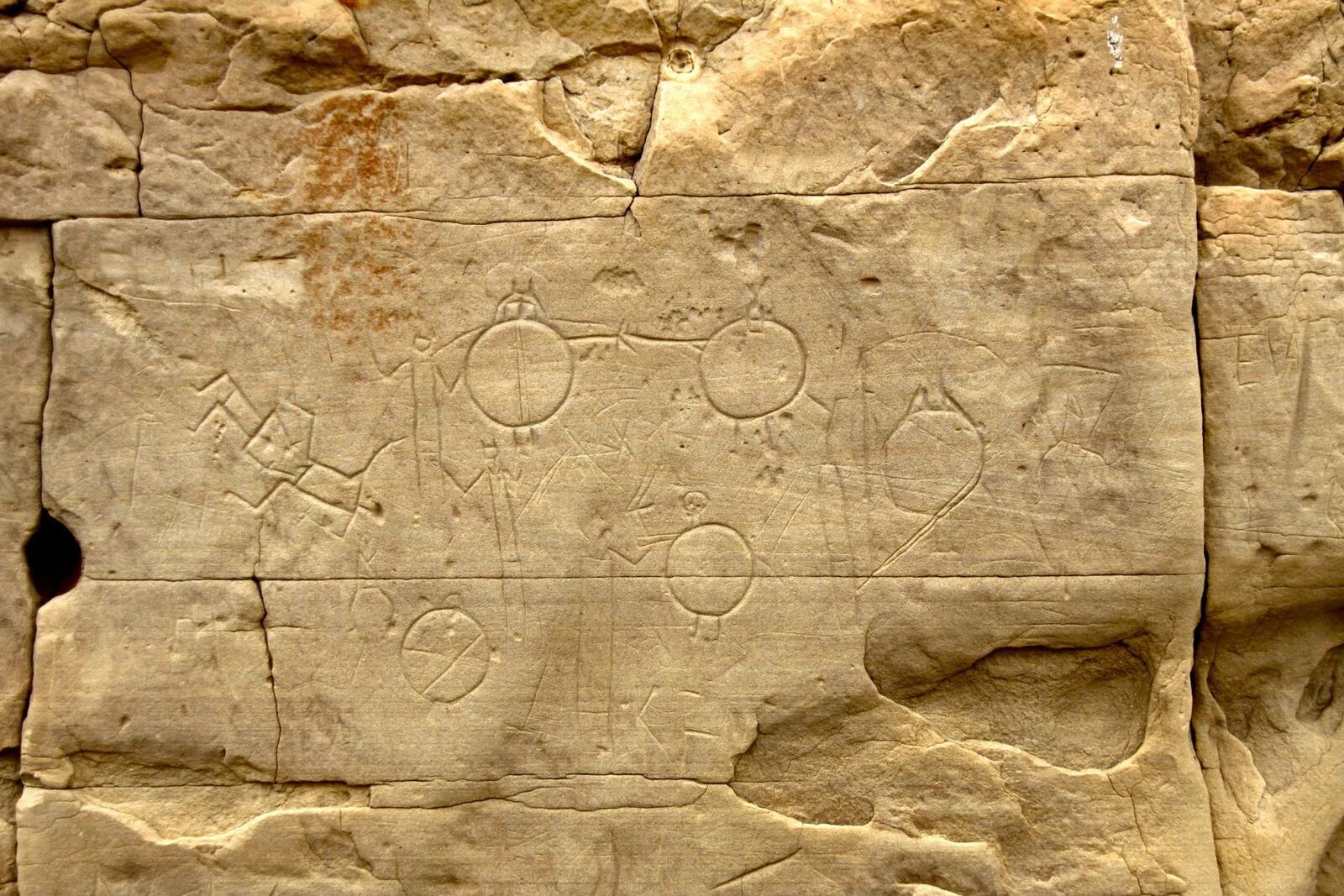
Known to the Blackfoot as Áísínai'pi ("it is written"), Writing-on-Stone preserves the largest concentration of Indigenous rock art on the Great Plains of North America. Set among dramatic sandstone hoodoos carved by wind and water along the Milk River valley, the site contains thousands of petroglyphs and pictographs spanning thousands of years of Blackfoot creation. Designated a UNESCO World Heritage Site in 2019, it remains a living sacred landscape for Blackfoot people today.

Old Town Lunenburg
Founded in 1753 as the first British colonial settlement in Canada outside of Halifax, Lunenburg's old town is the best-preserved example of a planned British colonial settlement in North America. Its distinctive wooden architecture — painted in vivid reds, blues, yellows, and greens — retains the original street grid and property divisions from its founding. A UNESCO World Heritage Site since 1995, it is the home port of the Bluenose II, Nova Scotia's iconic racing schooner.

Joggins Fossil Cliffs
The world's finest fossil record of the Carboniferous period — the "Coal Age" of 300 million years ago — exposed in dramatic sea cliffs along the upper Bay of Fundy. The exceptional tidal range at Joggins continuously reveals new specimens: upright fossilised tree trunks, ancient insects, and the remains of the earliest known reptiles. Charles Darwin called it "the finest fossil forest ever discovered." Designated a UNESCO World Heritage Site in 2008.

Red Bay Basque Whaling Station
From the 1540s to the early 1600s, Basque whalers from Spain and France crossed the Atlantic to Red Bay — making it one of the largest industrial operations in the New World. Archaeological excavations have uncovered the remains of the galleon San Juan (sunk in 1565), three chalupas (small whaling boats), a cooperage, and burial sites of the whalers. The site provides an extraordinary window into early European enterprise in the Americas. UNESCO World Heritage Site since 2013.

Waterton-Glacier International Peace Park
The world's first International Peace Park, established in 1932 by combining Canada's Waterton Lakes National Park and the United States' Glacier National Park — a symbol of the peaceful relationship between the two countries. The joined parks preserve one of the most geologically dramatic landscapes in North America, with Precambrian rock formations more than a billion years old thrust upward against the plains. A UNESCO World Heritage Site and designated Biosphere Reserve.
Landmarks
From the spray of Niagara Falls to the copper rooflines of Château Frontenac rising above the St. Lawrence, Canada's defining landmarks draw visitors from every country in the world and serve as the visual vocabulary of the country itself — the images that tell the world at a glance what Canada is.

Niagara Falls
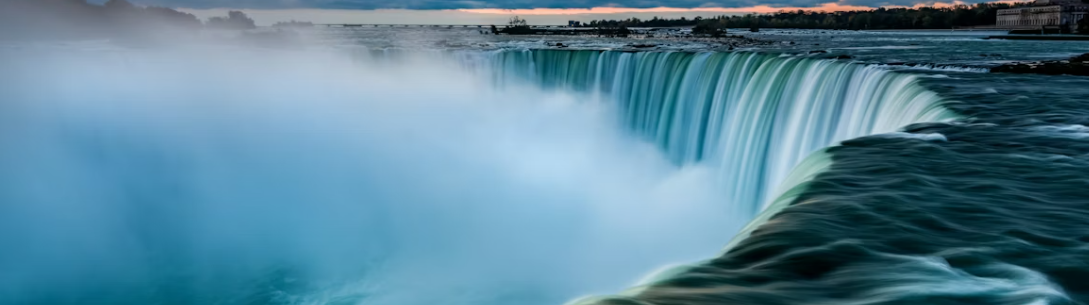
The most powerful waterfall in North America by volume of water, Niagara Falls comprises three separate falls on the Niagara River between Ontario and New York State: the Horseshoe Falls (Canadian side), the American Falls, and the Bridal Veil Falls. More than 168,000 cubic metres of water flows over the crestline every minute. Illuminated nightly and visited by over 12 million people annually, the falls have been a honeymoon destination and a centre of hydroelectric power since the 19th century.

Parliament Hill
Perched on a limestone escarpment above the Ottawa River, Parliament Hill is the seat of Canadian democracy and one of the finest examples of Gothic Revival architecture on the continent. The Centre Block — dominated by the 92-metre Peace Tower — was rebuilt after a fire in 1916. The Hill hosts the Changing of the Guard ceremony each summer and the dramatic Christmas Lights Across Canada display each winter. The eternal flame at the entrance was lit on Canada's centennial — July 1, 1967.

Château Frontenac
Dominating the skyline of Old Quebec City from its clifftop above the St. Lawrence, the Château Frontenac is often described as the most photographed hotel in the world. Built by the Canadian Pacific Railway beginning in 1893 in a Norman château style, it has hosted Franklin Roosevelt, Winston Churchill, and Queen Elizabeth II. The hotel stands at the heart of Old Quebec — a UNESCO World Heritage district and the only walled city north of Mexico.

Stanley Park
A thousand-acre old-growth forest on a peninsula in Vancouver Harbour, Stanley Park is one of the largest urban parks in North America. Ringed by the 8.8-kilometre Seawall — a paved path for cyclists and pedestrians with extraordinary views of Burrard Inlet and the North Shore Mountains — the park also contains ancient Douglas firs and cedars, the Vancouver Aquarium, and a collection of totem poles carved by Indigenous artists. Consistently voted among the world's most beautiful urban parks.

Peggy's Cove
The most photographed lighthouse in Canada stands on a granite outcrop above a small fishing cove 43 kilometres southwest of Halifax. The village of Peggy's Cove — with its brightly painted wooden houses, working fishing boats, and the vast smooth granite of the surrounding coastline — has become the defining image of Atlantic Canadian life. The lighthouse has operated since 1868. The cove appears on more Canadian postcards, calendars, and paintings than almost any other single image.

Icefields Parkway
Stretching 232 kilometres through the heart of the Canadian Rockies from Lake Louise to Jasper, the Icefields Parkway is consistently ranked among the most scenic drives in the world. The route passes more than 100 ancient glaciers, towering peaks, turquoise glacial lakes, and dozens of cascading waterfalls. The Columbia Icefield — the largest accumulation of ice south of the Arctic Circle in North America — is accessible directly from the highway. Elk, mountain goats, bighorn sheep, black bears, and grizzlies are regularly seen along the route.

Old Quebec City
The only remaining walled city in North America north of Mexico, Old Quebec City preserves 400 years of North American history within its 4.6 kilometres of stone fortifications. Founded by Samuel de Champlain in 1608, the city divides into the Upper Town — dominated by the Citadelle and the Plains of Abraham where Wolfe defeated Montcalm in 1759 — and the Lower Town, where narrow cobblestone streets recall the earliest days of New France. A UNESCO World Heritage Site since 1985.

Notre-Dame Basilica, Montréal
Completed in 1829 in the Gothic Revival style, Montreal's Notre-Dame Basilica is one of the most magnificent churches in North America. The twin towers of its facade rise 69 metres above the Place d'Armes in Old Montreal, while the interior — all deep blues, golds, and crimson — contains the dazzling polychrome decoration added by Victor Bourgeau in the 1870s. The basilica's pipe organ contains 7,000 pipes. Celine Dion was married here in 1994. An estimated 11 million visitors pass through annually.

Head-Smashed-In Buffalo Jump
One of the oldest, largest, and best-preserved buffalo jumps in the world, Head-Smashed-In was used by Blackfoot peoples for nearly 6,000 years to drive bison herds over a sandstone cliff. The site includes drive lanes, a camp area, and a bone bed 12 metres deep containing the remains of thousands of bison. A UNESCO World Heritage Site since 1981, its interpretive centre is built into the cliff face itself, with exhibits that trace the full story of the Plains peoples and their relationship with the bison.

Rideau Canal Skateway
In winter, the Ottawa section of the Rideau Canal transforms into the world's largest naturally refrigerated skating rink — 7.8 kilometres of maintained ice surface, equivalent to 90 Olympic hockey rinks placed end to end. Ottawans skate to work during the coldest months, stopping at BeaverTails huts along the route. The skateway has operated since 1971 and is certified by Guinness World Records. It is one of the defining experiences of Canadian winter life — combining practicality, community, and the austere beauty of a frozen city.

Thousand Islands
An archipelago of 1,864 islands straddling the Canada-US border where the St. Lawrence River begins its journey from Lake Ontario, the Thousand Islands region is one of the most beautiful freshwater landscapes in North America. The islands range from vast rocky outcrops to tiny slivers barely large enough to support a single tree. Boldt Castle — built by New York millionaire George Boldt on Heart Island in 1900 as a declaration of love for his wife — stands as the region's most romantic landmark. The Thousand Islands International Bridge crosses the border here.

Signal Hill, St. John's
The dramatic headland guarding the entrance to St. John's Harbour has watched over one of the oldest cities in North America for four centuries. Cabot Tower, built in 1897, is where Guglielmo Marconi received the first transatlantic wireless signal in December 1901. Signal Hill National Historic Site also marks the site of the final battle of the Seven Years' War in North America (1762) and commands sweeping views of the North Atlantic — on a clear day the first landfall in North America for ships crossing from Europe.
Mountains & Lakes
Canada holds approximately 20 percent of the world's fresh water — more than 2 million lakes, 849,000 kilometres of rivers, and enough ice in the polar north to raise global sea levels. The country's mountain ranges run the full length of its western edge and crown its Arctic rim. Together they define a landscape of extraordinary scale and variety.

Lake Louise
Fed by the Victoria Glacier and set beneath the sheer face of Mount Victoria (3,464 m), Lake Louise is one of the most photographed lakes in the world. Its extraordinary turquoise colour comes from glacial rock flour suspended in the meltwater. The Fairmont Chateau Lake Louise overlooks the lake from its eastern shore. In winter the lake surface hosts world-class ice sculpting exhibitions and Canada's largest outdoor skating rink. An essential destination in Banff National Park.

Moraine Lake
In the Valley of the Ten Peaks in Banff National Park, Moraine Lake's impossibly vivid cobalt blue water — even more intense than Lake Louise — is framed by ten peaks all rising above 3,000 metres. The view from the Rockpile trail — a brief scramble up a debris mound at the lake's western end — offers what is widely considered the single most spectacular vista in Canada. The image appeared on the Canadian twenty-dollar bill for many years. The road to Moraine Lake typically requires a reservation for peak summer visits.

Mount Logan
At 5,959 metres, Mount Logan is the highest mountain in Canada and the second-highest peak in North America after Denali. Located in Kluane National Park and Reserve in the Yukon, it has the largest base circumference of any non-volcanic mountain on Earth. Logan is still growing at roughly 0.35 millimetres per year due to tectonic activity. Its summit plateau holds the record for the coldest temperature ever recorded outside Antarctica: -77.5°C. Named for Sir William Edmond Logan, founder of the Geological Survey of Canada.

Peyto Lake
Viewed from the Bow Summit lookout — the highest point on the Icefields Parkway at 2,088 metres — Peyto Lake appears in the valley below in the shape of a howling wolf, its aquamarine water pouring south through lodgepole pine forest. Fed by the Peyto Glacier, the lake's glacial flour creates a colour that changes from deep green in early summer (when snowmelt input is highest) to brilliant turquoise as sediment concentrations shift. Named for Bill Peyto, a legendary Banff outfitter and guide.

Maligne Lake
The largest natural lake in the Canadian Rockies at 22 kilometres long and 97 metres deep, Maligne Lake sits in a broad mountain valley in Jasper National Park fed by glaciers and snowmelt. The view of Spirit Island — a tiny forested islet in the lake's middle distance, framed by snow-capped peaks — is among the most iconic images in Canadian nature photography. Boat tours have operated on the lake since 1928. The lake is a significant spiritual and cultural landscape for the Stoney Nakoda people.

Columbia Icefield & Athabasca Glacier
The Columbia Icefield — a 325-square-kilometre accumulation of glacial ice straddling the Continental Divide — is the largest icefield south of the Arctic Circle in North America, feeding six major glaciers. Its meltwater flows to three different oceans: the Pacific via the Columbia River, the Atlantic via the North Saskatchewan River and Hudson Bay, and the Arctic via the Athabasca River. The Athabasca Glacier, accessible directly from the Icefields Parkway, has retreated more than 1.5 kilometres since 1870 — a visible record of climate change.

Mount Robson
Rising to 3,954 metres and known as the "Monarch of the Canadian Rockies," Mount Robson is the highest peak in the Canadian Rockies — a massive pyramid of rock and ice that creates its own weather systems and is often shrouded in cloud. It lies at the heart of Mount Robson Provincial Park in British Columbia. The Berg Lake Trail — considered one of the finest multi-day hikes in Canada — leads through ancient forest and subalpine meadow to a turquoise glacial lake beneath the mountain's north face, where icebergs calved from the Berg Glacier float year-round.

Bay of Fundy
The Bay of Fundy experiences the highest tidal range on Earth — up to 17 metres between low and high tide, the equivalent of a four-storey building. Twice daily, 160 billion tonnes of seawater flow in and out of the bay — more than the combined flow of all the world's freshwater rivers. The extraordinary tidal range sculpts dramatic sea stacks, flowerpots, and sea caves at Hopewell Rocks, and drives the world's most productive marine ecosystem, feeding millions of migratory shorebirds each year. The bay is considered one of Canada's Seven Wonders.

Great Bear Lake
The largest lake entirely within Canada's borders and the fourth-largest in North America, Great Bear Lake covers 31,153 square kilometres in the Northwest Territories — an area larger than Belgium. Known to the Dene people as Sahtu Deh ("Bear Lake River"), it sits almost entirely above the Arctic Circle and freezes over completely each winter, its surface ice thick enough to support vehicle traffic. Its waters are among the clearest and coldest of any large lake in the world, supporting large populations of lake trout and arctic char.

Okanagan Lake
At 135 kilometres long and up to 232 metres deep, Okanagan Lake runs through the heart of the Okanagan Valley — Canada's premier wine region and one of the most idyllic summer destinations in the country. The towns of Kelowna, Penticton, and Vernon sit along its shores amid orchards, vineyards, and sandy beaches. The lake is home to Ogopogo, a legendary lake monster that has been part of the oral traditions of the Syilx/Okanagan people since time immemorial. Over 120 wineries operate within sight of the lake's shores.

Emerald Lake
The largest and most visited lake in Yoho National Park, Emerald Lake sits in a bowl of old-growth forest and soaring peaks on the western slope of the Continental Divide. Its stunning green colour comes from glacial lake flour suspended in the runoff from surrounding glaciers. The historic Emerald Lake Lodge — built in 1902 by the CPR — sits on a forested headland jutting into the lake, offering one of the most coveted natural retreats in the Canadian Rockies. The 5-kilometre lake circuit trail is one of the finest short walks in the mountain parks.

Montmorency Falls
At 83 metres — 30 metres taller than Niagara Falls — Montmorency Falls pours the Montmorency River into the St. Lawrence just east of Quebec City. The falls are most spectacular in winter when the spray builds up a large cone of ice — the "pain de sucre" (sugarloaf) — at the base. A suspension bridge crosses directly above the falls crest, offering a vertiginous view straight down. The surrounding Montmorency Falls Park features a manor house built by the Duke of Kent (father of Queen Victoria) and cable cars above the gorge.
National Parks
Canada operates 48 national parks and park reserves managed by Parks Canada, protecting more than 450,000 square kilometres of the country's most significant natural landscapes — from the Atlantic coast to the Pacific, from the Great Plains to the High Arctic. Five of Canada's national parks are designated UNESCO World Heritage Sites.

Banff National Park
Canada's first national park and the country's most visited, Banff encompasses 6,641 square kilometres of the Rocky Mountain wilderness — an unbroken landscape of glaciated peaks, turquoise lakes, deep river valleys, and ancient icefields. The Banff townsite — 1,397 metres above sea level — was established around the hot springs discovered in the 1880s. Lake Louise, Moraine Lake, the Icefields Parkway, and the Fairmont Banff Springs Hotel all lie within its boundaries. The park receives more than four million visitors annually, but 97 percent of its area remains roadless wilderness.

Jasper National Park
The largest national park in the Canadian Rockies at 10,878 square kilometres, Jasper is designated a UNESCO World Heritage Site as part of the Canadian Rocky Mountain Parks. The park is renowned for Maligne Lake, Spirit Island, and the Columbia Icefield, but equally for exceptional wildlife viewing: wolves, grizzly and black bears, woodland caribou, elk, and mountain goats are regularly observed from its roads and trails. Jasper is one of the largest Dark Sky Preserves in the world, offering extraordinary stargazing on clear nights.

Gros Morne National Park
Gros Morne's UNESCO World Heritage designation recognises the exceptional geological record preserved in western Newfoundland — ancient ocean crust and rocks from the Earth's mantle thrust to the surface, providing evidence for the theory of plate tectonics that changed how science understood the planet. The landscape encompasses fjords, sea stacks, waterfalls, boreal forest, and the extraordinary Tablelands — a weathered orange plateau of peridotite that resembles the surface of Mars. The park is also a paradise for hikers, with trails ranging from easy coastal walks to challenging alpine routes.

Wood Buffalo National Park
The largest national park in Canada and the second-largest protected area in the world, Wood Buffalo encompasses 44,807 square kilometres of boreal forest, wetlands, and salt plains across northern Alberta and the Northwest Territories. It was established to protect the last remaining herd of free-roaming wood bison in North America — now numbering around 5,000. The park also protects the only wild nesting habitat of the endangered whooping crane. Its Peace-Athabasca Delta is one of the world's largest inland freshwater deltas, a UNESCO World Heritage Site since 1983.

Pacific Rim National Park Reserve
Three separate units on the west coast of Vancouver Island protect the wild Pacific shore of Canada. Long Beach — a 16-kilometre arc of hard sand backed by ancient rainforest — is the centrepiece, drawing surfers year-round to some of the most consistent waves in Canada. The Broken Group Islands unit protects a scattered archipelago of 100 islands in Barkley Sound, a sea-kayaking paradise. The West Coast Trail — a demanding 75-kilometre route through old-growth rainforest, river gorges, and tidal flats — is considered one of the great wilderness trails in North America.

Fundy National Park
Perched above the highest tides in the world on the upper Bay of Fundy, Fundy National Park protects 206 square kilometres of Acadian forest, river valleys, and dramatic coastal cliffs. The park offers over 100 kilometres of hiking trails through old-growth forest, past waterfalls, and along the shoreline — where visitors can walk on the ocean floor at low tide and be surrounded by 12 metres of water just six hours later. The park's heated saltwater pool, carved into the tidal rockscape in 1921, is one of the most unusual swimming facilities in Canada.

Kluane National Park & Reserve
Home to Mount Logan — Canada's highest peak — and the world's largest non-polar icefield, Kluane is a landscape of staggering scale. The Kluane Icefield, shared with Alaska's Wrangell-St. Elias National Park, covers more than 22,000 square kilometres of unbroken glacier. As part of a UNESCO World Heritage cluster of four transboundary parks, it protects a vast wilderness of Dall sheep, grizzly bears, wolverines, and golden eagles. The Alsek and Tatshenshini rivers — flowing west through the park to the Pacific — offer one of the world's great wilderness river journeys.

Yoho National Park
The name "Yoho" is a Cree expression of awe and wonder — appropriate for a park whose compact 1,310 square kilometres contain some of the most dramatic scenery in the Canadian Rockies. Takakkaw Falls, at 384 metres, is the second-highest waterfall in Canada. Emerald Lake glows with impossible green depths. Natural Bridge spans a turquoise gorge. The Burgess Shale — a fossil deposit that has transformed scientific understanding of the Cambrian explosion of life 508 million years ago — is accessible by guided hike. Part of the Canadian Rocky Mountain Parks UNESCO World Heritage Site.

Cape Breton Highlands National Park
The Cabot Trail — a 297-kilometre road circuit around the northern tip of Cape Breton Island through the national park — is consistently ranked among the most scenic drives in the world. The highlands plunge precipitously to the sea in places, with the road clinging to cliff edges above the Gulf of St. Lawrence. The park protects a rugged boreal plateau with moose, bald eagles, and pilot whales visible from shore. The area retains its strong Cape Breton Scottish culture — Gaelic is still spoken in some communities, and traditional fiddle music fills summer festivals.

Grasslands National Park
Protecting the last intact mixed-grass prairie ecosystem in Canada — the vanishing sea of grass that once rolled from Manitoba to the Rocky Mountains and supported enormous bison herds — Grasslands National Park is one of the least-visited but most ecologically significant parks in the country. It is the only national park in Canada where the prairie dog, the black-footed ferret, the swift fox, and the burrowing owl all coexist. The park also preserves extraordinary Badlands formations, 70-million-year-old dinosaur bones, and some of the darkest skies in Canada.

Riding Mountain National Park
Rising above the Manitoba prairie on the Manitoba Escarpment, Riding Mountain National Park is a forested island in a sea of farmland — one of the last large tracts of boreal forest in southern Manitoba. The park protects a remarkable diversity of ecosystems: boreal forest, mixed forest, and parkland grassland all meet at its edges. Clear Lake at the park's centre is the most popular recreational lake in Manitoba, while the park's interior is prime habitat for elk, black bears, grey wolves, and a small herd of free-roaming plains bison. A UNESCO Biosphere Reserve.

La Mauricie National Park
Protecting a representative portion of the Laurentian Highlands — the ancient Pre-Cambrian bedrock plateau that covers much of central Quebec — La Mauricie is a rolling landscape of lakes, rivers, boreal forest, and rounded granite hills worn smooth by glaciation. The park's 150 lakes and 350 kilometres of rivers form a continuous canoe circuit: one of the finest backcountry paddling destinations in eastern Canada. In autumn the hills burn with the spectacular reds, oranges, and golds of the maple and birch forest. The park is a two-hour drive from both Montreal and Quebec City.
Provincial Parks
Canada's provincial and territorial parks system protects more than 1,200 individual parks across every province and territory — from the old-growth forests of British Columbia to the ancient fossil beds of Alberta, the Canadian Shield lakes of Ontario and Quebec, and the rugged shores of Atlantic Canada. Together they offer some of the finest outdoor experiences on the continent.

Algonquin Provincial Park
Canada's first provincial park and one of the most beloved wilderness destinations in the country, Algonquin encompasses 7,653 square kilometres of the Precambrian Shield — a vast landscape of lakes, rivers, and boreal forest two hours north of Toronto. Tom Thomson and several future members of the Group of Seven found their artistic vision here in the 1910s. Today the park is synonymous with canoe tripping: more than 1,500 kilometres of canoe routes thread through its interior. Moose, wolves, otters, loons, and over 270 species of birds inhabit its forests and waterways. The Highway 60 corridor through the park's southern edge offers accessible wildlife viewing throughout the year.

Garibaldi Provincial Park
An hour's drive north of Vancouver, Garibaldi Provincial Park encompasses 97,260 hectares of volcanic mountains, turquoise lakes, wildflower meadows, and ancient glaciers in the Coast Mountains of British Columbia. The park is named for Mount Garibaldi — a dormant stratovolcano whose eruptions created the extraordinary Black Tusk, a jagged spire of lava visible from Vancouver on clear days. The Cheakamus Lake, Garibaldi Lake, and Elfin Lakes trails are among the most popular backcountry day and overnight hikes in the province. Whistler Blackcomb ski resort borders the park's northern edge.

Dinosaur Provincial Park
One of the richest dinosaur fossil beds on Earth, Dinosaur Provincial Park in the Alberta Badlands has yielded more than 40 dinosaur species and over 300 museum-quality specimens since systematic excavation began in the 1880s. The park's eroded hoodoos, coulees, and river valley reveal 75-million-year-old Late Cretaceous rock formations with exceptional clarity. UNESCO World Heritage designation was granted in 1979. Guided fossil safaris take visitors into restricted backcountry areas where new fossils are still emerging from the eroding hillsides every year — a living fossil discovery site.

Killarney Provincial Park
Often called the "Crown Jewel of Ontario's Provincial Parks," Killarney was established at the urging of the Group of Seven artists who fell under the spell of its distinctive white quartzite ridges and crystal-clear blue-and-green lakes. The La Cloche Silhouette Trail — a 100-kilometre loop through the La Cloche Mountains — is considered one of the most challenging and beautiful backpacking routes in Ontario. The park's waters are among the clearest in Ontario, their striking colour a result of the quartzite and granite geology that filters out virtually all sediment.

Mount Assiniboine Provincial Park
Named for the dramatically pyramidal Mount Assiniboine (3,618 m) — sometimes called the "Matterhorn of the Rockies" for its striking resemblance to the Swiss peak — this remote park straddles the Continental Divide on the British Columbia side of the Rockies. Accessible only on foot or by helicopter, the park's backcountry meadows around Lake Magog are among the most achingly beautiful in the mountains, rimmed by glaciers and wildflower meadows in summer. The park is a designated UNESCO World Heritage Site as part of the Canadian Rocky Mountain Parks cluster and a paradise for experienced backcountry hikers and ski mountaineers.

Strathcona Provincial Park
British Columbia's oldest provincial park, Strathcona occupies the mountainous interior of Vancouver Island — a wilderness of alpine lakes, ancient glaciers, and old-growth forest that seems a world away from the island's coastal communities. The Elk River Trail leads to Landslide Lake, one of the most scenic backcountry destinations in the province. Forbidden Plateau and Mount Washington (on the park boundary) offer alpine skiing in winter. The park protects Vancouver Island's highest peak, the Golden Hinde (2,195 m), as well as rare and endemic plant communities found nowhere else on Earth.

Writing-on-Stone Provincial Park
In the Milk River valley of southern Alberta, Writing-on-Stone Provincial Park protects a landscape of wind-sculpted sandstone hoodoos, coulees, and the largest concentration of rock art on the Great Plains. The Blackfoot name for this place — Aisinai'pi — means "it is written." Thousands of petroglyphs and pictographs carved and painted over thousands of years record scenes of battle, ceremony, and daily life. The park also preserves rare prairie wildlife habitat. Designated a UNESCO World Heritage Site in 2019, the park is co-managed with the Blackfoot Confederacy as a sacred cultural landscape.

Gwaii Haanas
The southern islands of the Haida Gwaii archipelago — once called the Queen Charlotte Islands — are jointly managed as a national park reserve, national marine conservation area, and Haida Heritage Site by the Haida Nation and Parks Canada. Gwaii Haanas protects a remarkable ecosystem of old-growth Sitka spruce, cedar, and hemlock forests, along with extraordinary marine life: orcas, grey whales, Pacific white-sided dolphins, and Steller sea lions. At Sgang Gwaay (Anthony Island) — a UNESCO World Heritage Site — the weathered totem poles of a former Haida village stand in one of the most haunting and sacred landscapes in Canada.
Regions of Canada
Canada's vast geography divides naturally into distinct regions, each with its own landscape, climate, culture, and history. Understanding the country region by region is the most revealing way to grasp its extraordinary diversity — from the ancient fishing communities of the Atlantic coast to the boreal wilderness of the far north, from the wheat fields of the Prairies to the rainforests of the Pacific shore.

Atlantic Canada
The four easternmost provinces share a deep attachment to the sea — its rhythms, its resources, and its risks. Atlantic Canada's economy was built on cod, lobster, lumber, and farming, and its culture reflects centuries of Acadian, Scottish, Irish, English, and Mi'kmaq traditions. The region's coastlines range from the dramatic tidal drama of the Bay of Fundy to the red sandstone shores of PEI and the rugged barrens of Newfoundland. The people of Atlantic Canada have a distinctive warmth, musical tradition, and sense of humour rooted in community and resilience. The region's sea shanties, Celtic fiddling, and kitchen parties are as much a part of the national character as hockey or the maple leaf.
The Prairies
The three Prairie provinces stretch 2,000 kilometres across the interior of North America — a vast agricultural engine that feeds much of the world. Saskatchewan and Manitoba together grow roughly 55 percent of all Canadian wheat, while Alberta is the country's oil and gas heartland. The Prairie sky is the defining visual experience of the region: an enormous bowl of light that produces thunderstorms of Biblical drama in summer and auroras of extraordinary brilliance in winter. The cities of Winnipeg, Calgary, Regina, and Edmonton are dynamic, growing urban centres, but the Prairie identity remains shaped by the values of the rural communities that tamed the land — self-reliance, community solidarity, and an abiding relationship with the natural world.

Central Canada
Ontario and Quebec together contain approximately 62 percent of Canada's population and dominate the country's economic, political, and cultural life. The St. Lawrence-Great Lakes corridor — where most of this population lives — is the industrial and financial spine of the country. Toronto is Canada's largest city and the financial capital; Montreal is its cultural heart, a bilingual city where French and English civilisations have coexisted and contested for over 350 years. The Canadian Shield that covers most of both provinces to the north is the country's great wilderness interior — a landscape of granite, lakes, and boreal forest that Canadians return to every summer as a spiritual retreat from urban life.

The West Coast
British Columbia is Canada's most geographically dramatic province — a landscape of glacier-capped mountains, ancient rainforests, fjord-carved coastlines, and island archipelagos that stretches from the US border to the 60th parallel. Vancouver, the third-largest city in Canada, sits between the Pacific and the Coast Mountains in one of the most beautifully situated metropolitan areas in the world. The province's mild, wet climate produces the largest trees in Canada — ancient red cedars and Douglas firs — and supports a culture of outdoor recreation, environmental consciousness, and culinary innovation that has made it a global destination. The First Nations cultures of the Northwest Coast — the Haida, Tsimshian, Kwakwaka'wakw, and others — produced some of the world's most sophisticated visual art traditions.

The Interior & Okanagan
East of the Coast Mountains, British Columbia's interior is a land of contrasts: sun-drenched Okanagan wine country, the dramatic Thompson plateau, the gold rush landscapes of the Cariboo, and the old-growth temperate rainforest of the Columbia Mountains. The Okanagan Valley — a desert-like trough carved by glaciers between rows of mountains — produces award-winning wines, stone fruits, and apples in a climate unique in Canada. The valley's lakes and beaches attract visitors from across the country every summer. The Kootenay region to the east is known for its hot springs, ski mountains, and heritage mining towns preserved from the silver rush of the 1890s.

Northern Canada
Canada's three territories — Yukon, the Northwest Territories, and Nunavut — cover 40 percent of the country's land mass but are home to fewer than 120,000 people. The North is a land of extremes: midnight sun in summer, polar darkness in winter, permafrost beneath the surface, and skies illuminated by the Northern Lights for months at a time. Nunavut — established in 1999 as a homeland for the Inuit — is Canada's newest and largest territory. The North's Indigenous peoples — Inuit, Dene, and Yukon First Nations — have lived here for thousands of years. The Klondike Gold Rush of 1898 left ghost towns and legends across the Yukon. The North is also ground zero for climate change: warming faster than almost any other region on Earth.