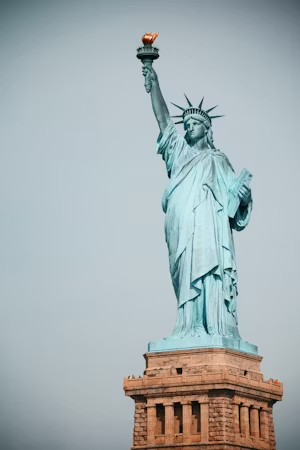
Morning route
Begin with a landmark, market, waterfront, downtown district or historic street before crowds build.
Northeast city guide
National museums, monuments, government landmarks, neighbourhoods and free attractions. Use this page for a first-day plan, neighbourhood ideas, food stops, museum time and wider route planning through District of Columbia.
Start with one central neighbourhood, a walkable landmark area, a local meal and one cultural attraction. Washington DC works best when you balance the famous sights with smaller local stops that show how people actually live in the city.
Begin with a landmark, market, waterfront, downtown district or historic street before crowds build.
Add a museum, public park, campus, food hall, sports venue or neighbourhood walk.
Finish with a local restaurant, music venue, theatre, skyline view or seasonal event.
Use Washington DC as an anchor and add a nearby state park, small town, food trail or regional drive. For larger trips, combine this page with the District of Columbia state guide, the regions page and the travel tips planner.
Pick a landmark, a neighbourhood walk, one museum and one local food experience.
Add a second neighbourhood, a day trip and a culture or sports event.
Connect the city to nearby nature, historic towns or a scenic drive through District of Columbia.
Connected guide
Professional UX works by connecting pages together: city guide, state guide, region guide, food guide and travel planner.
Open District of ColumbiaDeeper state guide
The Mid-Atlantic combines national history, dense museums, public transit, old neighborhoods, regional food and short trips between major American institutions.
District of Columbia sits in the Mid-Atlantic. The capital is Washington, DC, the largest city is Washington, DC, and the best first route is usually National Mall → Smithsonian museums → Capitol Hill → neighbourhood food streets.
The strongest trips here connect national monuments, free museums, political history. Give yourself enough time to pair one city experience with one landscape or small-town stop.
March to May and September to November is usually the easiest window for weather, road conditions, festivals, markets and outdoor stops.
Make at least one meal part of the research. Menus, markets and regional diners often reveal settlement history, agriculture, immigration and local pride better than a quick attraction list.
For a short trip, choose one main city, one signature outdoor stop and one culture or history stop. For a longer trip, follow the route: National Mall → Smithsonian museums → Capitol Hill → neighbourhood food streets.
District of Columbia works well for travelers who want national monuments, families building a school-friendly road trip, and visitors comparing American regions through real places rather than generic lists.
Start with Washington, DC or Washington, DC, add the most famous landmark nearby, then use food or a local museum to understand the state’s identity.
Mix one short museum, one outdoor stop, one casual meal and one flexible evening. Keep drives under three hours when possible.
Research how geography, migration, industry, climate and culture shaped District of Columbia. Compare it with another Mid-Atlantic state to make the differences clear.